Temperatures dropped below freezing across parts of the state. Here is how growth stage, temperature, and duration of the freeze influence potential wheat injury.
Amanda de Oliveira Silva, Small Grains Extension Specialist
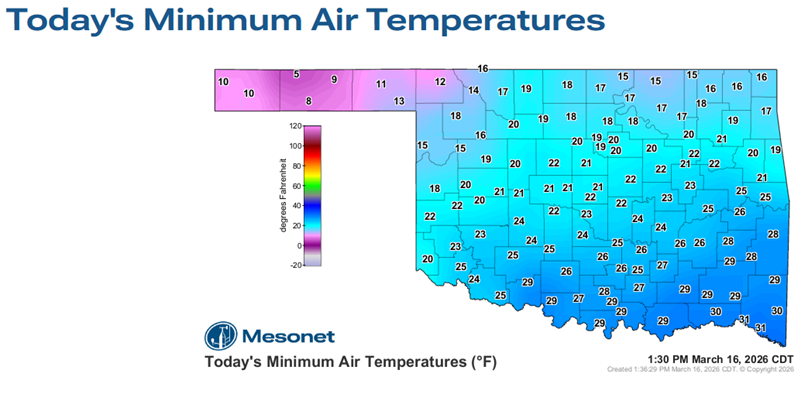
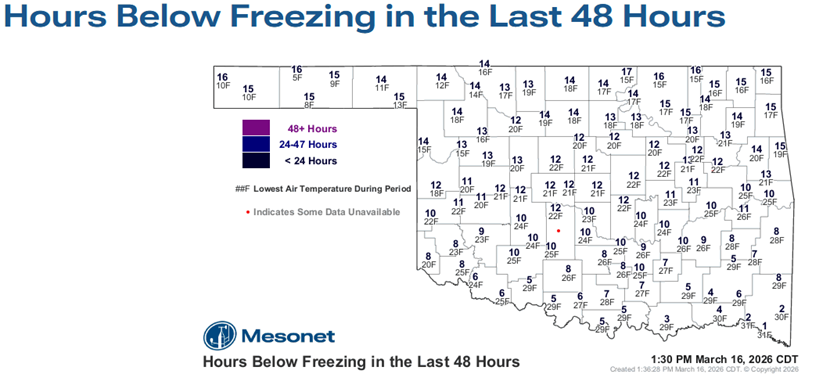
Several areas across Oklahoma experienced freezing temperatures overnight, with some locations recording multiple hours below freezing (Figures 1 and 2). There is potential for freeze injury, especially in drought-stressed wheat that has reached jointing or later growth stages. If wheat is still before jointing, the growing point remains below the soil surface and is more protected from freezing injury.
However, with the warm conditions we experienced earlier this spring, the crop is running slightly ahead of schedule, and some fields have already reached or passed the jointing stage. At this stage, the developing head has started to move up the elongating stem and is no longer protected.
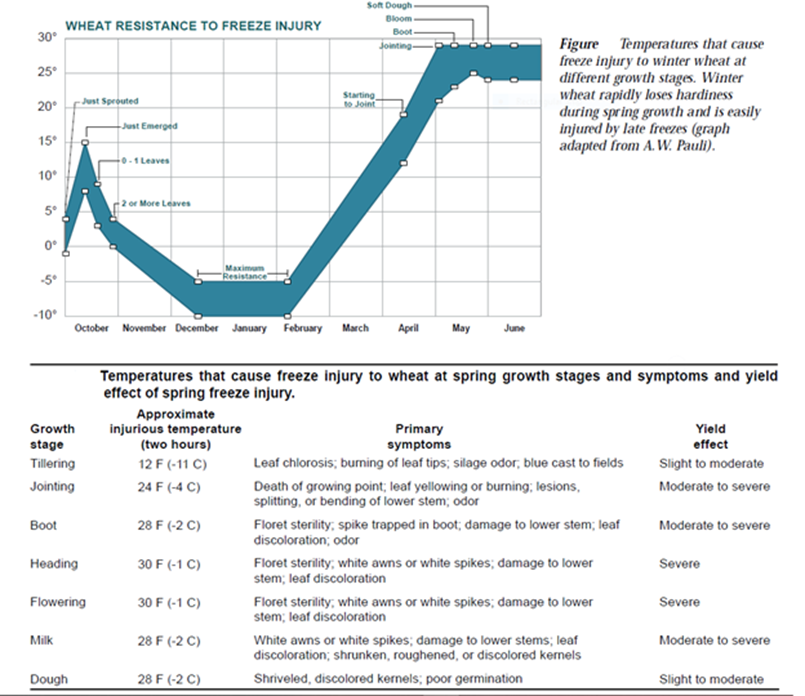
In the coming days we may start to see additional symptoms of freeze injury. The extent of the injury will depend on several factors, including the growth stage of the plants, how low the temperature dropped, and how long temperatures remained at those levels. Brief freezes often cause little damage, but several hours below critical temperatures during jointing or reproductive stages can reduce yield (Figure 3).
What are the temperatures that can damage the wheat plants?
The potential for freeze injury depends largely on the growth stage of the crop. Anecdotal evidence sometimes suggests varietal differences in resistance to spring freeze injury, but this is often due to differences in plant maturity at the time of the freeze event. Earlier-maturing varieties are more likely to be injured during spring freezes simply because they are typically more advanced in development.
The susceptibility of wheat plants to freeze injury steadily increases as the crop progresses from jointing to heading and flowering.
Figure 3 below provides a general guide to temperature thresholds and their potential impact on yield. Keep in mind that these values are not exact, but they serve as useful rules of thumb.
Temperatures closer to the soil surface may be slightly higher than those recorded by weather stations located about one meter above the ground, especially when soil moisture is present. Because each freeze event is unique, it is difficult to define exact thresholds. For example, a field at the jointing stage exposed to 24°F for two hours may experience similar injury to wheat exposed to 28°F for a longer period of time.
How long should I wait to assess the injury?
Patience is important when evaluating freeze damage. The full extent of injury is usually not visible within the first day or two after the freeze event.
If warm temperatures return quickly, symptoms may become evident within 5–7 days. If temperatures remain cool, it may take 10–14 days before the extent of the injury can be properly assessed.
What freeze injury symptoms should I look for?
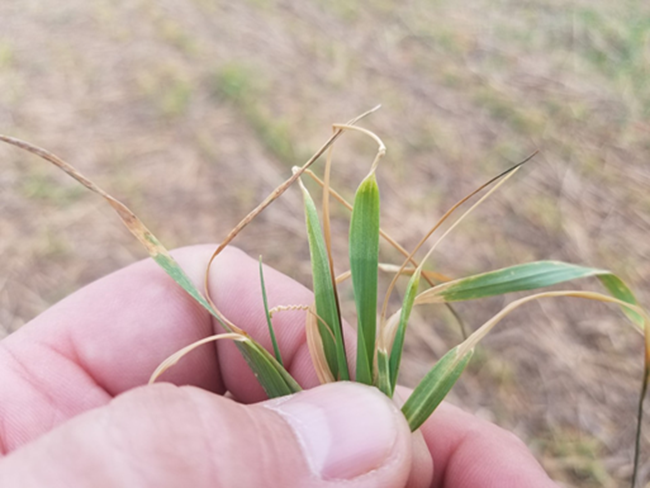
One common symptom is leaf tip burn, where leaf tips turn yellow and necrotic (Figure 4). This type of damage is often cosmetic and may not significantly affect yield.
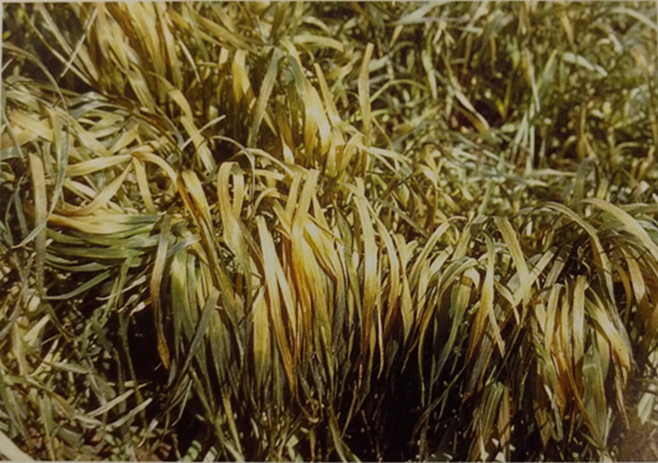
More severe freeze damage may cause entire leaves to turn yellow or white, and plants may lose their turgidity and appear flaccid (Figure 5). In some cases, a “silage” smell may be noticeable several days after the freeze event.
The most important plant part to check: the developing head (growing point)
This is particularly important in areas where fields are more advanced in growth. Plants may appear healthy overall while the developing head has been damaged or killed.
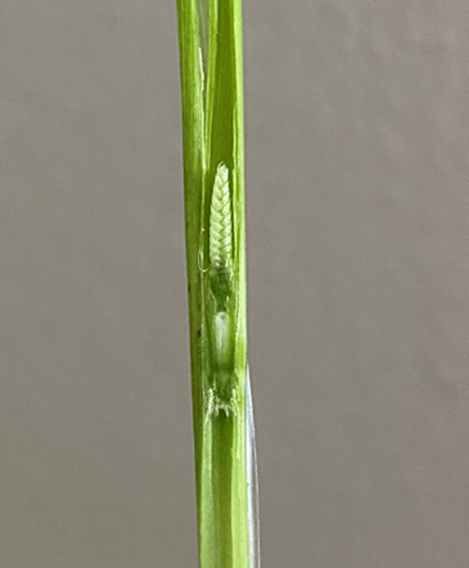
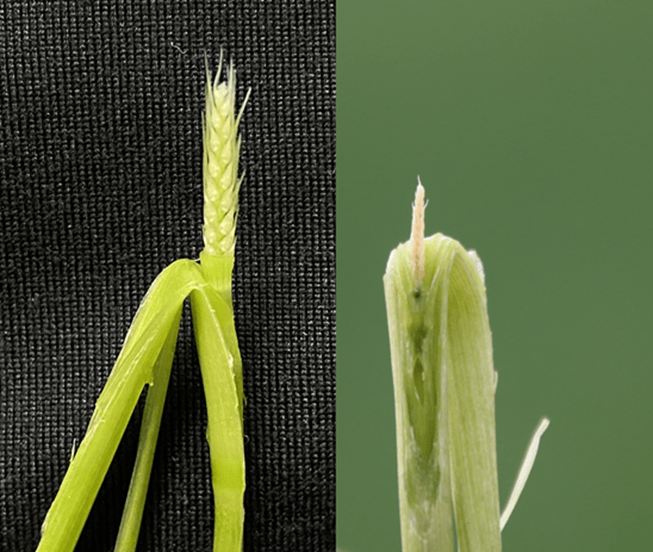
To examine the growing point, carefully slice the stem lengthwise. A healthy growing point will have a firm, whitish-green appearance and remain turgid (Figures 6 and 7, left). Often you can lightly flick the head; if it bounces back and does not break, it is likely still healthy.
If the growing point is mushy, limp, breaks easily, or appears brown, it has likely been compromised (Figure 7, right). Another indication of damage is when the next emerging leaf becomes necrotic and lower stems appear discolored with lesions or enlarged nodes.
Freeze injury at later growth stages
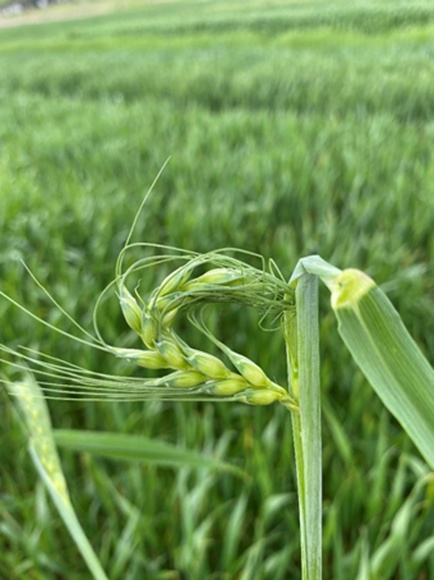
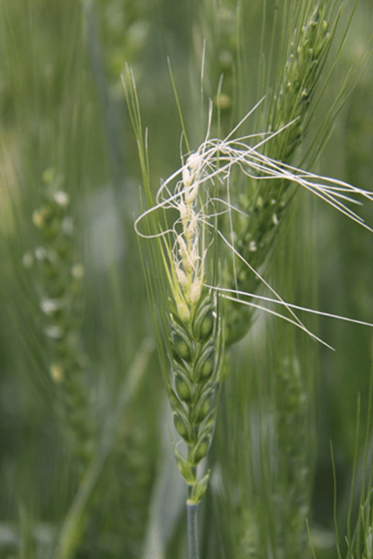
Freezing temperatures at the boot stage may cause the head to become trapped in the flag leaf sheath, preventing proper head emergence (Figure 8). Whitish awn tips are often an indication that the head was exposed to freezing temperatures and that the flower parts may have been damaged.
Freezes during flowering may cause sterility due to damage to the anthers (the male reproductive organ), resulting in poor kernel set and yield losses (Figure 9).
Can wheat recover from freeze injury?
The percentage of damaged heads does not always translate directly into yield loss. At the jointing stage, wheat still has the potential to produce additional tillers or retain secondary tillers.
Whether these tillers can compensate for damaged primary tillers will depend on subsequent weather conditions. If growing conditions are favorable, late-emerging tillers may still produce grain. However, if the crop is already near flowering or later stages, recovery becomes much more limited.
Key points to keep in mind
• Every freeze event is unique. Injury must be evaluated on a field-by-field basis. Temperature thresholds are guidelines, not exact predictors of damage. In some cases, conditions may suggest severe injury but fields recover with minimal impact.
• The extent of injury depends on several factors, including growth stage, minimum temperature reached, and duration of freezing temperatures. Field conditions such as elevation, residue cover, and soil moisture can also influence canopy temperatures.
• Symptoms may take several days to appear. Damage may become noticeable over the next days or into the middle of next week. Healthy wheat heads will remain firm and green, while damaged heads may appear bleached, yellow, or brown and break easily when pressed.
Stay Connected!
Enroll in the OSU Wheat text update service by texting the word “wheat” to (855) 452-0486 to receive timely information throughout the wheat season.
If you start to observe freeze injury in your fields over the next several days, send us a text and let us know what you are seeing.

Additional Resources
Contact your local Extension office.
 WORLD OF WHEAT