Amanda de Oliveira Silva, Small Grains Extension Specialist
Soil moisture conditions are currently favorable for wheat planting across much of Oklahoma. Many of you may be eager to get seed in the ground, but before moving ahead, it is important to consider a few key points.
Planting date
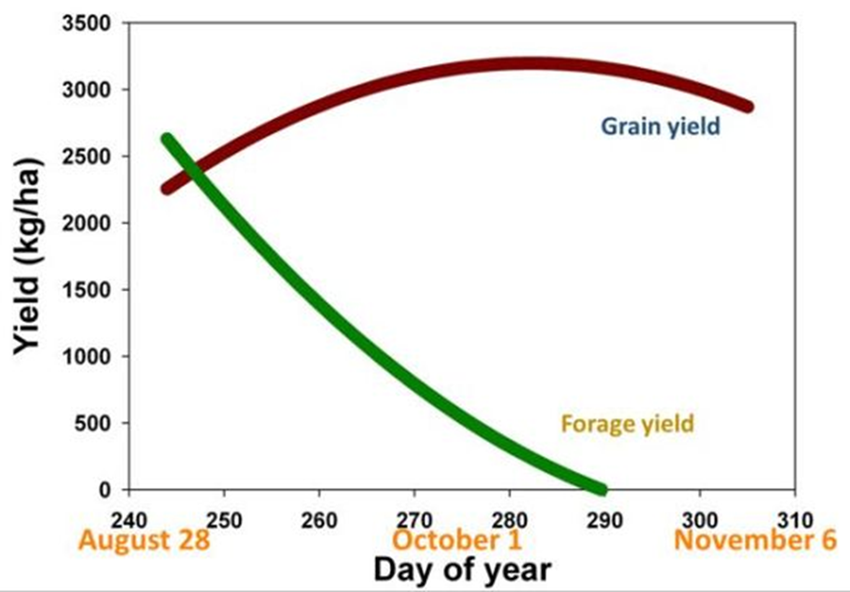
For dual-purpose wheat (grazing + grain), the optimal planting window in most of Oklahoma is mid-September (Figure 1). Planting during this period provides the best balance between fall forage production and maintaining grain yield potential.
- Early planting may increase fall forage production but also raises the risk of pests and diseases. It’s usually only recommended for wheat intended for graze-out or dual-purpose.
- Grain-only wheat should generally be planted about 3-4 weeks later (mid-October, Figure 1) in many parts of the state. Our recent work shows there is more flexibility than we thought, and planting a little later can still work well depending on the weather.
Watch for Fall Armyworms
Planting too early increases the chance of fall armyworm infestations. These pests are small and easy to miss, but you might notice “window-pane” feeding on leaves (Figure 2). Check beneath crop residue as well, since they often hide there during the heat of the day (Figure 3).


Volunteer wheat and Virus Risk
Early planting also raises the risk of wheat streak mosaic and Triticum mosaic viruses, spread by the wheat curl mite. Because seed treatments do not control these viruses and few varieties have strong resistance (i.e., Breakthrough), cultural practices are critical:
- Control volunteer wheat and other grassy hosts as much as possible.
- Ensure volunteer wheat is completely dead for at least two weeks before planting. This breaks the “green bridge” that mites use to move into new seedlings.
- Planting a little later can also help lower virus pressure.
We saw significant wheat streak mosaic issues last year, making these steps especially important in 2025.
Other Planting Considerations
Before planting:
- Soil test to guide fertility needs and reduce input costs.
- Use high-quality seed to promote good germination and stand establishment.
- Consider fungicide and insecticide seed treatments to protect against soilborne diseases and early pest pressure such as root rots.
Need More Information?
Your county OSU Extension office is a great resource for information. You can also reach out directly to us:
- Amanda Silva – Small Grains Extension specialist silvaa@okstate.edu
- Ashleigh Faris – Field Crops Extension Entomologist ashleigh.faris@okstate.edu
- Meriem Aoun – Wheat Pathologist – meriem.aoun@okstate.edu
- Brian Arnall – Precision Nutrient Management Specialist – b.arnall@okstate.edu
 WORLD OF WHEAT