Ashleigh Faris, Cropping Systems Extension Entomologist & IPM Coordinator
Maxwell Smith, Cotton IPM Specialist
Reports from southwest Oklahoma indicate Bird Cherry Oat Aphid (BCOA) infestations in winter wheat. While these aphids are often present in Oklahoma wheat every year, heavy infestations—especially during the grain-fill stages or in fields intended for grazing—can lead to economic loss through direct feeding and the transmission of viral diseases.
Identification and Differentiation from Other Small Grain Aphids
The Bird Cherry Oat Aphid is relatively easy to identify if you know what to look for, but it can be confused with the Rice Root Aphid (RRA).
- Bird Cherry Oat Aphid (BCOA), Rhopalosiphum padi:
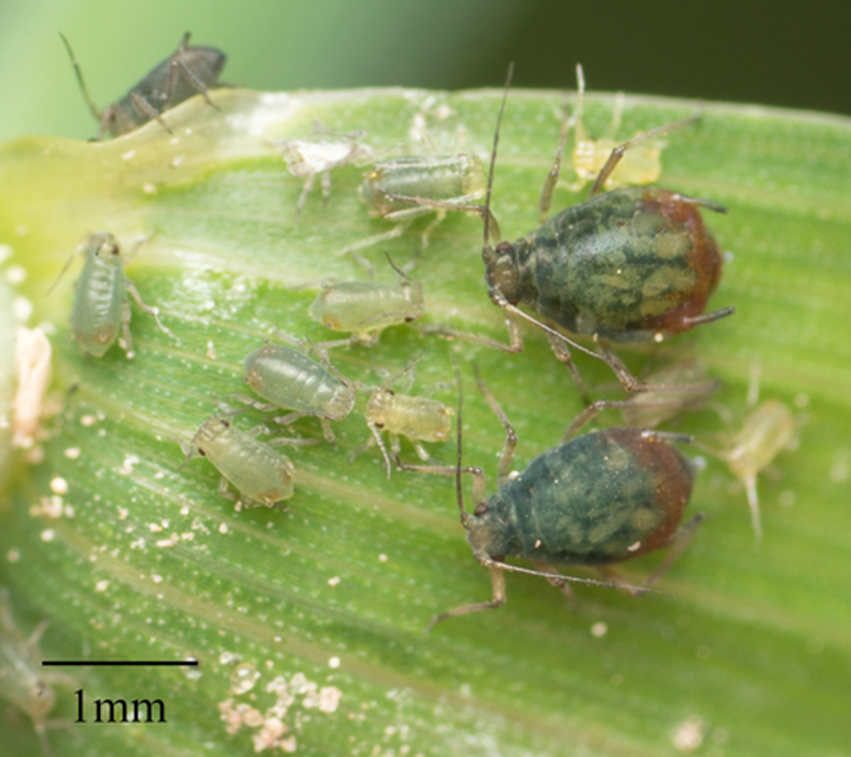
- Appearance: Small, pear-shaped, olive-green to greenish-black bodies. Tips of legs are black. “Old” aphids found in winter and early spring often are black but will give birth to more typically colored aphids in the spring.
- Key Feature: A distinctive reddish-orange or “rusty” patch at the rear of the abdomen, specifically surrounding the base of the cornicles (tailpipes) (Figure 1).
- Location: Primarily found on the leaves and stems in the lower to middle canopy and can be found throughout the wheat growing season. When in high numbers, feeding can result in honeydew.
- Rice Root Aphid (RRA), Rhopalosiphum rufiabdominale:
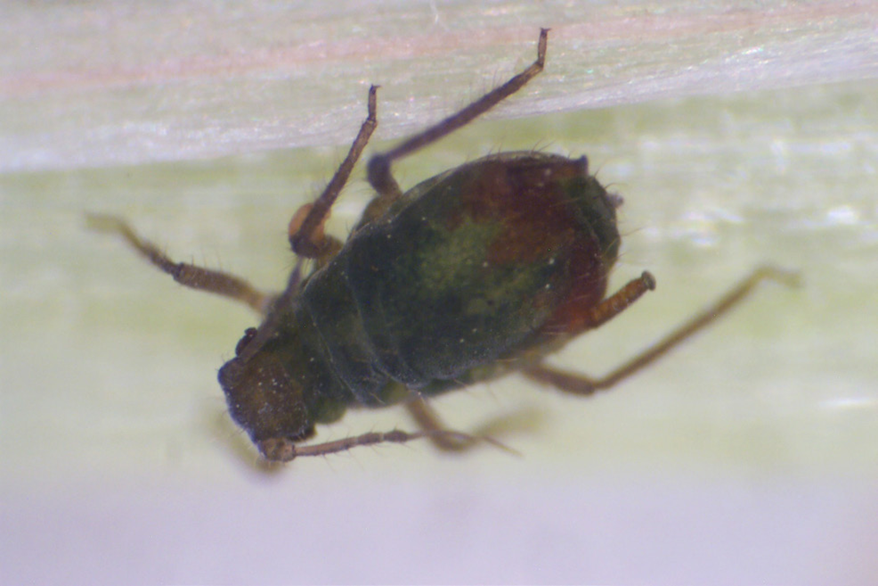
- Appearance: Very similar in color and possesses a reddish-orange patch.
- Key Differences: The RRA has a hairy appearance with long & prominent hairs on its antennae and body (Figure 2)
- Location: As the name suggests, RRA is typically found at or below the soil line on the roots or the very base of the crown. BCOA will stay on the green tissue above ground. RRA typically appear in the fall, soon after wheat emerges.
BCOA Biology
In Oklahoma and the southern Great Plains, BCOA populations consist entirely of females that give birth to live young (parthenogenesis). This allows for extremely rapid population growth when temperatures are mild. They can survive the winter as active nymphs and adults in the wheat canopy, though their development slows during extreme cold. As the wheat matures or populations become crowded, winged alates are produced to migrate to other fields.
BCOA Damage: Feeding and Disease
The impact of BCOA is twofold:
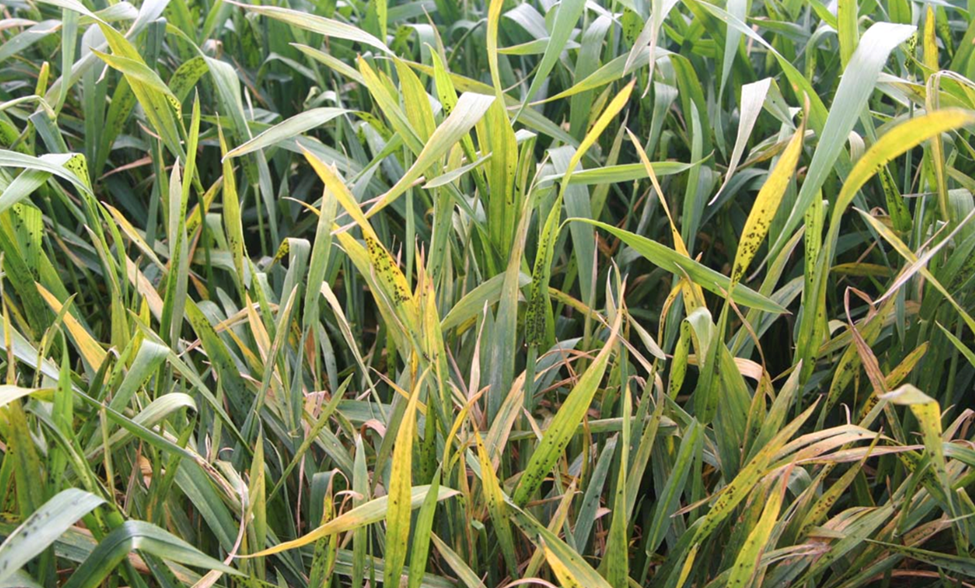
- Direct Feeding Damage: BCOA are sapsuckers. Large numbers can cause leaf yellowing and stunting (Figure 3). In grazing systems, BCOA feeding can interfere with protein assimilation in the plant, potentially reducing the nutritional quality of the forage for cattle.
- Viral Transmission: BCOA is a primary vector for Barley Yellow Dwarf Virus (BYDV).
- Symptoms: Infected wheat displays brilliant yellow or reddish-purple leaf tips. Plants infected in the fall are often severely stunted and have significantly reduced root systems, leading to high yield loss (Figure 3). Spring infections are usually less severe but still impact test weights.
Scouting Techniques
Because BCOA often hides in the lower canopy or in the “whorl” of the plant, thorough scouting is essential.
Method: Examine 25 randomly selected tillers across a zigzag transect of the field.
Focus: Look closely at the underside of leaves and inside the leaf sheaths.
Threshold: While wheat can tolerate a surprising number of BCOA, treatment is generally recommended if populations reach 20 to 50 aphids per tiller during the seedling to boot stages. If the wheat is under moisture stress or if the goal is to prevent BYDV spread in early spring, use the lower end of the threshold.
Management Recommendations
Natural Enemies: Before spraying, check for the “Three L’s”: Lady beetles, Lacewings, and Lysiphlebus (parasitic wasps). If you see aphid mummies, bloated, tan/bronze-colored aphid husks (Figure 4), the wasps are actively working. If natural enemy populations are high, they can often crash an aphid population without the need for chemicals. Based on recent observations, natural enemy numbers appear be on the low end this year.
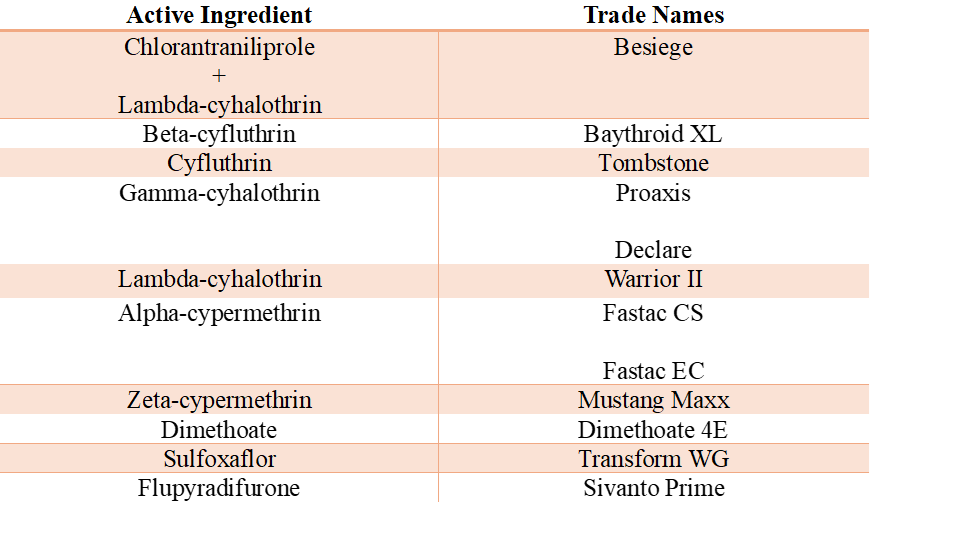
Chemical Control: Several insecticides are labeled for BCOA in wheat (Table 1). Organophosphates or pyrethroids are generally effective but be mindful of the flare risk: sometimes spraying for aphids can kill natural enemies and lead to a secondary surge of other pests like mites. We are having widespread reports of brown wheat mites across Oklahoma. BCOA can be spot sprayed with a ground-sprayer.
Before spraying any insecticides consider the return on investment:
Estimate yield loss: Calculate the average number of aphids per tiller from your scouting ( = # aphids/# tillers).
Estimate crop value: Crop Value = Yield Potential X Price per Bushel
Estimate control costs: Control Cost = Insecticide Cost + Application Cost
Estimate preventable loss: Crop Value X Yield Loss from Aphid (0.07)
Approximately 5-9% yield loss occurs when there are 20-40 BCOA per tiller, making average yield loss from BCOA to be 7% or 0.07.
If preventable loss is greater than control costs, then treat!
Cultural Control: For future seasons, delaying planting can reduce the window for fall BCOA migration and subsequent BYDV infection.
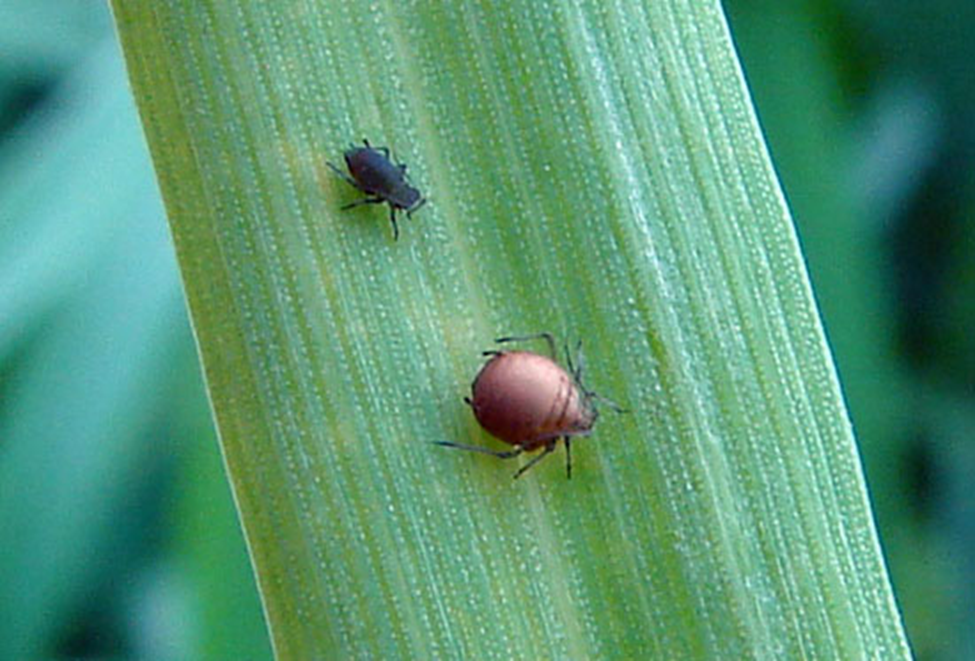
Table 1. Some foliar insecticides for bird cherry-oat aphid (BCOA) in wheat. The mention, listing, or use of specific insecticides is not an endorsement of that product, nor is it a criticism of similar products not mentioned.
Always follow pesticide label directions, application sites, and rates. Be sure to read and follow the label for preharvest intervals (PHI) and restricted-entry intervals (REI). Use a minimum of 10 GPA by ground and 3 GPA by air (if labelled for aerial application) to ensure adequate coverage.
For assistance with aphid identification or treatment decisions, see OSU Fact Sheet EPP-7099 Small Grain Aphids in Oklahoma and Their Management, or contact your local OSU Extension office.
 WORLD OF WHEAT