Amanda de Oliveira Silva, Small Grains Extension Specialist
First hollow stem (FHS) is the optimal time to remove cattle from wheat pasture. This occurs when there is 1.5 cm (5/8” or the diameter of dime) of stem below the developing grain head (full explanation). To give you a point of reference, the average FHS date over the past 20 years at Stillwater is March 6.
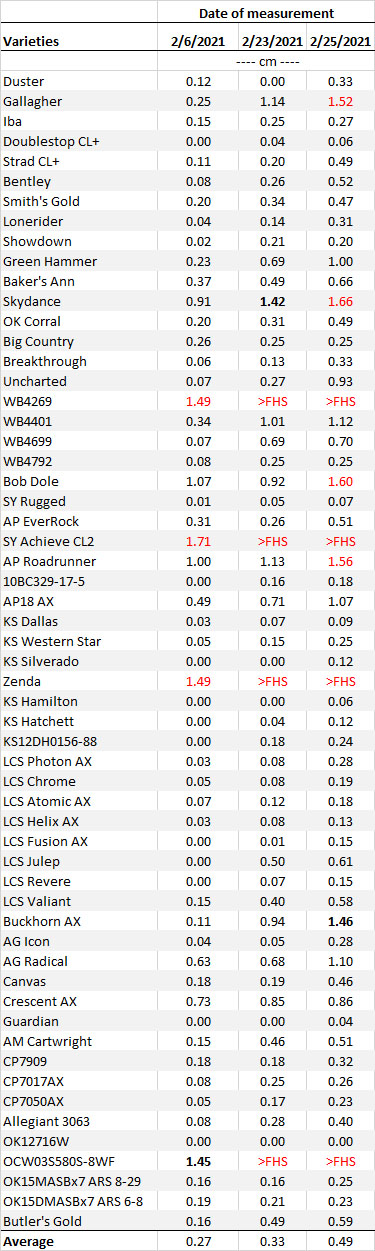
The latest FHS results from our forage trials in Chickasha (Table 1) and Stillwater (Table 2) are listed below. A few more wheat varieties in Stillwater have reached or passed the 1.5 cm threshold.
The Mesonet First Hollow Stem Advisor and the updates we provide give an indication of the FHS stem conditions in a particular area. However, because of the number of factors that can influence when FHS occurs, it is extremely important to check for FHS on a field-by-field basis.
Table 1. First hollow stem (FHS) results for each variety collected at Chickasha. Plots were planted on 09/29/2020. The threshold target for FHS is 1.5 cm (5/8″ or the diameter of a dime). The value of hollow stem for each variety represents the average of ten measurements from non-grazed plots. Varieties that have reached FHS are highlighted in red.

Table 2. First hollow stem (FHS) results for each variety collected at Stillwater. Plots were planted on 09/21/2020. The threshold target for FHS is 1.5 cm (5/8″ or the diameter of a dime). The value of hollow stem for each variety represents the average of ten measurements from non-grazed plots. Varieties that have reached FHS are highlighted in red.
Similar to previous years, we will monitor occurrence of FHS in our wheat plots at Stillwater and Chickasha and report the findings on this blog.
- Additional resources available:

