Amanda de Oliveira Silva, Small Grains Extension Specialist
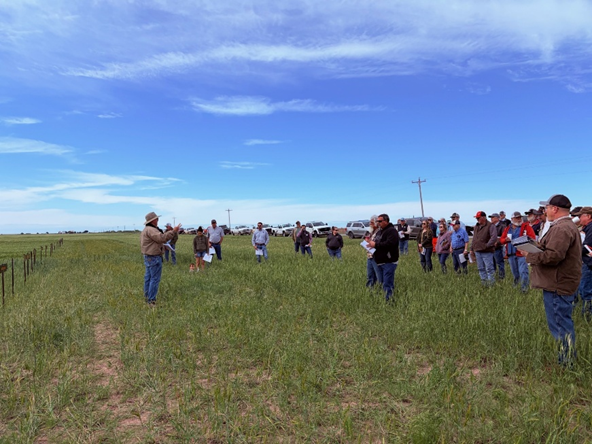
Last week, we kicked off our wheat plot tour season in Oklahoma, with our first stops in southwestern Oklahoma—Altus and Walters—and south-central Oklahoma in Chickasha. Plot tours are always a valuable opportunity to evaluate variety performance and visit with producers, and these first stops gave us an early look at the challenging conditions many wheat fields are facing across the state this season.
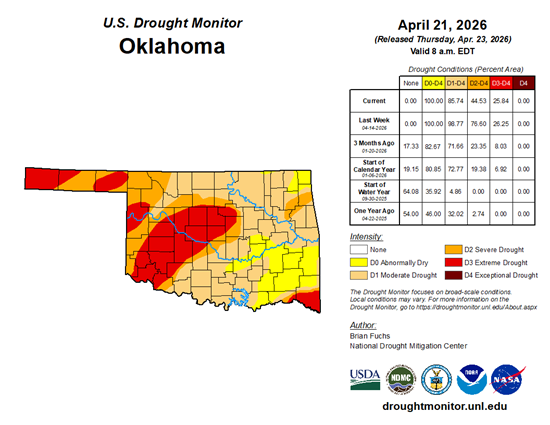
For anyone following the weather, the story is not surprising. Prolonged drought since last fall, combined with above-normal temperatures through winter and early spring, has taken a significant toll on the crop (Figure 2).
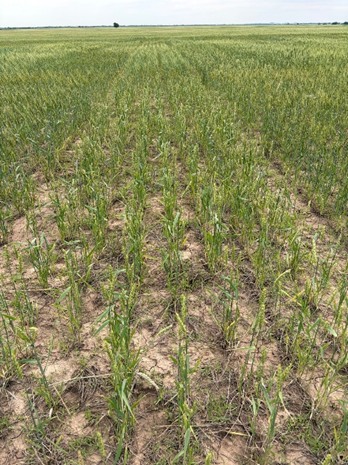
Across much of southwest Oklahoma, moisture has been extremely limited for months. Some fields never established properly, and in the driest areas, stands remain poor, thin, and uneven. In several cases, producers have already made the difficult decision to abandon fields or graze them out, as yield potential no longer justifies the cost of taking the crop to harvest, or in some cases, there simply is not enough crop there to harvest.
At our Walters dual-purpose and Altus stops, drought stress was impossible to miss (Figures 3 and 4). Short plants, reduced tillering, and accelerated development were common across fields. When wheat undergoes stem elongation and grain set under moisture stress and heat, the crop has less time and fewer resources to build and fill grain, directly reducing yield potential.
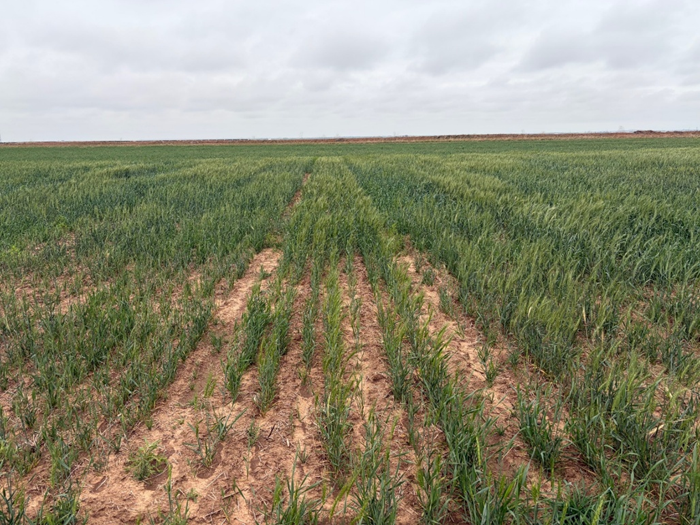
Conditions in Chickasha were somewhat better compared to the southwest, but variability remains high. Planting date, soil type, and how much rainfall individual fields have received are making a big difference in how the crop is holding on.
The recent rains were certainly welcome and should provide some benefit to fields that are still in fair to moderate condition, especially those now entering grain fill. However, for many fields we are approaching a point of diminishing returns. Rain at this stage can help preserve yield potential, but it cannot fully restore what was lost from poor establishment and prolonged stress earlier in the season.
On top of drought stress, we are also seeing some disease pressure. Viral diseases such as Wheat streak mosaic and Barley yellow dwarf remain present in some areas, and leaf rust has begun to develop where conditions have turned favorable. While disease pressure is not the main driver of yield loss right now, it can add another layer of stress to an already compromised crop (Figure 5).
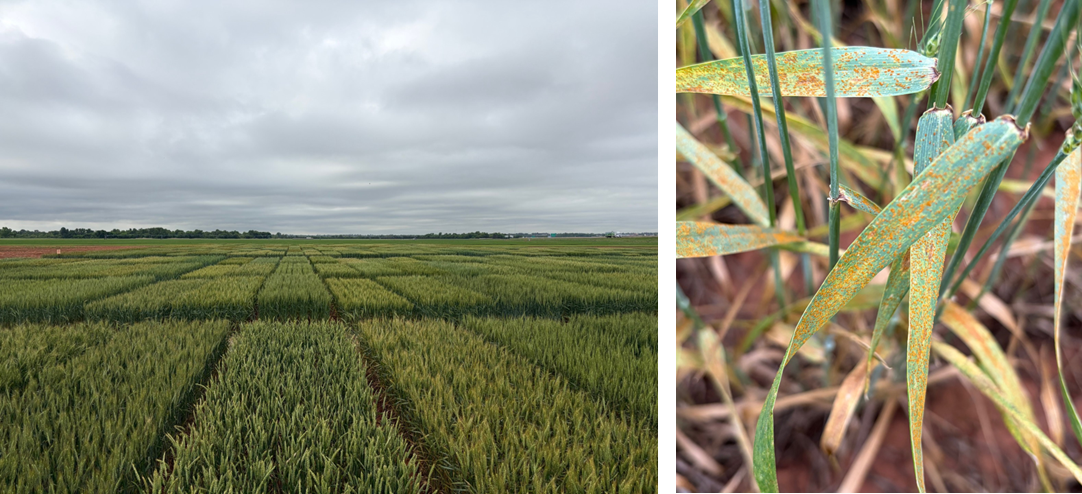
At this point, yield prospects will depend heavily on how long the crop can maintain green leaf area and continue grain fill over the next few weeks. But overall, statewide yield expectations are trending below average.
Even with the challenges this season, our plot tours remain a valuable opportunity to see how varieties are performing under real field conditions, review the latest research from our programs, and talk through the conditions you’re seeing in your area.
We encourage you to join us at one of our upcoming stops (see schedule here). Every season teaches us something, and this year is another strong reminder of how dependent Oklahoma wheat production is on timely rainfall.