I have been out in much of the state with wheat field days this week and wanted to share a few observations. Drought conditions are worsening in most wheat producing areas of the state and yield potential is declining fairly rapidly. An area roughly extending from Chickasha to Enid along highway 81 still has some potential, provided that that we receive rain soon. The same can be said for a few small pockets of wheat that received rain earlier this spring in Alfalfa, Grant, and Kay counties. With temperatures predicted to climb to the upper 90’s next week, however, the potential in these areas could decline rapidly. Most other areas of western Oklahoma have very limited or no yield potential remaining.
The effects of the April 15th freeze are still showing up in the Oklahoma wheat crop. We have several fields with lots of tillers but few heads. Most wheat south of Hwy 51 in Oklahoma is as fully headed as it is going to get. That is, the heads that were not killed by the freeze are fully emerged. Tillers that still look yellow or even green but are not headed out most likely have dead wheat heads inside. These can easily be identified by splitting the stem and examining the wheat head as shown in the pictures below.
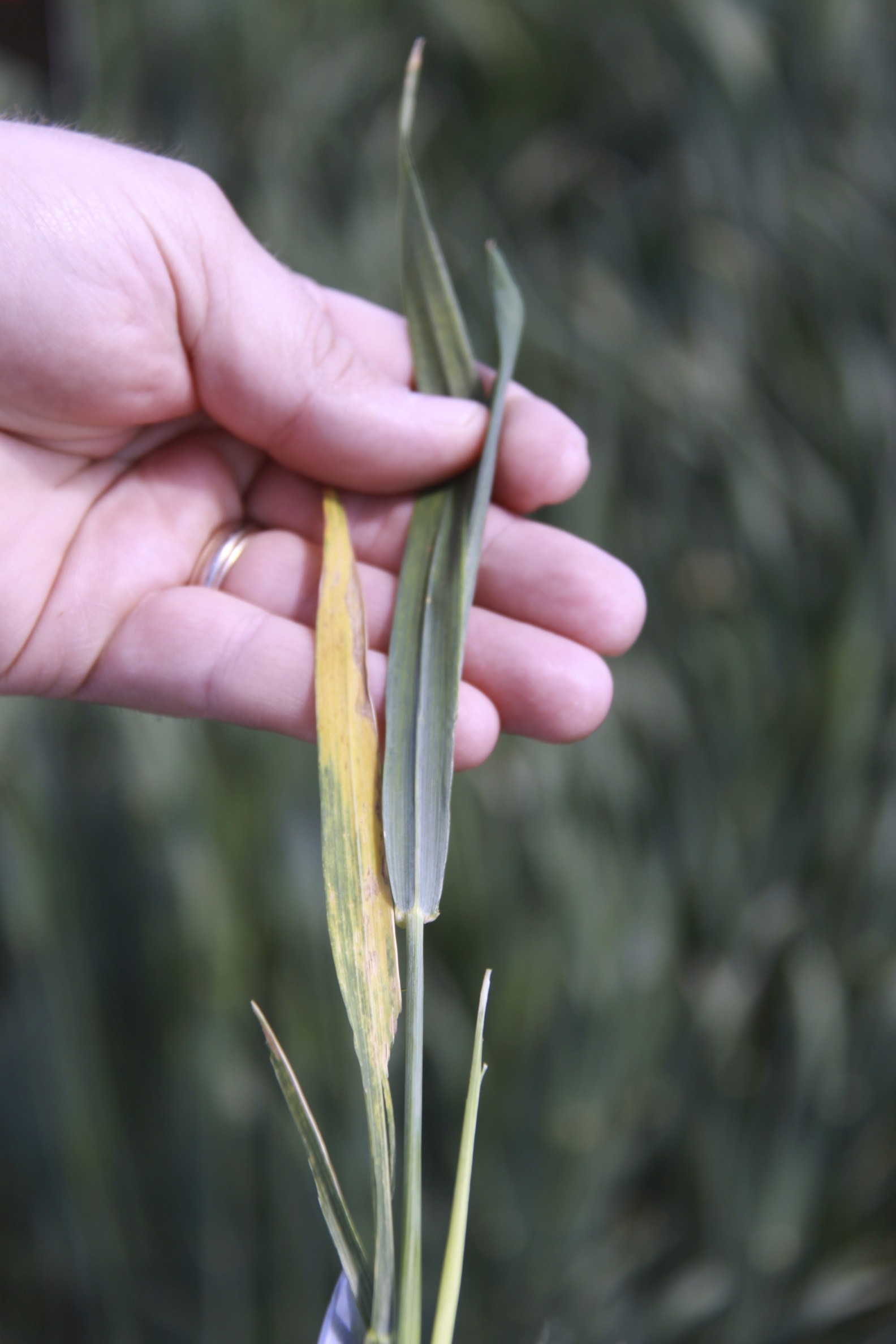
Freeze injured wheat can still have green flag leaves but dead wheat heads. This tiller will eventually turn brown.

Freeze injured wheat heads will be brown. As indicated in the post above, wheat tillers that are not headed out south of Hwy 51 in Oklahoma likely has this type of freeze injury.

