Oklahoma wheat planting – 2025

Amanda de Oliveira Silva, Small Grains Extension Specialist

Soil moisture conditions are currently favorable for wheat planting across much of Oklahoma. Many of you may be eager to get seed in the ground, but before moving ahead, it is important to consider a few key points.

Planting date

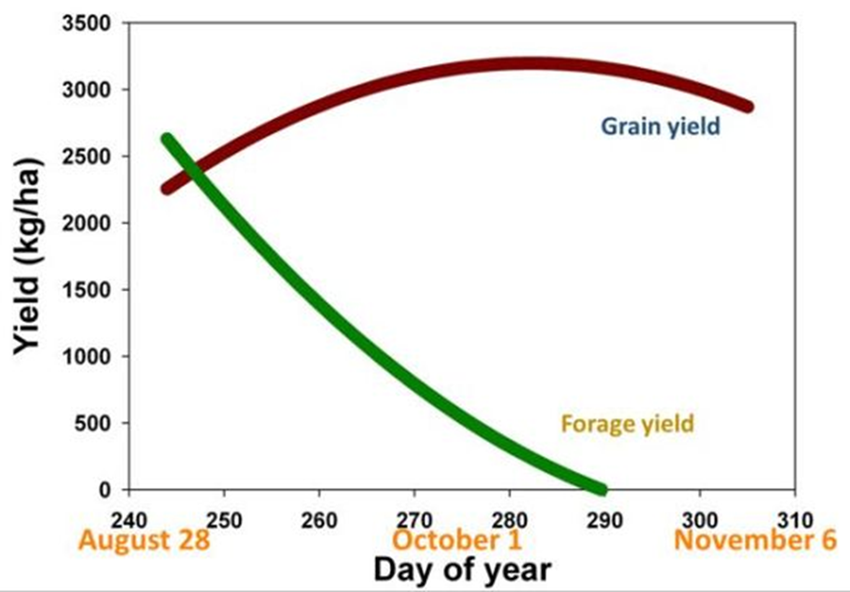
For dual-purpose wheat (grazing + grain), the optimal planting window in most of Oklahoma is mid-September (Figure 1). Planting during this period provides the best balance between fall forage production and maintaining grain yield potential.

  • Early planting may increase fall forage production but also raises the risk of pests and diseases. It’s usually only recommended for wheat intended for graze-out or dual-purpose.
  • Grain-only wheat should generally be planted about 3-4 weeks later (mid-October, Figure 1) in many parts of the state. Our recent work shows there is more flexibility than we thought, and planting a little later can still work well depending on the weather.
Figure 1. Forage and grain yield potential in relation to the day of the year. Every 1,000 kg/ha is equal to approximately 900 lb/acre or 15 bu/acre. Ideal planting dates for dual-purpose wheat in Oklahoma are mid-September (i.e., approximately day 260). Planting for grain-only should occur at least 3-4 weeks after dual-purpose planting (i.e., mid-October or approximately day 285).

Watch for Fall Armyworms

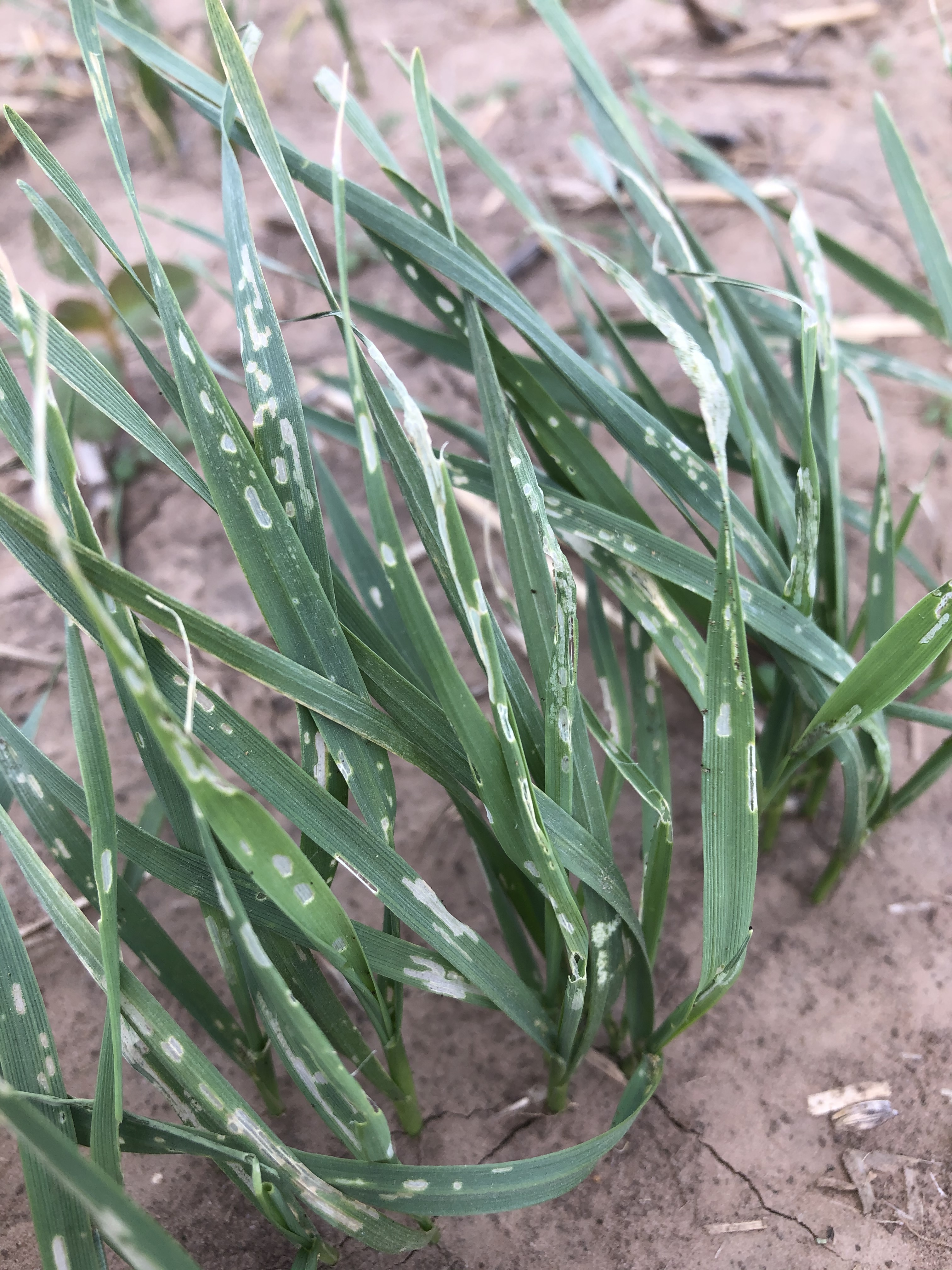
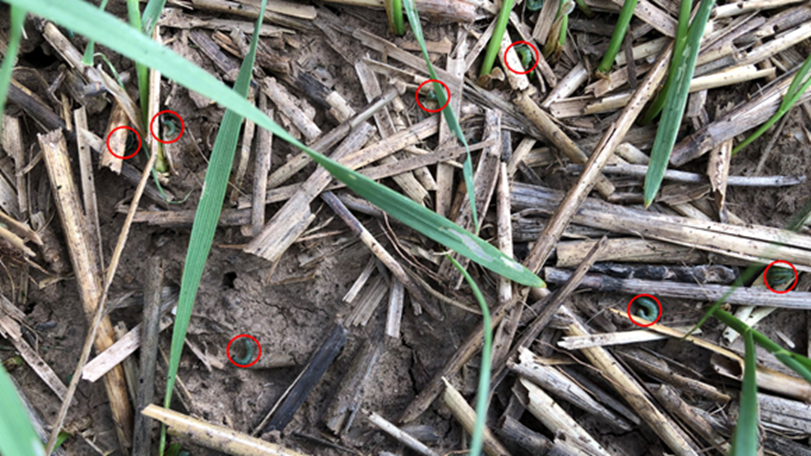
Planting too early increases the chance of fall armyworm infestations. These pests are small and easy to miss, but you might notice “window-pane” feeding on leaves (Figure 2). Check beneath crop residue as well, since they often hide there during the heat of the day (Figure 3).

Figure 2. Symptom of “window paned” leaves shows severe feeding from the fall armyworm. Photo taken on October 2, 2019, at Canadian County by Amanda Silva.
Figure 3. Fall armyworms may be found under crop residue during the day. Photo taken on October 2, 2019 at Canadian County by Amanda Silva.

Volunteer wheat and Virus Risk

Early planting also raises the risk of wheat streak mosaic and Triticum mosaic viruses, spread by the wheat curl mite. Because seed treatments do not control these viruses and few varieties have strong resistance (i.e., Breakthrough), cultural practices are critical:

  • Control volunteer wheat and other grassy hosts as much as possible.
  • Ensure volunteer wheat is completely dead for at least two weeks before planting. This breaks the “green bridge” that mites use to move into new seedlings.
  • Planting a little later can also help lower virus pressure.

We saw significant wheat streak mosaic issues last year, making these steps especially important in 2025.

Other Planting Considerations

Before planting:

  • Soil test to guide fertility needs and reduce input costs.
  • Use high-quality seed to promote good germination and stand establishment.
  • Consider fungicide and insecticide seed treatments to protect against soilborne diseases and early pest pressure such as root rots.

Need More Information?

Your county OSU Extension office is a great resource for information. You can also reach out directly to us:

Wheat update – Planting and fall armyworm

Amanda de Oliveira Silva, Small Grains Extension Specialist and Ashleigh Faris, Cropping Systems Extension Entomologist

Wheat planting in Oklahoma is off to a slow start due to extremely dry conditions, with only 32% of wheat planted as of October 7 (according to the USDA Crop Progress Report).

For most of Oklahoma, the optimal time to plant dual-purpose wheat is between September 10-20 (approximately day 260 in Figure 1). This period represents a balance between achieving good forage production and minimizing the risk of grain yield loss. Planting earlier can provide more fall forage potential but is usually only recommended if wheat is intended for grazing or “grazeout.” If you are planting wheat just for grain, you could wait at least 2-3 weeks after the dual-purpose planting window, which puts the best time for planting around mid-October (approximately day 285 in Figure 1) in many parts of the state. We have been evaluating how delayed wheat planting affects wheat yields, and it appears there might be more flexibility in the planting window than previously thought. I will be sharing more details about this research in an upcoming post!

Figure 1. Forage and grain yield potential in relation to the day of the year. Every 1,000 kg/ha is equal to approximately 900 lb/acre or 15 bu/acre. Ideal planting dates for dual-purpose wheat in Oklahoma are mid-September (i.e., approximately day 260). Planting for grain-only should occur at least 2-3 weeks after dual-purpose planting (i.e., mid-October or approximately day 285).

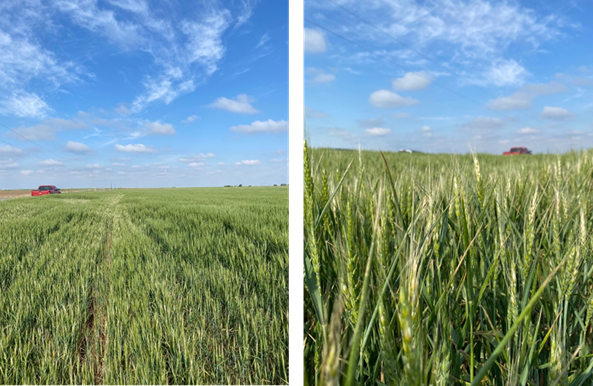
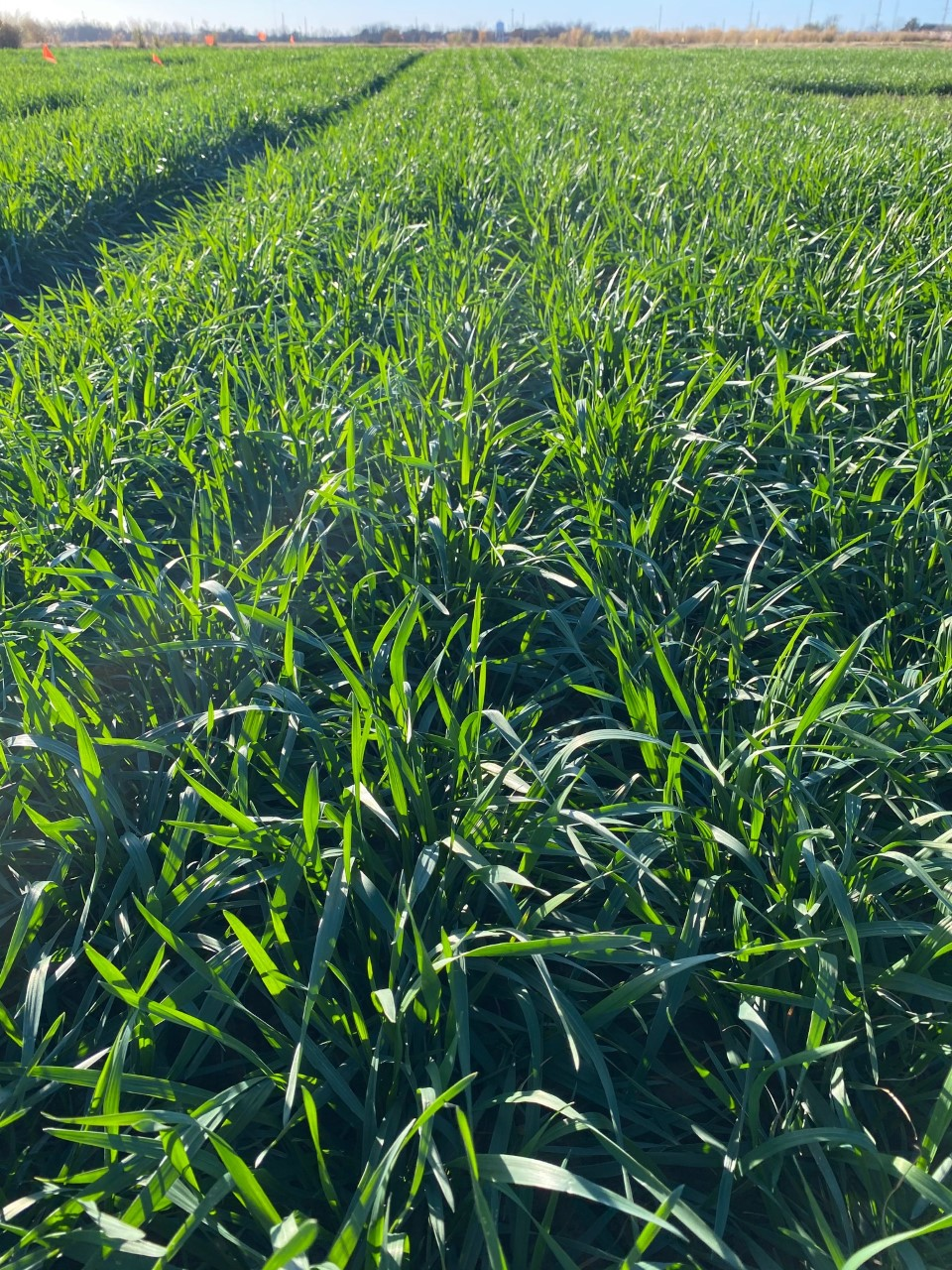
Rainfall on September 22 helped some fields in north-central, northwest, and Panhandle areas, and wheat that was planted before then has now emerged and looks good, though more rain would certainly help (Figure 2). In the fields we planted in Panhandle and northwest, we found moisture at about 1.5 inches deep, but the drought is holding us back in other parts of the state.

Figure 2. Wheat field planted before the September 22 rain event. Photo taken on October 8, 2024, near Goltry, OK by Josh Bushong.

For fields where wheat was planted before the September rain, we are receiving reports of fall armyworms. They have been especially active in north-central Oklahoma over the past week. We recommend checking your fields daily after wheat emerges. The worms are small and hard to spot, but you may notice symptoms like “window pane” feeding on the leaves (Figure 3). Also, check under crop residue where they might be hiding from the heat (Figure 4).

Figure 3. Symptom of “window paned” leaves shows severe feeding from the fall armyworm. Photo taken on October 2, 2019, at Canadian County by Amanda Silva.
Figure 4. Fall armyworms may be found under crop residue during the day. Photo taken on October 2, 2019 at Canadian County by Amanda Silva.

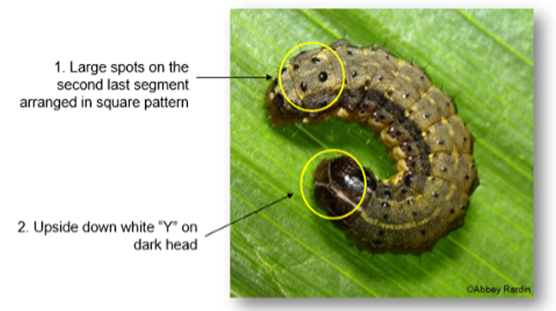
Below is some information regarding monitoring and management of fall armyworms. Typically, fall armyworm population spikes are due to increases in precipitation in summer months. Fall armyworms are identifiable due to the light colored, inverted “Y” on their head (Figure 5). They are generally light tan to light green caterpillars that have a brownish-black head (may appear orangish). For more on the biology of the insect and its identification, check out the EPP-23-21 e-Pest Alert from this past summer.

Figure 5. Image of fall armyworm with two common features used to differentiate it from other caterpillar pests. Image: Corteva Agriscience.

Fall armyworm larvae will begin to consume vegetation in the early instars (1-3) but often this damage goes unnoticed because of the small amount consumed. As fall armyworms enter the later instars (4-6) the rate of consumption increases, and damage is more noticeable. The reason for rapid crop loss at this stage is caterpillars do most of their feeding (80-90%) in the final two instars. Fall armyworms cause damage by defoliating leaves and cutting seedlings at the surface level. Small larvae, unable to completely chew through the leaf, will often feed on vegetation by scraping it, lending to a windowpane appearance (as mentioned above, Figure 3).

Recommendations

Begin scouting for fall armyworms as soon as wheat emerges, particularly in the morning hours at the edges of wheat fields that share borders with pasture or road ditches. Look closely for signs of windowpaned leaves and the fall armyworms themselves. Treat if three to four larvae are found per foot of row AND feeding damage is evident. The early instars are more susceptible to insecticides so early detection is important for providing effective chemical control. While pyrethroid-based insecticides are low-cost, they are often ineffective when populations of fall armyworms are high. Instead, consider mixing a pyrethroid with another product that has chlorantraniliprole or diflubenzuron as an active ingredient which have a longer residual. Chlorantraniliprole products offer the advantage of being rainfast as well as protection against bigger fall armyworms. Products with diflubenzuron have a long residual but do not work well on larger worms. The good news is first frost will help knockback fall armyworm populations, until then producers are encouraged to have fall armyworm scouting as part of their daily routine and to be on the ready to spray when threshold is met.

We will not get relief from fall armyworms until we get a killing frost, so keep vigilant!

Reach out to us and contact your county Extension office for more information.

Amanda Silva – silvaa@okstate.edu

Ashleigh Faris – ashleigh.faris@okstate.edu

Planting wheat in hot and dry soils

Amanda de Oliveira Silva, Small Grains Extension Specialist

With severe dry conditions and high temperatures in our state, it is good to consider the possible effects of high temperature and drought on wheat germination and early growth. As of September 19, soil temperature was in the 80’s F across the state and reached 97 F in some areas (Figure 1). Wheat can germinate in soil temperatures from 40 F to 99 F, but temperatures from 54 F to 77 F are optimal.

Figure 1. Soil temperature across Oklahoma. Figure courtesy Oklahoma Mesonet.

Wheat germination and emergence in HOT soils

Is the variety I am planting high-temperature germination sensitive?

High-temperature germination sensitivity is a more elaborate way of saying that some wheat varieties do not germinate well in hot soil conditions. This is not to say that the seed will not germinate, but it may not germinate until the soil temperature has lowered. Keep in mind too that this sensitivity can vary from year to year. For example, a sensitive variety like Ruby Lee may germinate fine in 90°F soils one year and only produce a 10% stand in the same soil conditions the next. When sowing early, it is best to plant varieties first that do not have high-temperature sensitivity (e.g., Duster, Gallagher). Soil temperatures typically begin to cool by about September 20 due to lower air temperatures and/or rainfall events. However, our summer temperatures seem to be sticking around for longer this year. Waiting until at least mid-September to plant sensitive varieties can help reduce the risk of this issue. A high temperature germination sensitivity rating for wheat varieties can be found in the OSU Fact Sheet (available by clicking here). An updated version of this factsheet will be published soon.

Coleoptile Length

Hot soil conditions at sowing also reduce coleoptile length. The coleoptile is the rigid, sheath-like structure that protects the first true leaf and aids it in navigating and reaching the soil surface. Once the coleoptile breaks the soil surface, the coleoptile will stop growing, and the first true leaf will emerge. If the coleoptile fails to reach the soil surface, the first true leaf will emerge below ground and take on an accordion-like appearance (Figure 2A-B). If this happens, the plant will die.

Figure 2A and 2B. Example of two different wheat seedlings in which the coleoptile failed to break the soil surface. The first true leaf emerged below the soil surface and resulted in this accordion-like appearance.

The coleoptile length for most wheat varieties today can allow for the seed to be safely planted up to 1.5 inches deep. Under hot soil conditions though, the coleoptile length tends to be decreased. Therefore, “dusting in” early-sown wheat at ¾ to 1 inch depth and waiting on a rain event may result in more uniform emergence than trying to plant into soil moisture at a deeper depth, if soil moisture is not available in the top 1 to 1.5 inches of the soil profile. A rating for coleoptile length for wheat varieties can be found in the OSU Fact Sheet PSS-2142 Wheat Variety Comparison. We are also working on updating this.

Wheat germination and emergence in DRY soils

The most important physiological requirement for wheat to germinate and sustain the developing seedling is soil water. Therefore, planting decisions should be based on a combination of available soil moisture and expected rainfall. In addition, other factors such as adequate seeding depth, sowing date, soil fertility, seed treatment, seed quality, etc., should be considered to guarantee good crop establishment. For more information, check the materials on our website.

Wheat seed needs a minimum water content of 35 to 45% of its dry weight to initiate germination, and germination will be more complete as moisture levels increase. Dry soils can still maintain a relative humidity of 99%, which can provide enough moisture for seeds to germinate. It might just take longer than with free-moisture availability. My concern with the current situation in Oklahoma is the severe drought we are in and the lack of rain in the forecast. In some cases, we could have enough moisture to start the germination process in some regions of the state, but seedling emergence and growth could be compromised if we do not see any rain soon.

What happens if the soil completely dries out before wheat emergence?

There are three phases during the germination process: water absorption, activation when the seed coat is ruptured, and visible germination when the radicle emerges, followed by the seminal roots and coleoptile. These processes will start and stop depending on soil moisture availability. Thus, if the soil dries out before the roots and shoots are visible, the seed remains viable, and germination will be paused and continue once water is available. However, if the soil dries out after those structures are emerged (approximately 4-5 days after germination has begun), the seedling may not tolerate the lack of water, resulting in incomplete or loss of stand.

What should I do then? Choose your battle!

The optimal time for planting wheat in central Oklahoma is around mid-September for a dual-purpose system or around mid-October for a grain-only system (Figure 3). With the current forecast, we are planning to wait another 7-10 days to decide on our dual-purpose and forage trials. There are different ways we can go about it, but we must remember that there is always risk involved when planting wheat in dry and hot soil conditions.

Figure 3. Forage and grain yield potential in relation to the day of the year. Every 1,000 kg/ha is equal to approximately 900 lb/acre or 15 bu/acre. Ideal planting dates for dual-purpose wheat in Oklahoma are mid-September (i.e., approximately day 260). Planting for grain-only should occur at least 2-3 weeks after dual-purpose planting (i.e., mid-October or approximately day 285).

If you decide to dust in your wheat and wait for a rainfall event to drive germination, watch your seeding depth. The optimum seeding depth to plant wheat is about 1-1.5” deep. We typically do not have as many issues with winterkill in Oklahoma as in more northern states, so I am comfortable with dusting in at about 0.75 – 1” deep. Planting at 0.5” or less is too shallow in most circumstances. Also, there is always a chance for a pounding rainfall event and subsequent soil crusting, which makes it difficult for the coleoptile to push through the soil surface and may result in poor emergence. Fields with stubble cover may be less affected and reduce the risk of soil crusting. If we receive light rain in the following weeks, that could cause wheat to emerge, but it may not be enough for wheat to continue growing. Most of the fields do not have good subsoil moisture, either.

If subsoil moisture is available and you decide to plant deeper to reach moisture, be careful with the coleoptile length of your variety, and make sure it has a long-enough coleoptile that will allow emergence if conditions are favorable. Consider increasing seeding rate to compensate for reduced emergence, which is prone to occur in this situation.

Should we wait for rain to plant then? This is a farm-by-farm call and it depends on which source of risk you find most comfortable. Personally, I would rather plant my wheat in the optimal planting window and adequate seeding depth than waiting for a rain that may take too long to happen or missing my optimal planting window. If the latter is the case, consider bumping seeding rate to try to compensate for the reduced time for tillering (especially in a grain-only system). Planting wheat at optimal time allows for more time for root growth in seedlings, helping the crop to establish more quickly under dry conditions and possibly help the plant to scavenge for water that is available deeper in the soil profile.

Are there any specific agronomic traits that could help wheat seedling growth under water stress?

Traits that will help with seedling growth in dry conditions are coleoptile length potential, which allows to plant a little deeper in moisture and good emergence (if deep planting is the practice of your choice). There are indications that sowing wheat varieties with larger seed may help to reduce the negative effects of drought during early growth (Mian and Nafziger, 1994). In general, the greater reserves of larger seed result in faster germination and crop establishment by increasing root growth and tiller production. Keep in mind, however, there are varieties with small seed size that germinate more rapidly than larger seeded varieties, owing to their differential response to available moisture.

Freeze damage update

Amanda de Oliveira Silva, Small Grains Extension Specialist

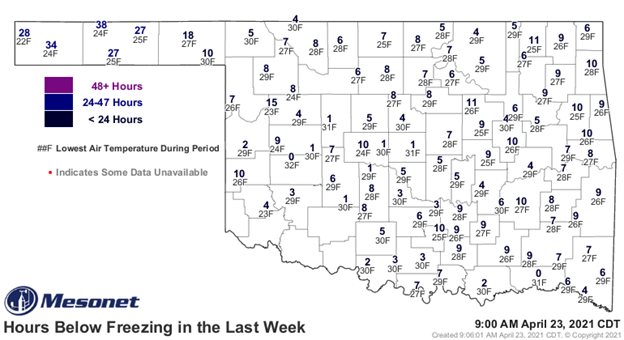
It has been almost one month since the freeze event on April 21, and we are now obtaining a better picture of potential freeze damage on wheat fields across Oklahoma. As I have indicated, the extent of the freeze damage will depend on several factors, including the growth stage of the plants, how low the temperature will get, and how long it stays at those cold temperatures. Wheat growth stage ranged from flag leaf emergence to heads starting to or fully emerged when the freeze occurred, and number of hours and temperature varied across the state (Figure 1).

Figure 1. Hour below freezing two days after the freeze event.

Traveling around the state for plot tours these past weeks, I have seen and heard about damage ranging from minimal to quite severe. Some fields seem to be fine with only scattered damaged heads and the grain appears to be filling as expected. Other fields however, show much more significant damage with discolored and sterile heads.

At the plot tour at Chickasha on April 30, there was a mix of freeze and hail damage with several abnormally growing heads (due to head trapping). Anthers seemed to be fine at that point (Figure 2).

Figure 2. Abnormally growing wheat heads at the Chickasha variety trial on April 30.

On May 7, I checked some wheat fields around Sentinel with Gary Strickland (Jackson County Extension Educator and SW Regional Agronomist) and we observed almost no freeze damage with a few heads in the field showing a pale color and partial sterility (Figure 3). I have observed this symptom commonly in fields I have visited, and many producers have described this to me as well.  Although common, it typically has been found at a low incidence.

Figure 3. Freeze damaged heads with partial sterility and pale color near Sentinel, OK on May 7.

We observed a few spots with freeze damage while at Alva on May 12, especially in low spots of the field and on the tops of terraces. Again, relatively few spots in the field showed damage. The wheat was looking good at Alva, but really needing a rain (Figure 4).

Figure 4. Freeze damage on wheat in low spots of the field at Alva, May 12.

The most severe freeze damage that I have seen so far was yesterday near Morris in eastern OK. The heads were green but there was no grain present (i.e. sterile). Damaged heads had glumes with a chocolate discoloration, which is similar to the discoloration caused by the bacterial disease called black chaff. In some cases, Dr. Hunger and I felt these discolored heads were the result of this bacterial disease but that the majority of the heads showing these symptoms were the result of freeze damage (Figure 5).

Figure 5. Freeze damaged heads without grains inside and showing a chocolate color on the outside (top photos). Heads showing no freeze damage and black chaff bacterial disease (bottom photos).

At the plot tour at El Reno today, we also observed a few varieties with pale colored and “empty” heads due to the freeze (Figure 6). We observed more freeze damage on wheat that was planted earlier and grazed as compared to the grain-only (ungrazed) wheat in that same field. Another noteworthy item is related to my earlier observation that the February freeze hurt some of the varieties in the dual-purpose plots by severely reducing tillering that would cause a loss of stand. That observation in those varieties was confirmed as the stand loss was quite evident today.

Figure 6. Wheat at El Reno. Same variety under grain-only (left) and dual-purpose (right) systems.

In conclusion, the freeze damage I am seeing is variable within and across fields, but overall I would say is minimal in most of the state. However, continue to keep scouting as it will now be easier to identify freeze damage.

Please let me know what you are seeing out there! My email is silvaa@okstate.edu.

Also, contact your County Extension office for more information.

Assessing potential freeze damage on wheat

Amanda de Oliveira Silva, Small Grains Extension Specialist

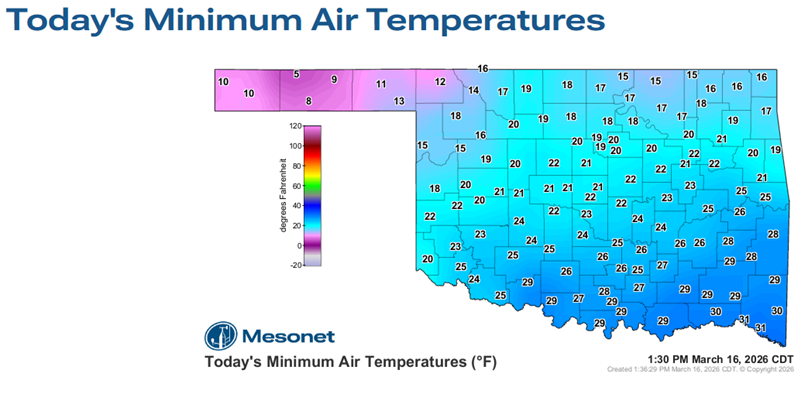
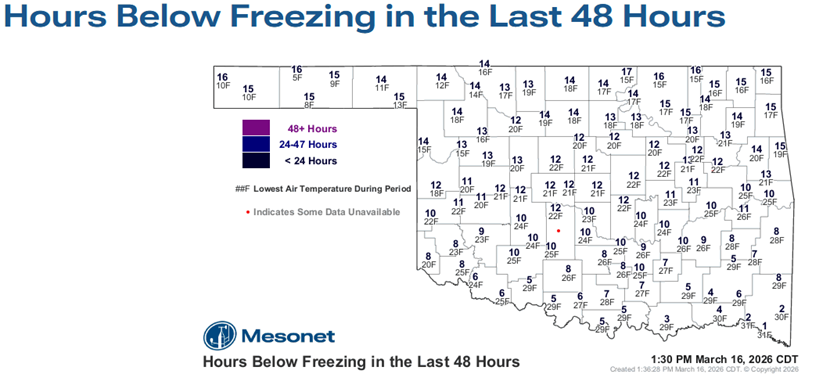
Temperatures dropped below freezing in the past hours in northwestern Oklahoma and Panhandle (Figures 1 and 2), and freezing temperatures are expected across most of the state tomorrow morning (April 21) (Figure 3). There is a potential for freeze injury to Oklahoma wheat. The extent of that will depend on several factors, including the growth stage of the plants, how low the temperature will get, and how long it stays at those cold temperatures.

Figure 1. Minimum air temperature (in Fahrenheit) over the past 24 hours at each Mesonet station. Figure courtesy Oklahoma Mesonet.
Figure 2. Number of hours spent at or below freezing (32°F) over the past 48 hours at Mesonet station. Figure courtesy Oklahoma Mesonet.
Figure 3. Freezing temperatures are predicted for most of Oklahoma on Wednesday morning, April 21, 2021. Figure courtesy Oklahoma Mesonet, Weather Forecast Office.

What are the temperatures that can damage the wheat plants?

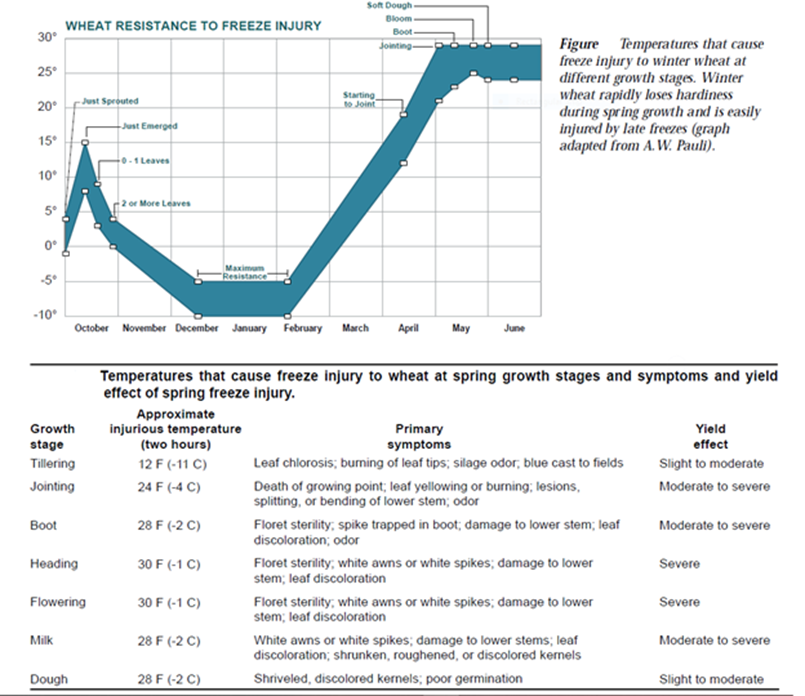
This will depend on the growth stage of the plants. Anecdotal evidence suggests varietal differences in resistance to spring freeze injury, but this is likely due to differences in plant growth stages when the freeze event occurred. Earlier maturing varieties are more likely to be injured from these recent freeze events than later maturing varieties because they are likely more advanced. The susceptibility of wheat plants to freeze injury steadily increases as we progress through the spring from jointing to heading and flowering. Figure 4 below is a general guide to the minimum temperature threshold and its impact on yield. Keep in mind these temperature thresholds are not exact but provide a decent rule of thumb. Temperatures closer to the soil surface might be higher than those reported by weather stations one meter above the soil surface, especially if moisture is present. It is difficult to have exact numbers because each freeze event is unique. While a field at the jointing stage could spend two hours at 24 F, it is possible that the same amount of injury could occur at a 28 F temperature that was sustained for a more extended period.

Figure 4. Temperatures that can cause injury to winter wheat at different growth stages. Source: Kansas State University publication C646: Spring Freeze Injury to Kansas Wheat.

How long should I wait to assess the injury?

Another important thing to keep in mind is that we need to be patient before assessing freeze injury. The extent of a significant freeze event may not be apparent 1 or 2 days after. If warm temperatures return quickly, you should wait about 5-7 days before determining the injury. Suppose temperatures remain cool after the freeze event. In that case, it may take 10-14 days before the extent of the injury can be fully assessed.

What are some freeze injury symptoms to look for?

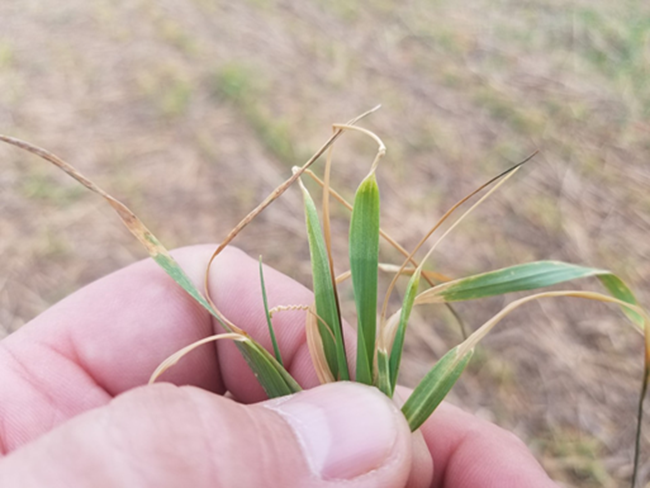
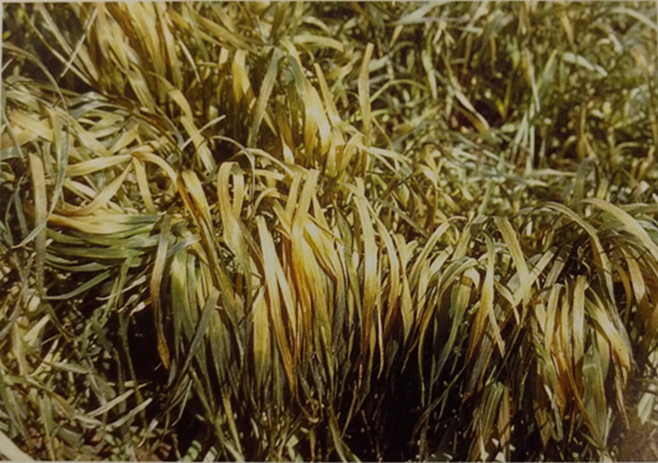
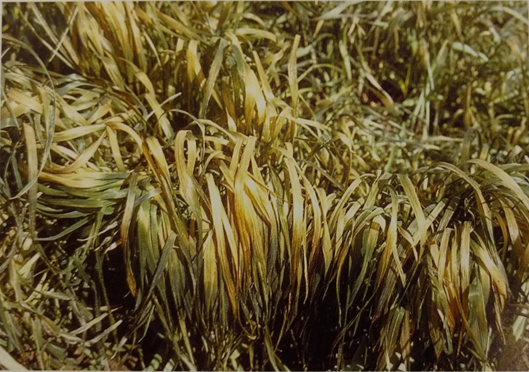
A typical freeze injury symptom is leaf tips turning yellow and necrotic (Figure 5). This is very often just cosmetic and will not hurt yield in the end. More severe damage can result in the entire leaf turning yellow to white, and the plants become flaccid (Figure 6). You may even notice a “silage” smell after several days.

Figure 5. Leaf tips which have turned necrotic due to freezing temperatures. Photo taken in March 2017 courtesy of Josh Bushong, OSU Northwest Area Extension Agronomist.
Figure 6. More severe freeze damage causing the leaves to turn yellow-white with plants losing their overall turgidity. Source: Kansas State University publication C646: Spring Freeze Injury to Kansas Wheat.

The most important plant part to check is the developing head (i.e., growing point)

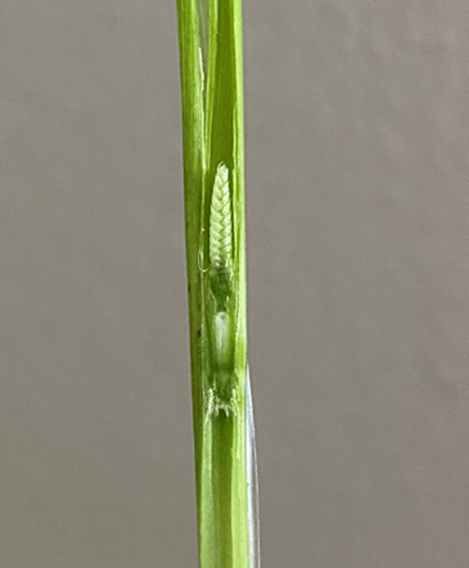
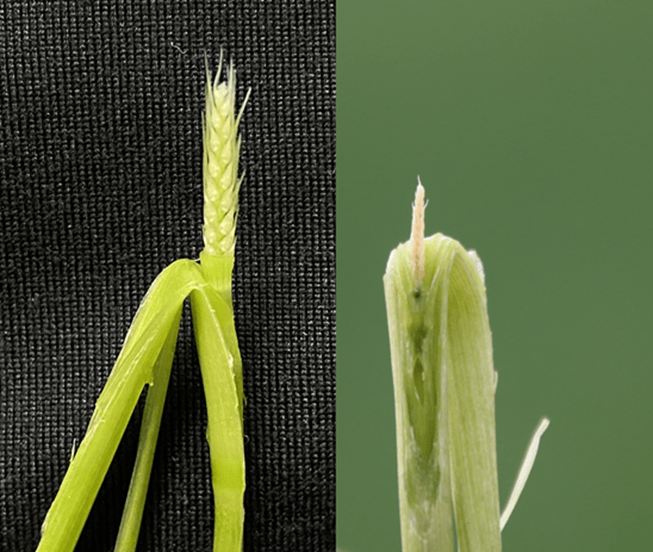
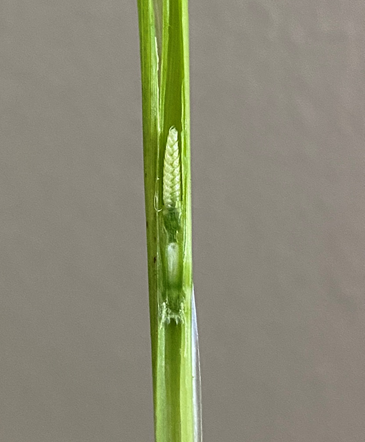
This will be important for areas of the state with fields with plants at flag leaf emergence stage. Sometimes we can see what look like healthy plants overall, but the developing head has been damaged or killed. To get a look at the developing head, you can slice the stem open lengthways. A healthy growing point will have a crisp, whitish-green appearance and be turgid (Figure 7). Often, you can lightly flick the head, and if it bounces back and does not break, it is still healthy. If it is mushy, limp, and breaks or parts of it break off when you lightly flick it, it has been compromised. It may also have a brown color (Figure 8, right). Another indication that the growing point has been compromised is that the next emerging leaf is necrotic, and the lower stems are discolored, with lesions and enlarged nodes.

Figure 7. Close up of a healthy wheat head (growing point) above the second node with whitish-green color and turgid.
Figure 8. Plants that appear healthy could have damaged heads. The photo on the left shows a healthy head, and the photo on the right shows a freeze-damaged head.

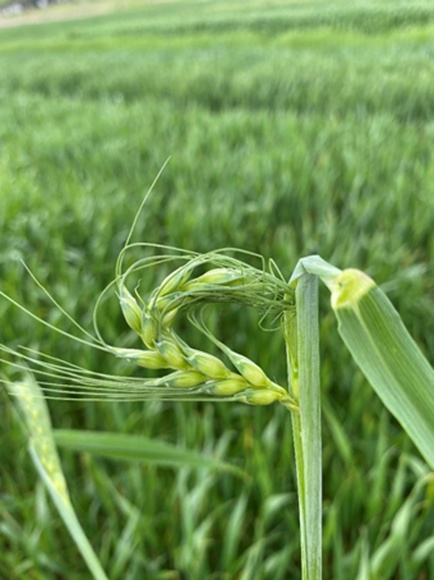
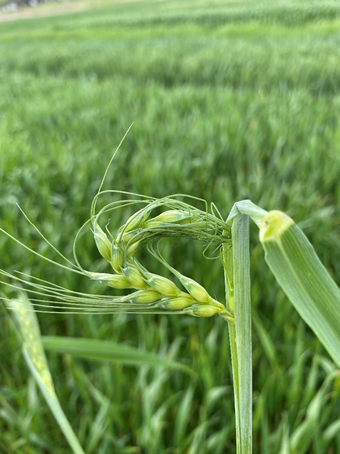
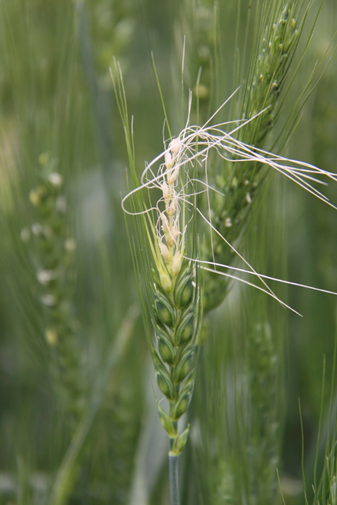
Freezing at the boot stage may cause the head to be trapped by the sheaths of the flag leaf resulting in issues with head emergence (Figure 9). The whitish tips of the awns indicate that it was exposed to freezing temperatures and that the flower parts could have been compromised. Freeze during the flowering stage may result in flower sterility via the death of the anthers (male organ) and consequently poor kernel set and grain yield losses (Figure 10).

Also, the percent of damaged heads may not translate into percent yield loss. For example, there is still an opportunity for wheat to produce additional tillers and/or retain secondary tillers at the jointing stage. Whether or not these tillers can compensate for larger tillers that were lost due to freeze will depend on the subsequent weather. If conditions are favorable, there is a chance for late-emerging tillers to have a shot at producing grain. If the wheat is more advanced (which is the case for most Oklahoma wheat), it will be more challenging to make this type of recovery.

Figure 9. Freeze at the boot stage may cause the head to be trapped in the boot and not being able to emerge properly.
Figure 10. Freeze during the flowering stage may result in sterility via death of the anthers (male organ) and consequently poor kernel set and grain yield losses.

A few points to consider:

Every freeze event is unique and freeze injury needs to be checked on a field by field basis – the temperatures and time durations we use regarding freeze injury are rules of thumb and are not exact. I have seen instances where conventional wisdom would indicate complete crop loss, and we skate through with minimal damage.

The amount of injury observed will depend on – the growth stage of the plants, how low the temperature got, and how long it stayed at those cold temperatures. Other factors such as elevation, residue cover, and moisture can influence the observed temperature within the canopy as well. Because of the number of influential factors, it is important to check each field. It is possible to have variability in injury symptoms among fields and even within fields.

It will take a few days to see how bad things are – Symptoms may start to appear mid-next week and will likely be identifiable by the end of the following week. Healthy wheat heads will remain turgid with a green color. Damaged wheat heads will be bleached, yellow, or brown and will easily break when pushed against.

Additional Resources

Contact your local Extension office.
C646: Spring Freeze Injury to Kansas Wheat.

Uneven wheat emergence and stand establishment – is my wheat going to make it?

Amanda de Oliveira Silva, Small Grains Extension Specialist

I have been watching some wheat fields consistently after that ice storm came in late October. I am currently seeing anything from good looking wheat fields to areas with incomplete, thin, and uneven stands. We might not see complete stands for a while as the wheat emergence seems to be very uneven, and the wheat is still slowly coming up (Figure 1).

Figure 1. Uneven wheat emergence in a field planted on October 16. Picture was taken on November 9, 2020.

The thin and uneven stand establishment of the current wheat crop is likely due to the severe drought from the end of September to most of October. Then, most of Oklahoma was hit by the ice storm during the last week of October, with some areas receiving up to 5 inches of rain. Although that rain came in a much-needed time, it could have created a crust in the soil preventing the coleoptile from breaking through the soil surface.

If the wheat fails to emerge as expected in your field, dig up the soil and look for an “accordion” like plant. If you see that wheat has emerged its first true leaf under the soil surface, and it has been sitting there for a week or more, it will probably not going make it (Figure 2).

Figure 2. Wheat that has emerged its first true leaf under the soil surface will lose viability after one week or so. Field planted on October 21. Picture taken on November 9, 2020.

However, I am seeing crinkled coleoptiles in fields around Stillwater that are coming up slowly and will be fine. The crinkles probably occurred when the heavy rain occurred during the ice storm, but it was not enough to prevent the coleoptile from continuing to grow and pushing through the soil surface for the most part (Figure 3).

Figure 3. Part of the coleoptile got crinkled due to heavy rain and light soil crusting during the emergence period. Still, most of the plants seem to continue growing and breaking through the soil surface. Field planted on October 21. Picture was taken on November 9, 2020.

Overall, our variety trials that were planted sometime in October are coming up nicely, but we might not have a complete stand for a little while in some locations. Robert Calhoun, the Senior Agriculturalist of OSU Small Grains Program.

Some fields that were planted in early-mid October is also just now starting to emerge near Kay County. Shannon Mallory, Kay County Extension Educator.

About 95% of the wheat in our variety trial at Altus has emerged and shows adequate stands (planted on September 29). Gary Strickland, the Jackson County Extension Agriculture Educator and Southwest Research and Extension Center Regional Agronomist.

Josh Bushong, the OSU Area Extension Agronomy Specialist, reported in his Ag Insights November report that most of the fields in the North Central region are showing thin and uneven stands. He also mentioned this would likely have a small effect for grain only-producers.

As a summary, most of the fields that I am seeing or hearing about that were planted in October are still coming up. Wheat growth is a function of temperature. The cooler temperatures and lower cumulative growing degree days in the coming months will slow down growth until March or so. Plants may compensate to a certain extent for that reduced stand, and wheat producers aiming for grain-only production should not be concerned yet.

The plant on the right is likely not going to make it as the first leaf seemed to be stuck in the leaf sheath and would not to be able to emerge properly.
Incomplete wheat stand for a field near Stillwater planted on October 21. This field had enough moisture for wheat to begin germination as soon as it was planted, but emergence was hindered by the excessive rain from the ice storm that took place during the week of October 26, 2020.
Wheat is looking good at the forage trial in Stillwater. Although, it would benefit for an additional drop of water. Planted on September 21, 2020. Picture taken on November 16, 2020.
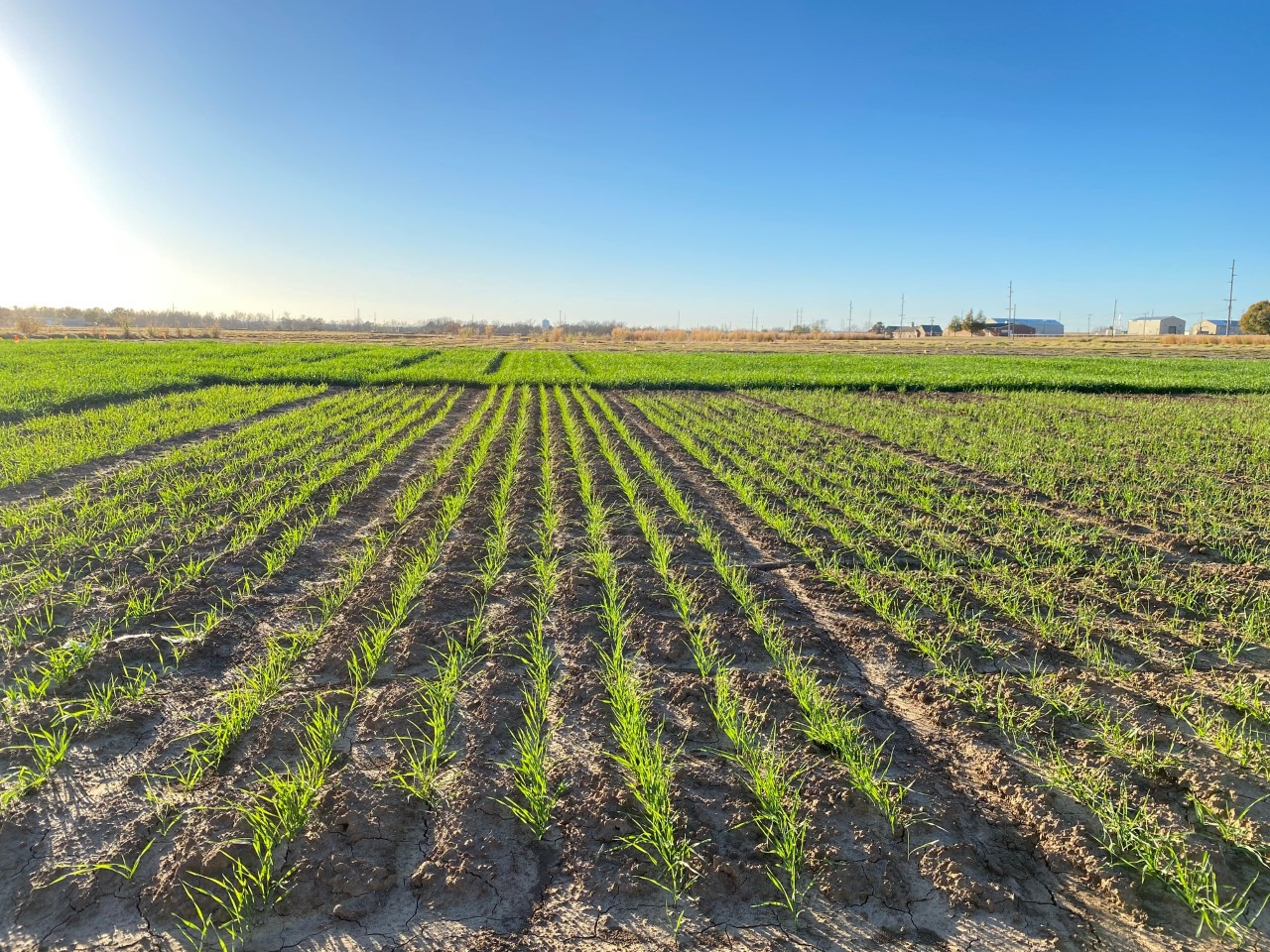
Wheat demonstration plots planted on September 21 (on the back) and on October 16 (in the front). Picture taken on November 16, 2020.

Bird cherry oat aphids in wheat: showing up in large numbers

By Tom Royer, OSU Extension Entomologist

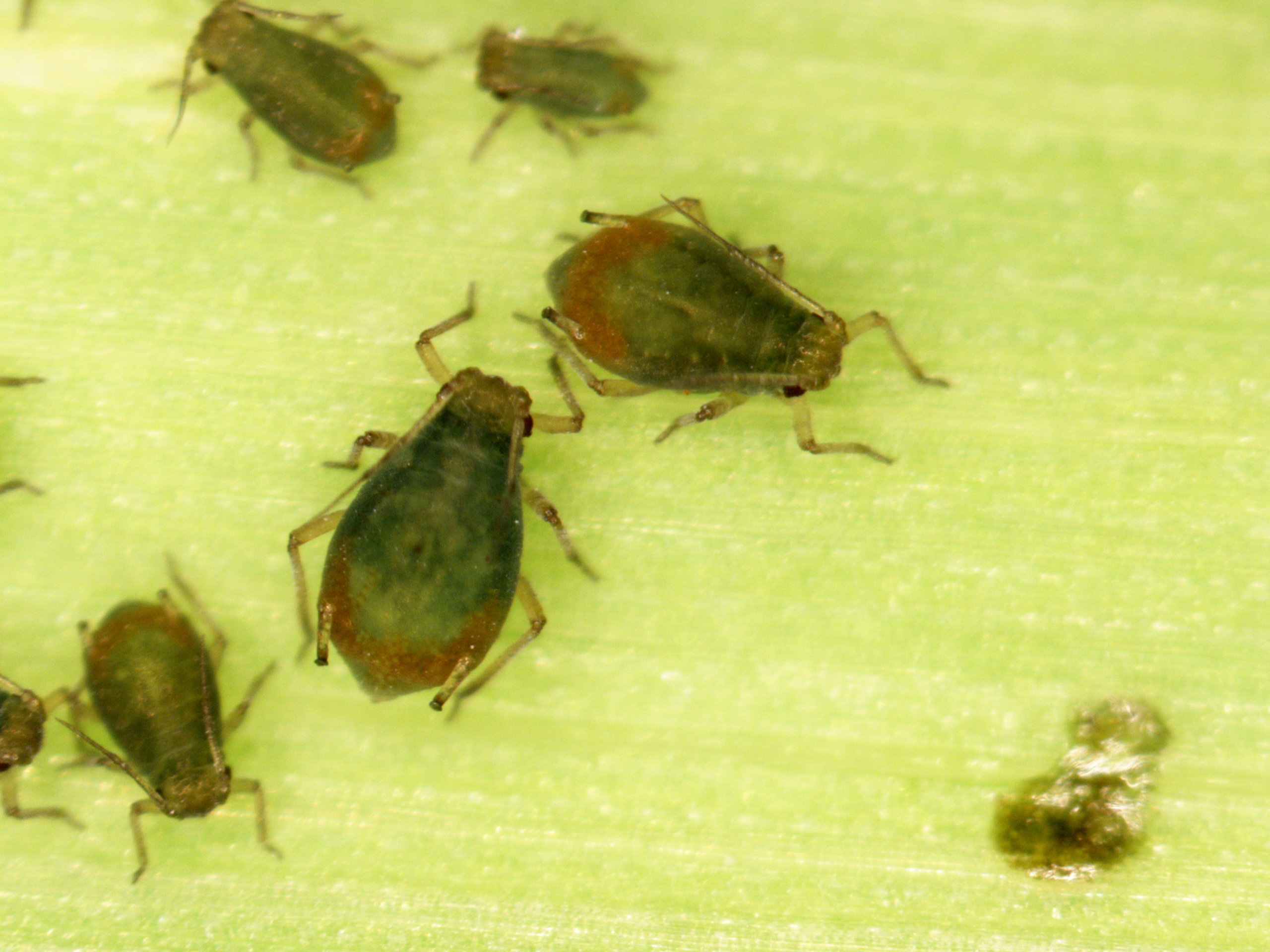
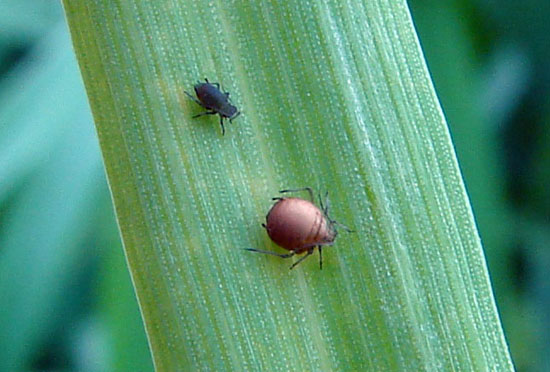
I have received several reports of (and photos, Figure 1) of bird cherry oat aphid (BCOA) numbers in winter wheat that will require treatment with an insecticide

Bird cherry oat aphid

Bird cherry oat aphid


Severe bird cherry oat aphid infestation

Severe bird cherry oat aphid infestation

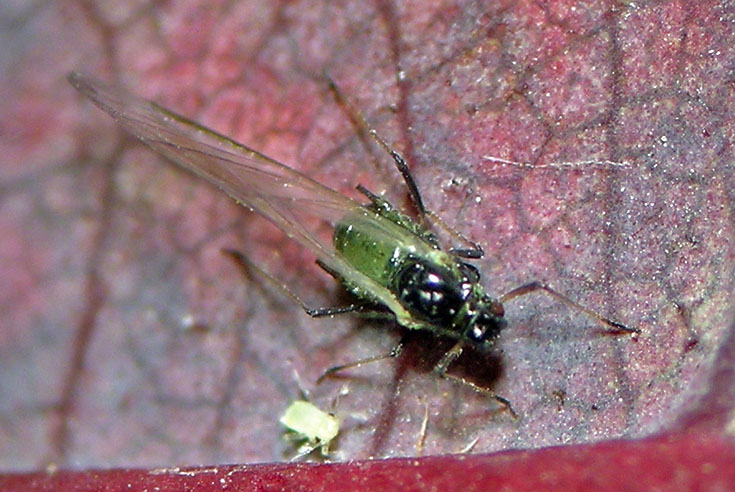
Bird cherry oat aphids are small (2mm) olive-green aphids with a red-orange patch surrounding the base of each cornicle (Figure 1). Old, wingless, overwintering adult aphids are darker, almost black.  At this time, you may also find winged aphids that have moved in to the field (Figure 2).

Winged bird cherry oat aphid

Winged bird cherry oat aphid

What are my suggestions regarding control of bird cherry oat aphid in winter wheat?

  • Unpublished research provided by Dr. Kris Giles (OSU) and Dr. Norm Elliott (USDA-ARS) along with studies conducted in South Dakota, Minnesota, and North Dakota on spring wheat indicated that BCOA causes yield loss before wheat reaches the boot stage. Approximately 5-9% yield loss occurs when there are 20-40 BCOA per tiller (average 7%).
  • Visible damage from bird cherry-oat aphid is not very noticeable so infestations may go unnoticed. It is very important to check fields for infestations and make treatment decisions only after a field has been checked.

My suggestion for making a treatment decision is as follows:

If greenbugs and bird cherry oat aphids are both present, use Glance n’ Go to scout, which can be accessed at http://entoplp.okstate.edu/gbweb/index3.htm.  Published research from Giles and Elliott showed that Glance n’ Go sampling will work with both aphids if they are both present.

If bird cherry-oat aphid is present alone, count the number of aphids present on each of 25 randomly-selected tillers across a zigzag transect of the field. The reason that you can’t use Glance n’ Go is that the most available research suggests that the threshold is too high to effectively use Glance n’ Go.

Look for evidence of parasite activity in the form of mummies (Figure 3).  A rule of thumb is that if 5-10% of the aphids are mummies, more than 90% are already parasitized.  If mummies are not present, use the guidelines below to make a treatment decision.

Parasitized bird cherry oat aphid

Parasitized bird cherry oat aphid

If, after thoroughly scouting your field, you can identify that infestations are spotty, consider spot spraying with a ground rig.

Use the YIELD LOSS TABLE to determine a potential YIELD LOSS from the aphids.  Then estimate your CROP VALUE and calculate your CONTROL COSTS.  Use those numbers to estimate PREVENTABLE LOSS.    If estimated PREVENTABLE LOSS is greater than CONTROL COSTS, Treat; otherwise, Don’t Treat.


Here is an Example:


Step 1:  Estimate YIELD LOSS:


  • Total # aphids_______525___________/25 tillers = average # aphids/tiller_____21_____


Step 2:  Estimate CROP VALUE:  (Crop Value = Yield potential X Price per bushel)

  • Yield potential__40____ bushels/acre X price per bushel $____4.50____ per bushel


CROP VALUE = $___180____


Step 3:  Estimate CONTROL COSTS: (Control Cost = Insecticide Cost + Application Cost)


  • Insecticide cost $___6_____ /acre  +  Application Cost       $ ____3_____/acre


CONTROL COSTS $_____9_____/acre


Step 4:  Estimate PREVENTABLE LOSS (Crop Value X Yield Loss from Aphid)


  • Crop value/acre $___180_____  x Yield Loss from aphid ___0.07_____


PREVENTABLE LOSS $____12.60______/acre


IF PREVENTABLE LOSS $___12.60_____ is greater than CONTROL COSTS $___9.00_____ TREAT


IF PREVENTABLE LOSS $________ is less than CONTROL COSTS $__________                                   DON’T TREAT


Check CR-7194, “Management of Insect and Mite Pests in Small Grains” for registered insecticides, application rates, and grazing/harvest waiting periods.

It can be obtained from any County Extension Office, or found at the OSU Extra Website at http://pods.dasnr.okstate.edu/docushare/dsweb/Get/Document-2601/CR-7194web2008.pdf

Freeze injury update 21 March 2016

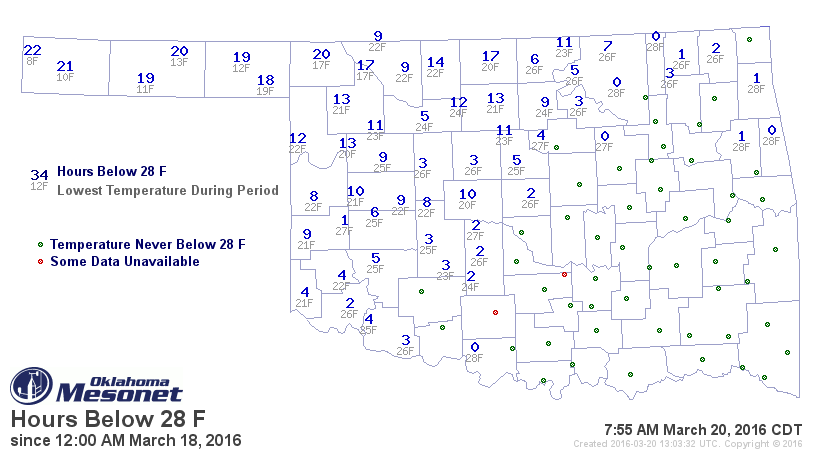
Temperatures over the weekend were cold enough to cause injury to the Oklahoma wheat crop. As shown in the figure below from the Oklahoma Mesonet many areas of Oklahoma spent several hours below 28F. While temperatures in the wheat canopy might have remained slightly higher than reported air temperatures, they were still probably low enough to result in significant injury to wheat.


Hours spent below 28F March 18 - 20

Hours spent below 28F March 18 – 20


A few points I would encourage everyone to consider:

Every freeze event is unique – the temperatures and time durations we use regarding freeze injury are rules of thumb and are not exact. I have seen instances where conventional wisdom would indicate complete crop loss and we skate through with minimal damage.
It will take a few days to see how bad things are – Symptoms may start to appear later this week and will likely be clearly identifiable by the end of this week. Healthy wheat heads will remain turgid with a green color. Damaged wheat heads will be bleached, yellow, or brown and will easily break when pushed against. I anticipate that we will not have any partial “blanking” of wheat heads and that most wheat heads will either be okay or a complete loss. This post from last year has some pictures showing tell tale signs of freeze injury. The linked post also serves as a reminder that while freeze is the concern of the day, the potential worsening of drought conditions in NW Oklahoma has the potential to do far more damage.

% damaged heads might not = % yield loss –  It is still relatively early in the growing season and there is still opportunity for smaller (two nodes or less) wheat to produce additional tillers and/or retain secondary tillers. Whether or not these tillers are able to compensate for larger tillers that were lost due to freeze will depend on moisture and weather. IF (and that is a big if) weather conditions remain favorable, late emerging tillers in central and northern Oklahoma might still have a shot at producing grain. It will be tougher for more advanced wheat in southern Oklahoma to make this type of recovery.


First hollow stem nearing

First hollow stem occurs just prior to jointing and is the optimal time to remove cattle from wheat pasture. Given the warm forecast for the next two weeks, it is likely that we will start seeing first hollow stem in Oklahoma wheat fields. Grazing past first hollow stem can reduce wheat grain yield by as much as 5% per day and the added cattle gains are not enough to offset the value of the reduced wheat yield.

Similar to previous years, we will monitor occurrence of first hollow stem in our wheat plots at Stillwater and report the findings on this blog. There is also a first hollow stem advisor available on the Oklahoma Mesonet that can assist in determining when to start scouting.

Checking for first hollow stem is fairly easy.

  • You must check first hollow stem in a nongrazed area of the same variety and planting date. Variety can affect date of first hollow stem by as much as three weeks and planting date can affect it even more.
  • Dig or pull up a few plants and split the largest tiller longitudinally (lengthways) and measure the amount of hollow stem present below the developing grain head. You must dig plants because at this stage the developing grain head may still be below the soil surface.
  • If there is 1.5 cm of hollow stem present (see picture below), it is time to remove cattle. 1.5 cm is about the same as the diameter of a dime.
  • Detailed information on first hollow stem can be found at www.wheat.okstate.edu under ‘wheat management’ then ‘grazing’
  • Image

Is this the year for split fungicide application?

The stripe rust epidemic of 2015 is still fresh on the minds of many wheat farmers. Reports of active stripe rust on wheat in southern Oklahoma has producers now wondering if we are in for a repeat in 2016. While it is too early to tell if environmental conditions will favor a stripe rust outbreak in 2016, having active rust on wheat in the area satisfies at least one of the requirements for an epidemic. Most Oklahoma wheat producers will still be best advised to monitor the situation and make the fungicide decision based on yield potential and likelihood of infection when the flag leaf is emerging. Those with fields already showing heavy infection of foliar disease, however, might also benefit from a two-pass fungicide system. A few talking points and items to consider for those considering a two-pass system are posted below. A fact sheet on the topic of split application of fungicides can be found at www.wheat.okstate.edu

When to apply – The first pass in a two-pass fungicide system should be applied just after jointing. Please note that this is well after topdress nitrogen should be applied. For this and other reasons (see Dr. Arnall’s blog), tank mixing fungicides with nitrogen is generally not a good practice. Remember that the purpose of the early fungicide application is to keep disease in check until you come back with a flag leaf application in April. Going too early can result in too large of a gap between applications and enough time for disease to re-establish. Going too late can reduce the return on investment. Timing is everything with fungicides.
How much to apply – Back in the day, the discussion around split fungicide application centered on half rates for the first application. This recommendation was because of cost savings rather than disease management. The availability of low-cost, generic fungicides, though, has changed our philosophy, and a full rate of a low cost fungicide is the standard for split applications.

Which product to choose – Product choice is at the discretion of the consumer. If you are considering how to best spend your season-long fungicide budget, however, I would strongly recommend saving your “best” and perhaps most expensive product for the flag leaf application.

Watch season-long restrictions – As always, please read labels carefully and make note of season-long application restrictions. You don’t want an early fungicide application to remove the ability to apply your preferred product at flag leaf.

Wheat stripe rust

Wheat stripe rust

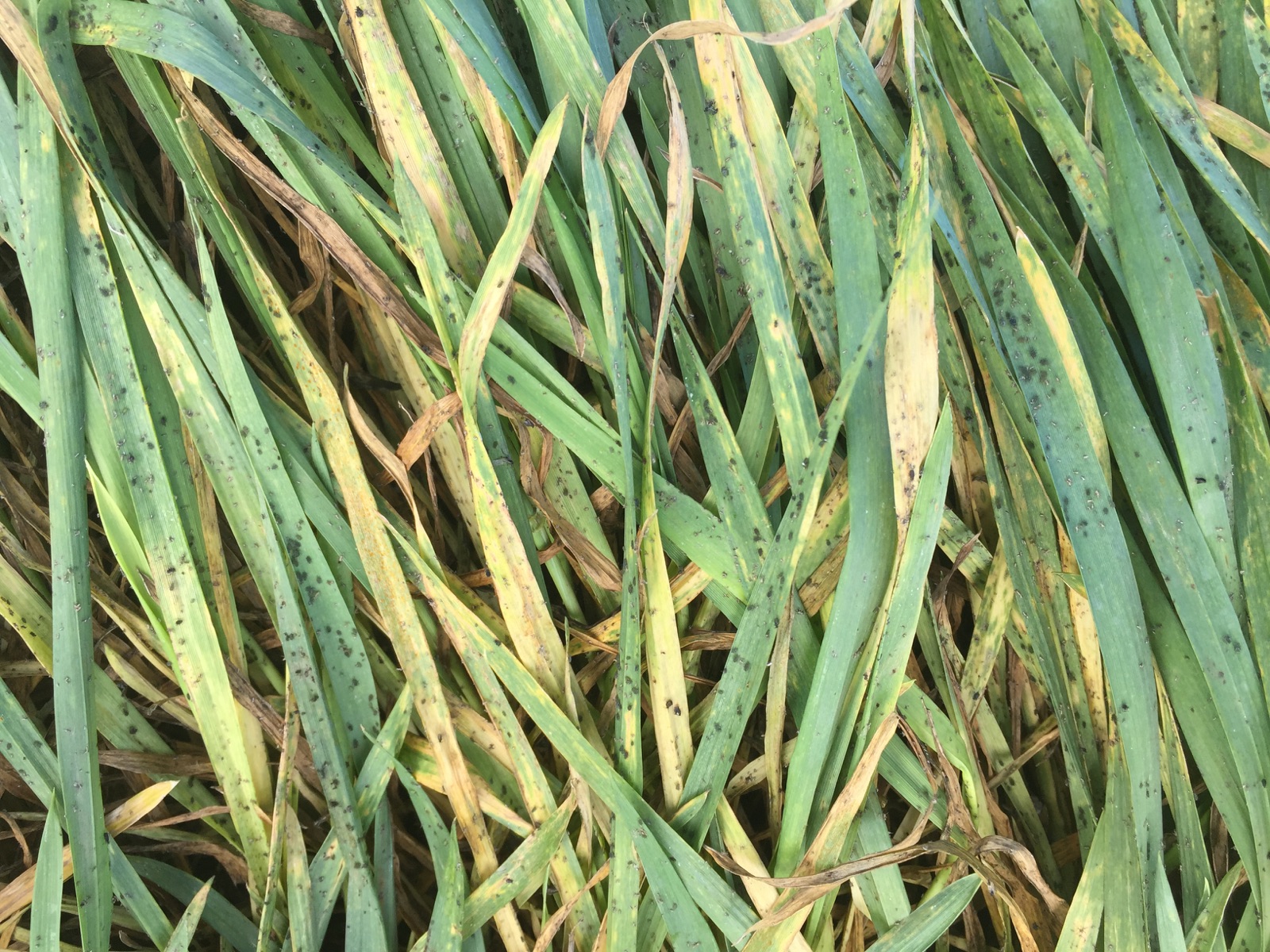
This overhead shot of the 2015 Chickasha intensive and standard wheat variety trials illustrates the severity of stripe rust in the region. The intensively managed trials on the left was treated with a fungicide just prior to heading. The standard trial on the right has the exact same varieties but no fungicide. The "middle" replication between the two studies is a border of Ruby Lee that is 1/2 treated 1/2 non treated.
This overhead shot of the 2015 Chickasha intensive and standard wheat variety trials illustrates the severity of stripe rust in the region. The intensively managed trials on the left was treated with a fungicide just prior to heading. The standard trial on the right has the exact same varieties but no fungicide. The “middle” replication between the two studies is a border of Ruby Lee that is 1/2 treated 1/2 non treated.