Fall Season Review and Ideal Timing for Cattle Removal from Wheat Pasture

Amanda de Oliveira Silva, Small Grains Extension Specialist

Oklahoma’s wheat planting season was heavily impacted by severe drought. The season was essentially divided into two main rain events that impacted crop growth. Dual-purpose producers who planted before September 22 established good stands in early fall. Warm temperatures promoted rapid growth, but the crop began to decline as drought conditions intensified (Figure 1).

The next significant rain event occurred about a month later, almost past the optimal wheat planting window in some areas. With rain in the forecast for late October, many farmers chose to “dust in” their wheat ahead of the rain, while others opted to wait.

In early November, wheat-growing regions across Oklahoma received between 1 and nearly 8 inches of rain, while the Panhandle saw up to 20 inches of snow from November 5–9 (Figure 2). These events quickly shifted conditions from extreme drought to flooding. Although November temperatures were above average (~53°F), seeds remained in cool, wet soils for weeks, leading to slow or failed germination. Some areas experienced standing water and soil crusting, causing plant losses. As a result, wheat stands across the state vary widely, with some fields establishing well while others remain highly uneven, contributing to overall low fall forage production.

For grain-only wheat sown in late fall, stands are just now closing in some areas. Though still small, the crop appears to be growing well.
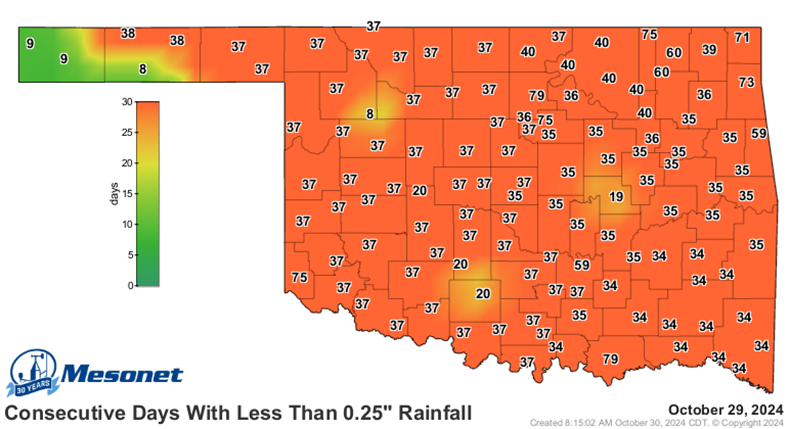
Figure 1. Consecutive days with less than 0.25” rainfall as of October 29, 2024.
Figure 2. Four-day rainfall accumulation from November 2 to 6th, 2024.

Yield loss for grazing past first hollow

For the producers with available pasture for spring grazing, preserving some leaf tissue after grazing will be important for future grain crop. Ideally, at least 60% canopy coverage (as measured by the Canopeo app) should remain to support crop recovery after grazing (PSS-2170). Extending grazing for an additional two week past first hollow stem (FHS)—particularly under conditions unfavorable for plant regrowth and canopy recovery—could reduce wheat yield by approximately 60% of its potential (Figure 3).

Figure 3. Grazing past first hollow stem has been shown to reduce grain yield by as much as five percent per day or as little as one percent per day. This figure shows the anticipated yield loss for grazing past first hollow stem given favorable (solid line), unfavorable (dashed line) and average (dotted line) conditions for wheat regrowth following grazing termination (PSS-2147).

The first hollow stem stage as an indicator for cattle removal from wheat pasture

The first hollow stem stage indicates the beginning of stem elongation or just before the jointing stage. It is a good indicator of when producers should remove cattle from wheat pasture. This occurs when there is 1.5 cm (5/8”, or the diameter of a dime) of hollow stem below the developing grain head (Figure 4). This is the optimal period because it gives enough time for the crop to recover from grazing and rebuild the canopy. Also, the added cattle weight gains associated with grazing past the FHS are not enough to offset the value of the potential reduced grain yield (1-5% every day past FHS) (Figure 3). The wheat variety, severity of grazing, time when cattle are removed, and weather conditions after cattle removal determine how much grain yield potential might be reduced.

Figure 4. The first hollow stem growth stage is reached when there is 1.5 cm of hollow stem (about the diameter of a dime) below the grain head. 

Methods for scouting for FHS

  • Check for FHS in a non-grazed area of the same variety and planting date. Variety can affect FHS date by as much as three weeks, and planting date can affect it even more.
  • Dig or pull up a few plants, split the largest tiller longitudinally (lengthways), and measure the amount of hollow stem present below the developing grain head. Plant tissue must be removed below the soil surface, because the developing grain head may still be below the soil surface.
  • If there is 1.5 cm (~5/8″) of hollow stem present, it is time to remove cattle. 1.5 cm is about the same as the diameter of a dime (see picture below).
  • Find detailed information on FHS and grazing by clicking here.

OSU Small Grains Program monitors FHS occurrence on a twice-per-week basis

As in previous years, we will continue monitoring FHS occurrence in our wheat plots at Stillwater and Chickasha and share updates on this blog. In past years, our forage trials—where FHS samples are collected—were seeded early to simulate a grazed system, though forage was not removed. This method created an accelerated growth environment, allowing us to identify the earliest onset of FHS. Varieties that reach FHS earliest in these trials should be closely monitored in commercial fields.

This year, we are introducing a new approach by simulating grazing with a mower in the forage trial in Stillwater. This will allow us to compare whether varieties reach FHS at different times when grazed versus non-grazed. We hypothesize that the simulated grazing treatment will likely delay FHS relative to the non-grazed treatment, with FHS differences among varieties becoming less pronounced. We also hypothesize that the amount of delay will vary among varieties, such that an early-FHS variety in the non-grazed environment may appear more intermediate in its FHS arrival with canopy removal. This comparison will provide insight into how canopy removal from grazing impacts the timing of reproductive development.

The latest FHS results for each variety planted in our forage trials at Stillwater and Chickasha are summarized below (Tables 1 and 2). Most varieties are still well below the 1.5 cm FHS threshold. However, if moisture and warmer conditions develop in the coming weeks, values could increase quickly.

Table 1. First Hollow Stem (FHS) results for each wheat variety collected at Stillwater. Plots were planted on 10/11/24, with one section left unclipped and the other clipped to simulate grazing. The FHS threshold is 1.5 cm (5/8″ or approximately the diameter of a dime). Reported values represent the average of ten measurements per variety. Varieties that exceed the threshold are highlighted in red. For the simulated grazing, plots were mowed on January 3rd, 15th, and 28th at a 2.5-3” cutting height, with the frequency representing a light grazing treatment.
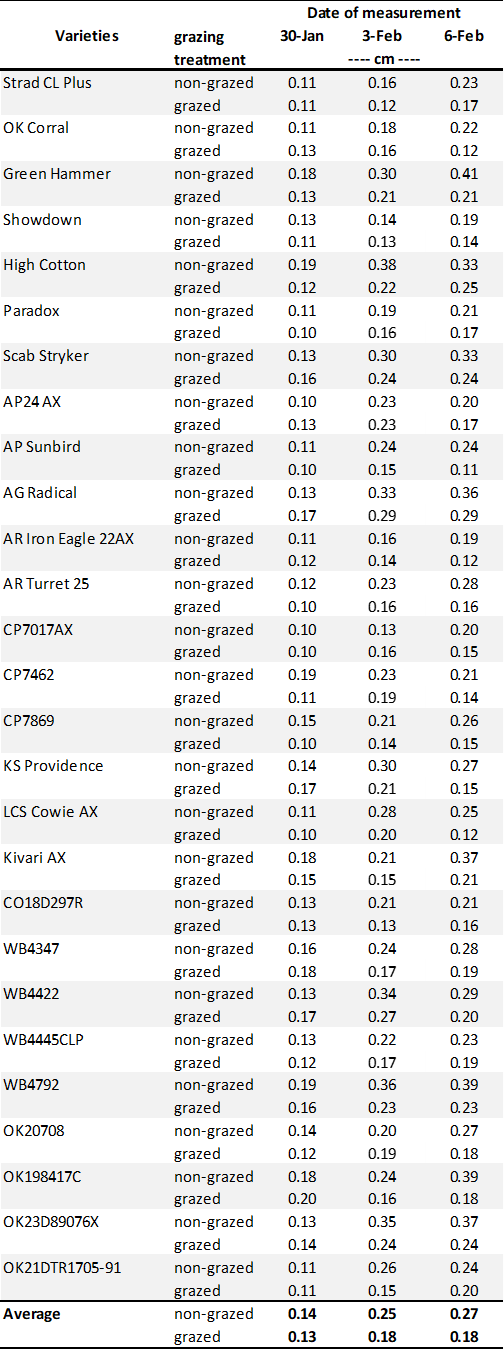
Table 2. First Hollow Stem (FHS) results for each wheat variety collected at Chickasha. Plots were planted on 10/02/24, with all sections left unclipped (i.e., not grazed). The FHS threshold is 1.5 cm (5/8″ or approximately the diameter of a dime). Reported values represent the average of ten measurements per variety. Varieties that exceed the threshold are highlighted in red.
Contact your local Extension office and us if you have questions. 

Acknowledgements: 

Tyler Lynch, Senior Agriculturalist

Israel Molina Cyrineu, PhD student

Gilmar Machado, Visiting Scholar

Rafael Moreira, Undergraduate Visiting Scholar

Oklahoma Wheat Harvest for 2024 Season Begins in Southwest Oklahoma

By: The Oklahoma Wheat Commission

Oklahoma wheat harvest has started in multiple locations in Southwest, Oklahoma over the weekend, with the wheat being 10 days ahead of normal schedule.   It has been reported that over 100,000 bushels was received between locations at Grandfield and Devol.  Trucks have also been received at Frederick. Early cutting has also started around Temple, Walters and Chattanooga. Test cutting has taken place around Altus with some producers hoping to start this afternoon. 

Early reports in all locations show test weights ranging from 60 to 63 lbs. per bushel. (The wheat reported at 60 lbs. per bushel was at a higher moisture level, so producers are hopeful as moisture goes down test weights will still go up.)

Proteins ranging from 11.1% to 12.5% with more of the proteins on early cuttings being reported in the 11.9% to 12.5% range. Early yields being reported at 40 to 45 bushels per acre.  Higher yields are predicted on intensively managed wheat.  Keep in mind this region has been considered the bright spot of the state for growing conditions this year. The state has received a large amount of hail damage in South Central, Oklahoma last night with large amounts of hail damage in other regions of Southwest Oklahoma and Northern Oklahoma over the past two weeks.  A more comprehensive report will be published on Thursday, May 23, 2024.

Below, see the 7-day forecast provided by the Oklahoma Mesonet.

First Hollow Stem Update – 02/14/2023

Amanda de Oliveira Silva, Small Grains Extension Specialist

First hollow stem (FHS) is the optimal time to remove cattle from wheat pasture. This occurs when there is 1.5 cm (5/8”, or the diameter of a dime) of hollow stem below the developing grain head (see full explanation). The latest FHS results from OSU forage trials in Stillwater (Table 1) and Chickasha (Table 2) are listed below. For an additional resource, see the Mesonet First Hollow Stem Advisor.

We use an accelerated growth system to report the earliest onset of FHS stage. Trials are seeded early to simulate a grazed system, but the forage is not removed. Varieties reported here with the earliest FHS date should be the first to monitor in commercial fields. In practice, wheat that is grazed will likely reach FHS stage later than reported here, and differences between varieties will likely moderate.

Table 1. First hollow stem (FHS) results for each variety collected at Stillwater. Plots were planted on 10/06/22 but not grazed or clipped. The threshold target for FHS is 1.5 cm (5/8″ or the diameter of a dime). The value of hollow stem for each variety represents the average of ten measurements. Varieties exceeding the threshold are highlighted in red.

Table 2. First hollow stem (FHS) results for each variety collected at Chickasha. Plots were planted on 10/07/22 but not grazed or clipped. The threshold target for FHS is 1.5 cm (5/8″ or the diameter of a dime). The value of hollow stem for each variety represents the average of ten measurements. Varieties exceeding the threshold are highlighted in red.

Contact your local Extension office and us if you have questions. 

Additional resources available:

Acknowledgments: 

Tyler Lynch, Senior Agriculturalist

Israel Molina Cyrineu, Graduate Research Assistant

Samson Abiola, Graduate Research Assistant

Cassidy Stowers, Undergraduate Student

Lettie Crabtree, Undergraduate Student

Planting wheat in hot and dry soils

Amanda de Oliveira Silva, Small Grains Extension Specialist

With severe dry conditions and high temperatures in our state, it is good to consider the possible effects of high temperature and drought on wheat germination and early growth. As of September 19, soil temperature was in the 80’s F across the state and reached 97 F in some areas (Figure 1). Wheat can germinate in soil temperatures from 40 F to 99 F, but temperatures from 54 F to 77 F are optimal.

Figure 1. Soil temperature across Oklahoma. Figure courtesy Oklahoma Mesonet.

Wheat germination and emergence in HOT soils

Is the variety I am planting high-temperature germination sensitive?

High-temperature germination sensitivity is a more elaborate way of saying that some wheat varieties do not germinate well in hot soil conditions. This is not to say that the seed will not germinate, but it may not germinate until the soil temperature has lowered. Keep in mind too that this sensitivity can vary from year to year. For example, a sensitive variety like Ruby Lee may germinate fine in 90°F soils one year and only produce a 10% stand in the same soil conditions the next. When sowing early, it is best to plant varieties first that do not have high-temperature sensitivity (e.g., Duster, Gallagher). Soil temperatures typically begin to cool by about September 20 due to lower air temperatures and/or rainfall events. However, our summer temperatures seem to be sticking around for longer this year. Waiting until at least mid-September to plant sensitive varieties can help reduce the risk of this issue. A high temperature germination sensitivity rating for wheat varieties can be found in the OSU Fact Sheet (available by clicking here). An updated version of this factsheet will be published soon.

Coleoptile Length

Hot soil conditions at sowing also reduce coleoptile length. The coleoptile is the rigid, sheath-like structure that protects the first true leaf and aids it in navigating and reaching the soil surface. Once the coleoptile breaks the soil surface, the coleoptile will stop growing, and the first true leaf will emerge. If the coleoptile fails to reach the soil surface, the first true leaf will emerge below ground and take on an accordion-like appearance (Figure 2A-B). If this happens, the plant will die.

Figure 2A and 2B. Example of two different wheat seedlings in which the coleoptile failed to break the soil surface. The first true leaf emerged below the soil surface and resulted in this accordion-like appearance.

The coleoptile length for most wheat varieties today can allow for the seed to be safely planted up to 1.5 inches deep. Under hot soil conditions though, the coleoptile length tends to be decreased. Therefore, “dusting in” early-sown wheat at ¾ to 1 inch depth and waiting on a rain event may result in more uniform emergence than trying to plant into soil moisture at a deeper depth, if soil moisture is not available in the top 1 to 1.5 inches of the soil profile. A rating for coleoptile length for wheat varieties can be found in the OSU Fact Sheet PSS-2142 Wheat Variety Comparison. We are also working on updating this.

Wheat germination and emergence in DRY soils

The most important physiological requirement for wheat to germinate and sustain the developing seedling is soil water. Therefore, planting decisions should be based on a combination of available soil moisture and expected rainfall. In addition, other factors such as adequate seeding depth, sowing date, soil fertility, seed treatment, seed quality, etc., should be considered to guarantee good crop establishment. For more information, check the materials on our website.

Wheat seed needs a minimum water content of 35 to 45% of its dry weight to initiate germination, and germination will be more complete as moisture levels increase. Dry soils can still maintain a relative humidity of 99%, which can provide enough moisture for seeds to germinate. It might just take longer than with free-moisture availability. My concern with the current situation in Oklahoma is the severe drought we are in and the lack of rain in the forecast. In some cases, we could have enough moisture to start the germination process in some regions of the state, but seedling emergence and growth could be compromised if we do not see any rain soon.

What happens if the soil completely dries out before wheat emergence?

There are three phases during the germination process: water absorption, activation when the seed coat is ruptured, and visible germination when the radicle emerges, followed by the seminal roots and coleoptile. These processes will start and stop depending on soil moisture availability. Thus, if the soil dries out before the roots and shoots are visible, the seed remains viable, and germination will be paused and continue once water is available. However, if the soil dries out after those structures are emerged (approximately 4-5 days after germination has begun), the seedling may not tolerate the lack of water, resulting in incomplete or loss of stand.

What should I do then? Choose your battle!

The optimal time for planting wheat in central Oklahoma is around mid-September for a dual-purpose system or around mid-October for a grain-only system (Figure 3). With the current forecast, we are planning to wait another 7-10 days to decide on our dual-purpose and forage trials. There are different ways we can go about it, but we must remember that there is always risk involved when planting wheat in dry and hot soil conditions.

Figure 3. Forage and grain yield potential in relation to the day of the year. Every 1,000 kg/ha is equal to approximately 900 lb/acre or 15 bu/acre. Ideal planting dates for dual-purpose wheat in Oklahoma are mid-September (i.e., approximately day 260). Planting for grain-only should occur at least 2-3 weeks after dual-purpose planting (i.e., mid-October or approximately day 285).

If you decide to dust in your wheat and wait for a rainfall event to drive germination, watch your seeding depth. The optimum seeding depth to plant wheat is about 1-1.5” deep. We typically do not have as many issues with winterkill in Oklahoma as in more northern states, so I am comfortable with dusting in at about 0.75 – 1” deep. Planting at 0.5” or less is too shallow in most circumstances. Also, there is always a chance for a pounding rainfall event and subsequent soil crusting, which makes it difficult for the coleoptile to push through the soil surface and may result in poor emergence. Fields with stubble cover may be less affected and reduce the risk of soil crusting. If we receive light rain in the following weeks, that could cause wheat to emerge, but it may not be enough for wheat to continue growing. Most of the fields do not have good subsoil moisture, either.

If subsoil moisture is available and you decide to plant deeper to reach moisture, be careful with the coleoptile length of your variety, and make sure it has a long-enough coleoptile that will allow emergence if conditions are favorable. Consider increasing seeding rate to compensate for reduced emergence, which is prone to occur in this situation.

Should we wait for rain to plant then? This is a farm-by-farm call and it depends on which source of risk you find most comfortable. Personally, I would rather plant my wheat in the optimal planting window and adequate seeding depth than waiting for a rain that may take too long to happen or missing my optimal planting window. If the latter is the case, consider bumping seeding rate to try to compensate for the reduced time for tillering (especially in a grain-only system). Planting wheat at optimal time allows for more time for root growth in seedlings, helping the crop to establish more quickly under dry conditions and possibly help the plant to scavenge for water that is available deeper in the soil profile.

Are there any specific agronomic traits that could help wheat seedling growth under water stress?

Traits that will help with seedling growth in dry conditions are coleoptile length potential, which allows to plant a little deeper in moisture and good emergence (if deep planting is the practice of your choice). There are indications that sowing wheat varieties with larger seed may help to reduce the negative effects of drought during early growth (Mian and Nafziger, 1994). In general, the greater reserves of larger seed result in faster germination and crop establishment by increasing root growth and tiller production. Keep in mind, however, there are varieties with small seed size that germinate more rapidly than larger seeded varieties, owing to their differential response to available moisture.

First Hollow Stem Update – 3/7/2022

Amanda de Oliveira Silva, Small Grains Extension Specialist

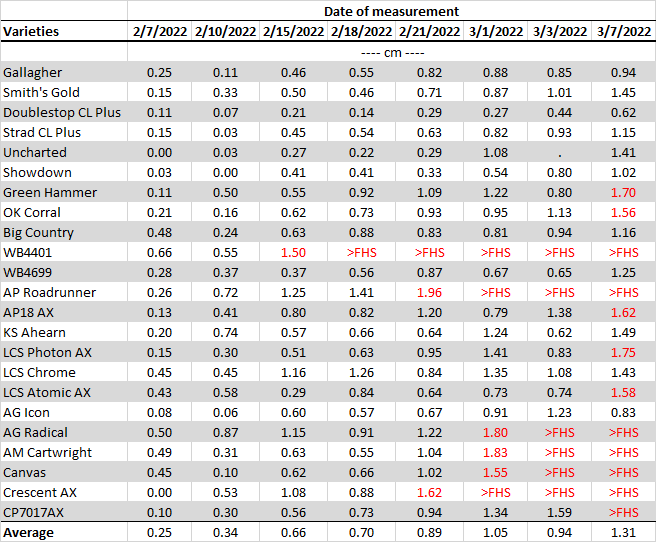
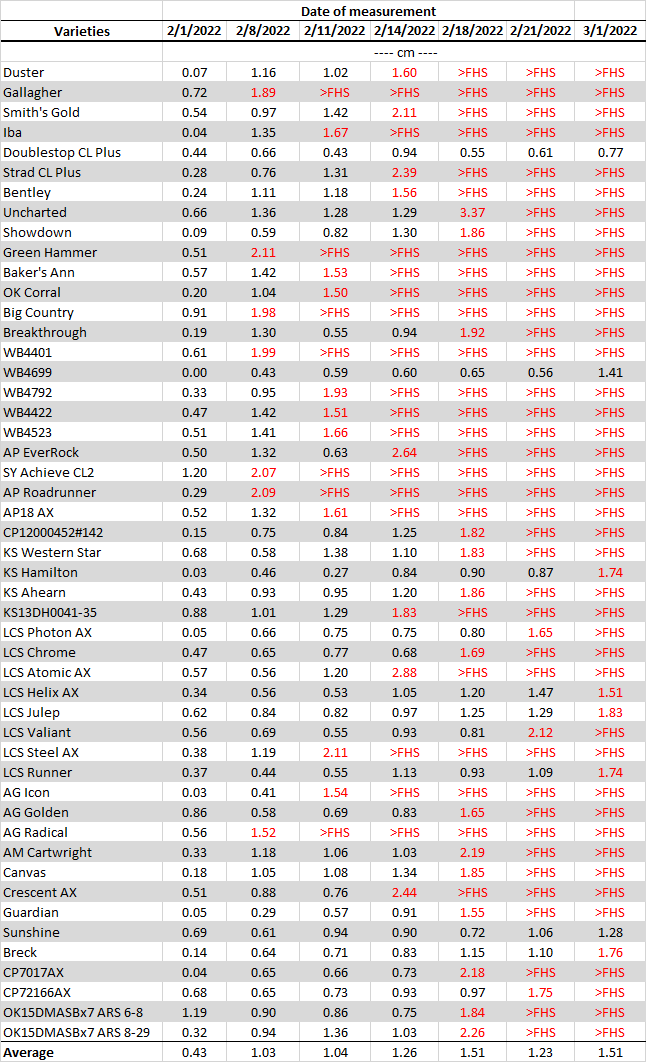
First hollow stem (FHS) is the optimal time to remove cattle from wheat pasture. This occurs when there is 1.5 cm (5/8”, or the diameter of a dime) of hollow stem below the developing grain head (see full explanation). The latest FHS results from OSU forage trials in Stillwater (Table 1) and Chickasha (Table 2) are listed below. For an additional resource, see the Mesonet First Hollow Stem Advisor.

We use an accelerated growth system to report the earliest onset of FHS stage. Trials are seeded early to simulate a grazed system, but the forage is not removed. Varieties reported here with the earliest FHS date should be the first to monitor in commercial fields. In practice, wheat that is grazed will likely reach FHS stage later than reported here, and differences between varieties will likely moderate.

Values can fluctuate from one sampling to another due to environmental variation associated with, among other factors, the winter storm on February 2-4. Additionally, varieties differed widely in their FHS response following this cold period.

Table 1. First hollow stem (FHS) results for each variety collected at Stillwater. Plots were planted on 09/27/21 but not grazed or clipped. The threshold target for FHS is 1.5 cm (5/8″ or the diameter of a dime). The value of hollow stem for each variety represents the average of ten measurements. Varieties exceeding the threshold are highlighted in red. The overall average represents the mean FHS for the varieties measured within a date.

Table 2. First hollow stem (FHS) results for each variety collected at Chickasha. Plots were planted on 09/28/21 but not grazed or clipped. The threshold target for FHS is 1.5 cm (5/8″ or the diameter of a dime). The value of hollow stem for each variety represents the average of ten measurements. Varieties exceeding the threshold are highlighted in red. The overall average represents the mean FHS for the varieties measured within a date.

Additional resources available:

First Hollow Stem Update – 3/02/2022

Amanda de Oliveira Silva, Small Grains Extension Specialist

First hollow stem (FHS) is the optimal time to remove cattle from wheat pasture. This occurs when there is 1.5 cm (5/8”, or the diameter of a dime) of hollow stem below the developing grain head (see full explanation). The latest FHS results from OSU forage trials in Stillwater (Table 1) and Chickasha (Table 2) are listed below. For an additional resource, see the Mesonet First Hollow Stem Advisor.

We use an accelerated growth system to report the earliest onset of FHS stage. Trials are seeded early to simulate a grazed system, but the forage is not removed. Varieties reported here with the earliest FHS date should be the first to monitor in commercial fields. In practice, wheat that is grazed will likely reach FHS stage later than reported here, and differences between varieties will likely moderate.

Values can fluctuate from one sampling to another due to environmental variation associated with, among other factors, the winter storm on February 2-4. Additionally, varieties differed widely in their FHS response following this cold period.

Table 1. First hollow stem (FHS) results for each variety collected at Stillwater. Plots were planted on 09/27/21 but not grazed or clipped. The threshold target for FHS is 1.5 cm (5/8″ or the diameter of a dime). The value of hollow stem for each variety represents the average of ten measurements. Varieties exceeding the threshold are highlighted in red. The overall average represents the mean FHS for the varieties measured within a date.

Table 2. First hollow stem (FHS) results for each variety collected at Chickasha. Plots were planted on 09/28/21 but not grazed or clipped. The threshold target for FHS is 1.5 cm (5/8″ or the diameter of a dime). The value of hollow stem for each variety represents the average of ten measurements. Varieties exceeding the threshold are highlighted in red. The overall average represents the mean FHS for the varieties measured within a date.

  • Additional resources available:

First Hollow Stem Update – 2/15/2022

Amanda de Oliveira Silva, Small Grains Extension Specialist

First hollow stem (FHS) is the optimal time to remove cattle from wheat pasture. This occurs when there is 1.5 cm (5/8”, or the diameter of a dime) of hollow stem below the developing grain head (see full explanation). The latest FHS results from OSU forage trials in Stillwater (Table 1) and Chickasha (Table 2) are listed below. For an additional resource, see the Mesonet First Hollow Stem Advisor.

We use an accelerated growth system to report the earliest onset of FHS stage. Trials are seeded early to simulate a grazed system, but the forage is not removed. Varieties reported here with the earliest FHS date should be the first to monitor in commercial fields. In practice, wheat that is grazed will likely reach FHS stage later than reported here, and differences between varieties will likely moderate.

Values can fluctuate from one sampling to another due to environmental variation associated with, among other factors, the winter storm on February 2-4. Additionally, varieties differed widely in their FHS response following this cold period.

Table 1. First hollow stem (FHS) results for each variety collected at Stillwater. Plots were planted on 09/27/21 but not grazed or clipped. The threshold target for FHS is 1.5 cm (5/8″ or the diameter of a dime). The value of hollow stem for each variety represents the average of ten measurements. Varieties exceeding the threshold are highlighted in red.

Table 2. First hollow stem (FHS) results for each variety collected at Chickasha. Plots were planted on 09/28/21 but not grazed or clipped. The threshold target for FHS is 1.5 cm (5/8″ or the diameter of a dime). The value of hollow stem for each variety represents the average of ten measurements. Varieties exceeding the threshold are highlighted in red.

  • Additional resources available:

The impact of dry and warm weather on wheat – 2021 fall conditions

Amanda de Oliveira Silva, Small Grains Extension Specialist

Dual-purpose producers were not able to plant wheat in timely fashion (mid-September) due to drought conditions in much of the state. Most of the wheat intended for dual-purpose was “dusted in” and emergence was delayed, but plants established well. Oklahoma received good rainfall in October, which helped the dual-purpose wheat to emerge and grow and enabled grain-only producers to plant in good soil moisture. Although dual-purpose wheat was planted later than desired, the October moisture enabled moderate fall forage production. Oklahoma has not received 0.25” of rainfall for almost two months in some parts of the state and the wheat is showing signs of drought stress. There are also several fields showing symptoms of nitrogen deficiency.

The last several weeks have been warmer than usual. December is on track to be one of the warmest on record. The issue with current temperature fluctuations and abnormally warm temperatures is that the wheat crop is not able to fully acclimate and “cold-harden” before the winter. On December 15, soil temperatures in OK ranged from 47 to 62 F and air temperature in one location changed by 13 degrees (from 67 to 80F) in a matter of hours.

Soil temperature at the crown level will influence wheat vernalization and tolerance to cold temperatures. Wheat needs soil temperatures at the crown level to be below about 50F to initiate the physiological process of cold acclimation. Once below this threshold, cooler temperatures generally mean more rapid acclimation.

If wheat is not well acclimated, severe drops in temperature could cause winterkill or injury, and a reduction in tillering and crop growth in the spring, but we won’t know for certain until later. In addition, dry soils can experience wider oscillation in temperature than moist soils, creating more crop risk if temperatures drop well below freezing before significant rainfall.

In all, the effect of this hot and dry weather on Oklahoma’s wheat crop will depend on several factors, especially how abrupt temperatures decrease and how much rainfall is received soon. Our crop is showing signs of drought stress and could benefit from additional moisture going into the winter.

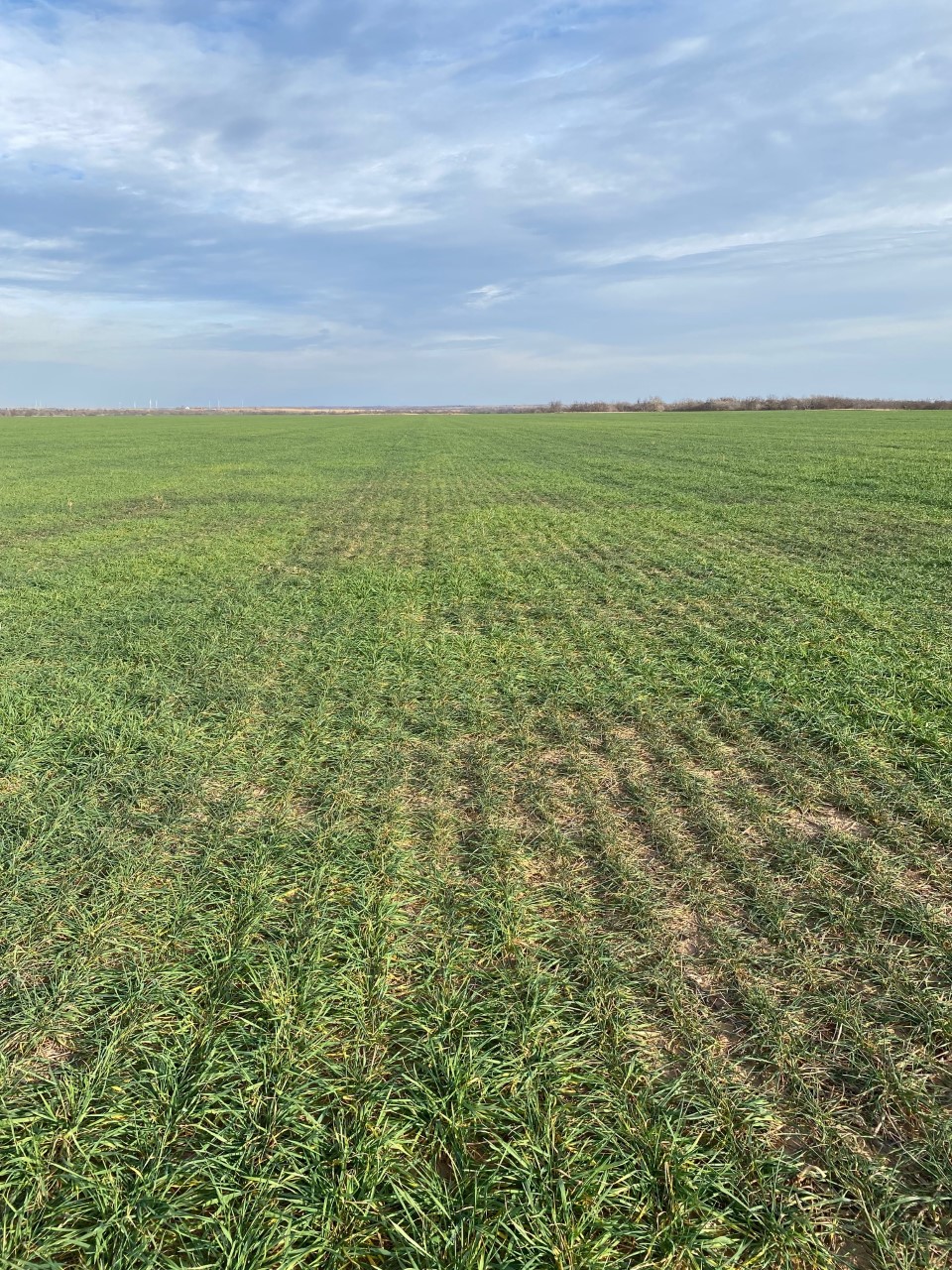
Wheat field showing signs of drought stress at Caddo County. Photo taken on Dec 7, 2021.

Wheat disease update – 16 April 2016

Wheat disease updates are written by Dr. Bob Hunger, OSU Extension Plant Pathologist

OklahomaI had limited trips outside of Stillwater this past week, and only was able to contact one County Educator before writing this today.  Wheat around Stillwater is mostly at various stages of head emergence.  I did see a few anthers on scattered heads, but not many.  By contrast, Aaron Henson (County Educator; Tillman County in south-central OK) indicated wheat in his area is mostly at flowering.

During this past week, I had several calls about spraying wheat with a fungicide.  Although rust (stripe and leaf rust) didn’t appear to increase this past week, conditions reverted to being more favorable for stripe rust development with rainfall, increased dews, and favorable temperature.  With more rains and cool temps in the forecast, stripe rust could “reactivate” again, and leaf rust will start to come into the picture.  Wheat is now at the point where it will quickly move past the stage (the start of flowering) where it can be sprayed with most fungicides.  As far as I know, all wheat foliar fungicides (with the exception of Prosaro) must be applied prior to the start of flowering (Feekes’ growth stage 10.5).  Prosaro can be applied through growth stage 10.5.1, which is when flowering is just starting (anthers emerged mostly from the middle of heads).  Be sure to read all labels regarding a fungicides use on wheat.  There also are varying pre-harvest intervals (PHIs) required for the various fungicides, and often the length of time from heading to harvest can be short in Oklahoma.  So, be aware of these PHIs, and spray accordingly.

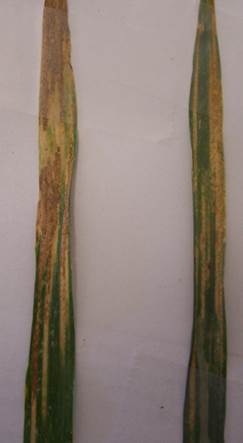
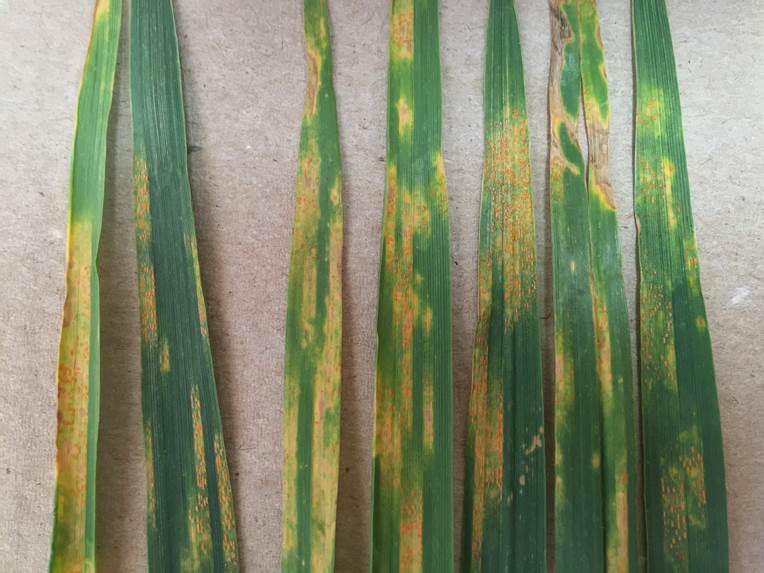
Active sporulation of stripe rust still can be found around Stillwater and the surrounding area.  Stan Fimple (County Educator, Pawnee County just to the northeast of Stillwater) sent me the following photos showing active stripe rust.  The photo on the top shows an actively sporulating “stripe” of strip rust (yellowish-orange in color), whereas in the photo on the bottom in the “stripes” you can see dark, blackish specks (teliospores) starting to appear.


Active spore stage of stripe rust

Active spore stage of stripe rust

Survival spore stage of stripe rust

Survival spore stage of stripe rust


Other than this, I have seen scattered leaf rust pustules on lower leaves around Stillwater, and powdery mildew also has become more apparent around Stillwater and at Lahoma as reported by Dr. Brett Carver (OSU Wheat Breeder).  However, both of these diseases are at low levels on lower leaves but with coming rain and cool temperatures both (especially leaf rust) could continue to increase on the upper canopy.  Around Stillwater, barley yellow dwarf spots continue to be observed but the aphids are now gone or at least in much lower in frequency.  If heavy rains come over the next 3 or so days, I would imagine aphid populations will be mostly eliminated.

Finally, I want to raise awareness once again to Fusarium head blight (scab) of wheat.  When wheat flowers it is susceptible to infection by the Fusarium fungus that causes scab.  That time is quickly approaching. Occasionally Oklahoma has problems with this disease, typically more so in eastern/northeastern Oklahoma than through the central and western parts of the state.  However, scab was severe across the state for a couple years around 2010 and there also was some reported last year.  For more information on scab, please see PSS-2145 (Fusarium Head Blight (Head Scab) of Wheat:  Questions & Answers) and PSS-2136 (Considerations when Rotating Wheat Behind Corn) that can be found at: wheat.okstate.edu.  An additional resource is the Fusarium Head Blight Prediction Center at http://www.wheatscab.psu.edu/.  At this site you can read commentaries submitted by specialists from each state but more importantly see if weather conditions in your area have been conducive to development of FHB.  The site is easy to use and especially may be beneficial in helping make fungicide application decisions.

Reports/excerpts of reports from other states:

Louisiana:  Dr. Stephen Harrison, Wheat & Oat Breeder, Louisiana State University, Apr 15, 2016:  My research associate (Kelly Arceneaux) is at the Rice Research Station in Crowley (Southwest) Louisiana rating plots today.  We plant a double-headrow set of a number of nurseries every year for disease screening at this location in collaboration with Don Growth (rice pathologist).  This site is inoculated with scabby corn but is not misted due to the abundance of humidity and free moisture at this site.  Nurseries include: Statewide Variety Trial, Uniform Southern Soft Red Winter Wheat Nursery, Uniform Southern Scab Nursery, Sunwheat, GAWN.  Kelly reports that stem rust is heavy and widespread at this site.  Leaf rust is moderate and scab is at an intermediate level, which is good for distinguishing lines.  The earliest plots are starting to mature, probably just past soft dough, while the latest lines are just past heading or not vernalized and not going to head.  We only received about 50% of our normal vernalization hours this winter and quite a few lines in the statewide variety trials will not be harvested due to vernalization issues.

Nebraska:  Dr. Stephen Wegulo, Extn Plant Pathologist, University of Nebraska, April 14, 2016:  “On Friday April 8, Jenny Rees, UNL Extension Educator, found trace amounts of stripe rust in a wheat field in Nuckolls County in south central Nebraska.  Earlier this week, samples from several wheat fields in Banner County submitted to the lab of Dr. Bob Harveson (Extension Plant Pathologist) at UNL’s Panhandle Research and Extension Center in Scottsbluff were positive for stripe rust and leaf rust.  This week on April 12 and 13 I surveyed wheat fields in the southernmost tier of counties in southeast, south central, and west central Nebraska.  Dry weather which has prevailed over the last two weeks or so stopped rust development.  I did not find rust in any of the fields I visited in the southernmost tier of counties.  Several fields showed symptoms of stress from lack of moisture.  Today I looked at research plots at Havelock Farm here in Lincoln (Lancaster County) and at the Agricultural Research and Development Center (ARDC) near Mead (Saunders County, about 35 miles north of Lincoln).  I found a few hot spots of stripe rust at Mead (see first attachment), mostly on the lower leaves.  I also found trace levels of leaf rust at Mead (second attachment).  Powdery mildew was the predominant disease at Lincoln and Mead, but I also saw significant levels of Septoria tritici blotch in one research field at Mead.  Wheat growth stage across the state ranges from Feekes 5 and 6 (most fields) to Feekes 7 in some irrigated fields.”

South Dakota:  Dr. Emmanuel Byamukama, Extension Plant Pathologist, South Dakota State University; Apr 13, 2016:  “Several winter wheat fields in central South Dakota were scouted yesterday for stripe rust. One field originally found with stripe rust last week was the only one we found with stripe rust. Stripe rust was found on old/dying leaves and some of the leaves had teliospores, indicating the source of this rust would have been from overwintered stripe rust in South Dakota.”


Wheat disease update – 02 April 2016

Wheat disease updates are written by Dr. Bob Hunger, OSU Extension Plant Pathologist

Wheat has advance in maturity across OK this past week flag leaves definitely are emerging around Stillwater.  From reports I’ve received I believe across the state wheat ranges from flag leaves emerging to heads starting to emerge (although wheat in far northwest OK and the panhandle may not be quite as far along).  I didn’t hear specifics but was told that freeze damage has been observed around Kingfisher in central OK.  With frost/freezing temps again last night, additional damage is possible.  Drought, although not as bad as last year, also is creeping back into the picture.  One producer from southwestern OK indicated to me that “leaves are rolling-up at 2 o’clock in the afternoon.”  I didn’t see any wheat that looked stressed, but in several locations had to dig 4” or more to find moist soil.

In my trips this past week to central OK (Watonga) and to more north-central OK (Blackwell), I could find stripe rust, but it doesn’t appear to me that it had advanced (become more severe).  In fact, Zack Meyer (Extn Educator; Kingfisher Cnty) sent me the following photo that shows the telial spore stage of the stripe rust fungus forming on wheat leaves.  Look closely at the photo and you can see minute yellowish-orange pustules of stripe rust also present on the leaves (especially the greener leaf).  The telial stage is considered more of a survival spore stage and indicates that stripe rust is encountering unfavorable conditions and starting to shut down.  Although this is good news, stripe rust can quickly “reactivate” if favorable temperature and moisture are resumed.

Telial/uredinial pustules of the stripe rust fungus. Zack Meyer; Extn Educator; Kingfisher Cnty

Telial/uredinial pustules of the stripe rust fungus. Zack Meyer; Extn Educator; Kingfisher Cnty


Unfortunately there also is a lot of active stripe rust still in the state as I have had numerous calls from across OK to discuss spraying options, and Greg Highfill (Extn Educator; Woods Cnty) sent me the following photo showing moderate/severe and active stripe rust on wheat in northern-central OK.


Photo credit:  Greg Highfill - Extn Educator; Woods Cnty in northern-central OK

Photo credit: Greg Highfill – Extn Educator; Woods Cnty in northern-central OK


Reports/excerpts of reports from other states:  No reports from Texas, but did hear the following from Kansas and Nebraska.

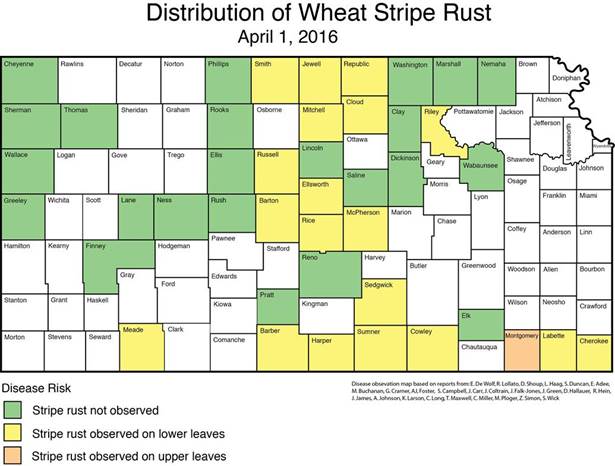
Kansas:  Dr. Erick DeWolf; Extn Plant Pathologist; Kansas State University; Manhattan, KS; Apr 1, 2016:  “The Kansas wheat crop is progressing rapidly through the jointing stages of development in much of the state.  Wheat in the Southeast portion of the state is at or fast approaching flag leaf emergence.  The crop is generally considered to be two or three weeks ahead of schedule.

Scouting reports indicate that stripe rust is becoming established in the 2016 wheat crop.  This past week, stripe rust was reported in many counties in central and eastern Kansas.  The disease is still at low levels in most fields with a few exceptions in Southeast Kansas.  This early establishment of stripe rust increases the risk of severe yield loss and growers should continue to monitor the situation carefully.  If weather conditions become favorable, the disease could spread rapidly from the lower leaves, where it is now established, to the upper leaves that are critical for grain development.  Leaf rust is still active in the western tier of counties bordering CO but remains a low levels in most fields.  Powdery mildew is severe in some fields in central and eastern Kansas.”

3image003


Nebraska:  Dr. Stephen Wegulo; Professor/Extn Plant Pathologist; University of Nebraska-Lincoln; Lincoln, NE, KS; Mar 31, 2016:  “Yesterday March 30, 2016: Jennifer Rees, UNL Extension Educator, found trace levels of actively sporulating leaf rust in wheat fields in Nuckolls County in south central Nebraska.  Nuckolls County is in the southernmost tier of counties that border Kansas.  She did not find actively sporulating stripe rust; however, in one field there was evidence of stripe rust that was active last fall.”


Colorado:  Dr. Kirk Broders; Ast Professor; Colorado State University; Ft. Collins, CO; Mar 29, 2016:  “As I mentioned last week stripe rust is now present in eastern Colorado with a confirmed report of stripe rust in the Prospect Valley region northeast of Denver. We have received several reports of stripe rust from that same region. This past week was windy with some precipitation in this area of Colorado, so spores were spread but there was limited moisture to promote additional infection.  There is rain in the forecast for this coming week and the rain is certainly needed for the wheat, but also will provide a favorable environment for stripe rust to increase because temperature is supposed to be staying in the 50s-70s for the days and 20s-40s at night. If you already have noticeable levels of rust in your field you may want to consider including a fungicide at tillering (GS 4) or when you make your herbicide application. If you do not currently have rust in your fields or in your region, I would recommend waiting until closer to flag leaf and monitor the spread of stripe rust in the state.  CSU Extension specialist Wilma Trujillo was able to examine wheat in the southwest part of the state near Lamar, where stripe was present last fall. We examined these leaves and found no evidence stripe rust was able to overwinter in this region of the state. It is still early in the season, but there is certainly the possibility for stripe rust to become a serious problem in the state again this year. There are also the threat of leaf rust we should not forget about. Leaf rust has been present in western Kansas for the last 2 weeks and has likely moved into eastern parts of the state. I have not received in specific reports, but would appreciate you feedback if you have observed either stripe rust of leaf rust in you fields.