Unknown's avatar

About Amanda De Oliveira Silva

I have served as an Assistant Professor and Small Grains Extension Specialist at Oklahoma State University since August 2019. I believe that close interaction with producers is vital to understand their production strategies and to establish realistic research goals. My program focuses on developing science-based information to improve the agronomic and economic viability of small grains production in Oklahoma and in the Southern Great Plains.

Freeze injury update – worse than we thought

On April 4th I toured southwest Oklahoma and surveyed freeze injury to wheat. In my experience, most freeze events are overhyped; however, this one was the real deal Holyfield.  I traveled a route from Faxon to Chattanooga to Altus to Blair and ended up at Apache. Damage was similar at all sites, with injury ranging from 50 to 80%.

The best looking wheat was the hardest hit. Particularly troubling are some fields in the Altus area that easily had 80 bushel potential prior to the freeze. In most of these fields we are too far past the tillering stage to have yield compensation from secondary tillers. Late-emerging fields that were jointing or smaller escaped the freeze with little injury. Fields that had been heavily grazed and/or under-fertilized also escaped with relatively minor injury.  Conditions improved slightly when I checked wheat in the Chickasha area and injury was more in the 10 – 30% range.

I am frequently asked if the injured wheat head will go ahead and “push through” as the season progresses, and the answer is no. So, if you see heads emerging out of the boot in a few weeks, they are likely not damaged and a head count at this stage will be a reasonable estimate of fertile heads. Since there will not be additional stem elongation in freeze injured wheat, it will not accumulate as much tonnage as in a ‘normal’ year.

I have posted a few pictures below showing freeze injury symptoms. Freeze injury can vary greatly among fields and even within a field. So, it is important to check several sites within a field and split several stems when determining the percent injury. Check early maturing varieties such as Jackpot, Billings, and Everest first, as they are most likely to have injury.

Image

Endurance wheat collected from plots at Chattanooga, OK. The two top heads are freeze damaged and will not recover. Note the shriveled, white appearance of the wheat head. The bottom head was not injured and is healthy green.

A healthy head of Endurance  from Apache, OK.
A healthy head of Endurance from Apache, OK.

Even though this wheat was just past jointing, it was injured by the freeze and the head was lost.
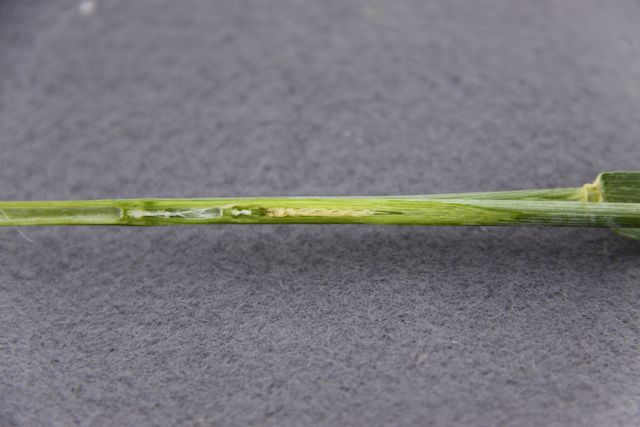
Even though this wheat was just past jointing, it was injured by the freeze and the head was lost.

Freeze injured Billings from the Altus research station

Freeze injured Billings from the Altus research station

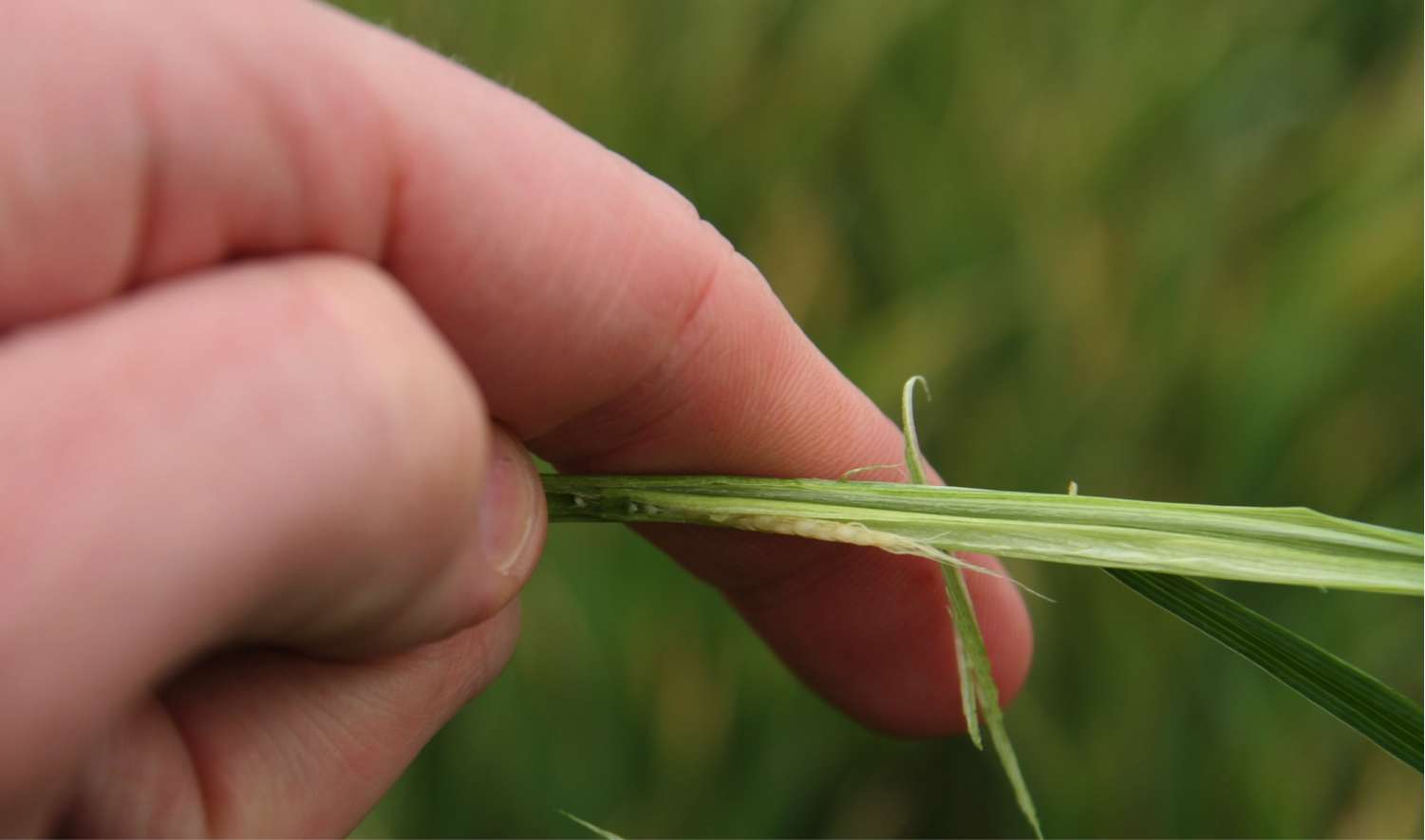
A sign of the drought. Wheat seed still easy to find on a sample from near Altus, OK April 4.

A sign of the drought. Wheat seed still easy to find on a sample from near Altus, OK April 4.

Freeze injury to wheat

Temperatures across Oklahoma dipped into the teens and 20’s March 25 and 26 (see maps below). The rule of thumb is temperatures below 24F will damage wheat at or past the jointing stage, so it was certainly cold enough to injure wheat that was not delayed due to drought stress, grazing, or late emergence.  ImageImage

Freeze injury is not an exact science, and it remains to be seen whether or not we actually have widespread wheat freeze injury in the 2013 wheat crop.  My best guess is that we will have some injury and might lose our primary tillers in more advanced fields. Wheat that is at Feekes growth stage 6 – 7 generally has the ability to compensate for primary tiller loss by keeping secondary tillers that would otherwise be sloughed off in April. In this scenario, the effect on final grain yield would be minimal. Wheat that has already aborted secondary tillers does not have this flex ability and will not recover from freeze injury.  This is why March freezes are generally yield reducing and April freezes are yield eliminating. I will check fields late next week and post the results on this blog.

Freeze injury is not clearly identifiable until 7 – 10 days after the freeze event. So, the best advice for a wheat farmer after a freeze event is to find something else to do for a week or two and then check your crop. I have provided some pictures below with typical injury symptoms and rules of thumb regarding the extent of the injury. Fields should be checked at several random locations by splitting 10 – 20 stems at each location and looking for injury. Don’t focus solely on the large stems. Split a random sampling and determine the percent damage. A good reference for evaluating freeze injury to wheat is K-State Extension Publication C-646 Spring Freeze Injury to Kansas Wheat (access online by clicking here).

This is a healthy wheat head at approximately growth stage 6 - 7. Note the light green color and healthy, turgid appearance.

This is a healthy wheat head at approximately growth stage 6 – 7. Note the light green color and healthy, turgid appearance.

Freeze injury just after jointing. Note the pale, milky color of the head.

Freeze injury just after jointing. Note the pale, milky color of the head. Freeze injury to wheat heads at this growth stage is all or none, so this head is a complete loss.

Leaf tip burn from freeze injury will have no impact on final grain yield

Leaf tip burn from freeze injury will have no impact on final grain yield

Yellowing is a common reaction to light freeze injury. Wheat will recover quickly from this injury.

Yellowing is a common reaction to light freeze injury. Wheat will recover quickly from this injury.

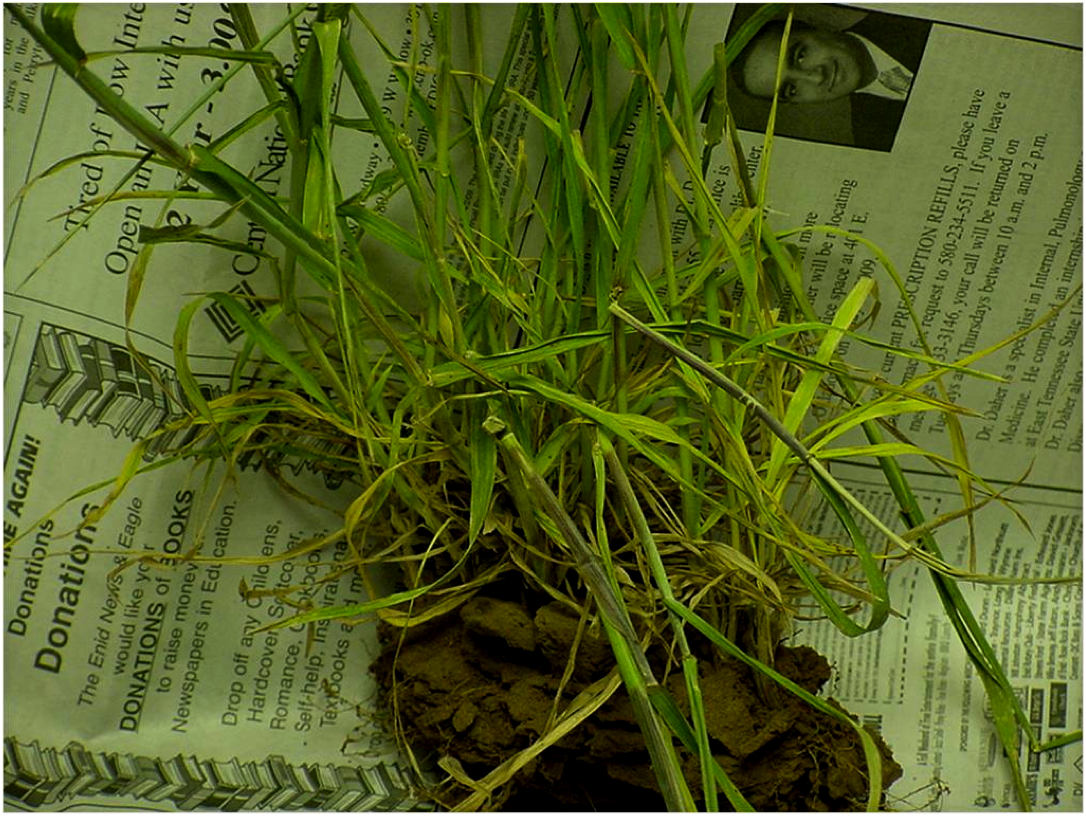
Severe freeze injury at or just after jointing can turn the entire plant brown and fields can exude an odor similar to fermenting silage. If conditions are favorable, the plant can produce new tillers (as shown here) and make a partial recovery. It will take a few weeks after a freeze event to determine if the plant will recover from this type of injury

Severe freeze injury at or just after jointing can turn the entire plant brown and fields can exude an odor similar to fermenting silage. If conditions are favorable, the plant can produce new tillers (as shown here) and make a partial recovery. It will take a few weeks after a freeze event to determine if the plant will recover from this type of injury

It is common for sub-lethal freeze injury to result in bent or weak lower nodes. These plants might look fine, but will lodge during grain fill.

It is common for sub-lethal freeze injury to result in bent or weak lower nodes. These plants might look fine, but will lodge during grain fill.

First hollow stem update 03/13/13

Most wheat varieties are now at first hollow stem. As mentioned in previous posts, the drought has wheat development in Oklahoma a good one to two weeks behind normal. If you still have cattle on wheat pasture it is past time to remove them, as there will be a significant grain yield penalty for further grazing.

CHICKASHA

                 cm of hollow stem

Variety           03/13/13

Jagger             .

Endurance       0.5

Deliver             1.5

Pete                 0.7

Ruby Lee         3.2

Garrison           2.2

Duster              1.9

Gallagher        .

Iba                   2.2

Fuller               .

Everest           .

Jackpot            .

Doans              1.6

Greer               .

CJ                    2.2

Razor               .

Armour             .

WB-Cedar        3.7

WB-Redhawk    .

T153                .

T154                .

T158                0.9

OK08328         0.8

*Average of ten hollow stem measurements in wheat sown 09/20/12 at Chickasha, OK

Stillwater

                 cm of hollow stem

Variety            03/13/13

Jagger                 3.2

Endurance          0.7

Deliver                 1.7

Pete                    0.7

OK Bullet            1.7

OK Rising            2.1

Centerfield          1.4

Ruby Lee             .

Garrison               .

Duster                  1.6

Gallgher              1.8

Iba                       0.4

Billings                2.4

Fuller                   .

Everest                .

Jackpot                4.3

Doans                  .

Greer                   1.2

CJ                        0.4

Razor                   .

Armour                3.2

WB-Cedar            2.7

WB-Redhawk       4.1

WB-Duece CL+    .

WB-Grainfield      0.8

Winterhawk          2.0

WB-4458             .

T153                   .

T154                   .

T158                   0.6

LCS Mint             0.4

LCH08-80            0.5

LCH08 – 109        0.7

T173                   0.7

Byrd                     1.8

Brawl CL+            0.5

TAM 113             1.3

OK09915C          0.9

OK09935C          0.9

OK09634             1.8

OK09125             0.4

OK09528             0.4

OK09729             0.5

OK08328             0.3

*Average of ten hollow stem measurements in wheat sown 09/18/12 at Stillwater, OK

Onset of first hollow stem was affected by severe drought stress

First hollow stem update 03/08/2013

We are not progressing towards first hollow stem as quickly as I anticipated, but most varieties are getting close. The drought has likely slowed onset of first hollow stem. Keep in mind that drought stressed wheat might need longer to recover from grazing, so it will likely be better to remove cattle a little early in 2013.

CHICKASHA

                 cm of hollow stem

Variety           03/06/13

Jagger             .

Endurance       0.46

Deliver             0.43

Pete                 0.4

Ruby Lee         1.3

Garrison           1.44

Duster              0.49

Gallagher        .

Iba                   0.78

Fuller               1.99

Everest           .

Jackpot            1.69

Doans              0.55

Greer               .

CJ                    0.38

Razor               .

Armour             1.7

WB-Cedar        0.82

WB-Redhawk    2.71

T153                2.27

T154                2.44

T158                0.5

OK08328         0.36

*Average of ten hollow stem measurements in wheat sown 09/20/12 at Chickasha, OK

Stillwater

                 cm of hollow stem

Variety            03/05/13

Jagger                 1.1

Endurance          0.2

Deliver                 0.7

Pete                    0.3

OK Bullet            0.5

OK Rising            0.7

Centerfield          0.3

Ruby Lee             2.4

Garrison               1.6

Duster                  .

Gallgher              0.7

Iba                       0.1

Billings                0.4

Fuller                   1.8

Everest                .

Jackpot                1.5

Doans                  1.7

Greer                   0.5

CJ                        0.2

Razor                   2.8

Armour                1.2

WB-Cedar            1.1

WB-Redhawk       0.9

WB-Duece CL+    .

WB-Grainfield      0.7

Winterhawk          1.2

WB-4458             .

T153                   1.7

T154                   2.0

T158                   0.1

LCS Mint             0.1

LCH08-80            0.1

LCH08 – 109        0.3

T173                   0.4

Byrd                     0.1

Brawl CL+            0.1

TAM 113             0.4

OK09915C          0.4

OK09935C          0.4

OK09634             0.5

OK09125             0.4

OK09528             0.2

OK09729             0.4

OK08328             0.1

*Average of ten hollow stem measurements in wheat sown 09/18/12 at Stillwater, OK


Onset of first hollow stem was affected by severe drought stress

First hollow stem update – 03/01/2013

The OSU Small Grains Extension team checked first hollow stem at Chickasha and Stillwater this week. Measurements from both locations are provided in the tables below. Varieties with 1.5 cm or more of hollow stem are considered to be at first hollow stem. Numbers have not changed much at Chickasha due to the cold weather; however, with temperatures climbing into the 60’s next week we should see rapid progression of first hollow stem. Although planted a few days earlier, Stillwater is about a week behind Chickasha in terms of first hollow stem. This is due to severe drought stress at Stillwater. In fact, there were a few times I questioned wether or not the Stillwater plots would survive. In this situation it is important to not only consider first hollow stem but also the amount of green leaf area remaining after grazing. Wheat with less than 60% ground cover at jointing will likely not achieve full grain yield potential, even if cattle were removed prior to first hollow stem.

CHICKASHA

                     cm of hollow stem

Variety               02/28/13

Jagger                   2.5

Endurance             0.1

Deliver                   0.3

Pete                       0.2

Ruby Lee               1.1

Garrison                 0.8

Duster                    0.5

Gallagher             

Iba                         0.4

Fuller                     1.5

Everest                 –

Jackpot                  0.7

Doans                    0.4

Greer                     1.6

CJ                          0.8

Razor                     4.0

Armour                   1.0

WB-Cedar              1.1

WB-Redhawk          1.1

T153                      1.2

T154                      1.0

T158                      0.3

OK08328               0.4

*Average of ten hollow stem measurements in wheat sown 09/20/12 at Chickasha, OK


Stillwater


                     cm of hollow stem

Variety               02/27/13

Jagger                     0.4

Endurance              0.1

Deliver                     0.7

Pete                        0.3

OK Bullet                0.1

OK Rising                0.4

Centerfield              0.3

Ruby Lee                 1.2

Garrison                   0.5

Duster                      0.0

Gallgher                  0.3

Iba                           0.0

Billings                    0.2

Fuller                       0.5

Everest                    2.3

Jackpot                    0.8

Doans                      0.5

Greer                       0.4

CJ                            0.0

Razor                       0.6

Armour                    0.1

WB-Cedar                0.6

WB-Redhawk           0.9

WB-Duece CL+        4.2

WB-Grainfield          0.4

Winterhawk              0.6

WB-4458                 1.6

T153                       0.9

T154                       0.7

T158                       0.1

LCS Mint                 0.1

LCH08-80                0.0

LCH08 – 109            0.2

T173                       0.0

Byrd                         0.2

Brawl CL+                0.2

TAM 113                 0.3

OK09915C              0.1

OK09935C              0.1

OK09634                 0.0

OK09125                 0.1

OK09528                 0.0

OK09729                 0.2

OK08328                 0.1

*Average of ten hollow stem measurements in wheat sown 09/18/12 at Stillwater, OK


Onset of first hollow stem was affected by severe drought stress

First hollow stem is here

First hollow stem occurs just prior to jointing and is the optimal time to remove cattle from wheat pasture. Grazing past first hollow stem can reduce wheat grain yield by as much as 5% per day and the added cattle gains are not enough to offset the value of the reduced wheat yield. Checking for first hollow stem is fairly easy.

  • You must check first hollow stem in a nongrazed area of the same variety and planting date. Variety can affect date of first hollow stem by as much as three weeks and planting date can affect it even more.
  • Dig or pull up a few plants and split the largest tiller longitudinally (lengthways) and measure the amount of hollow stem present below the developing grain head. You must dig plants because at this stage the developing grain head may still be below the soil surface.
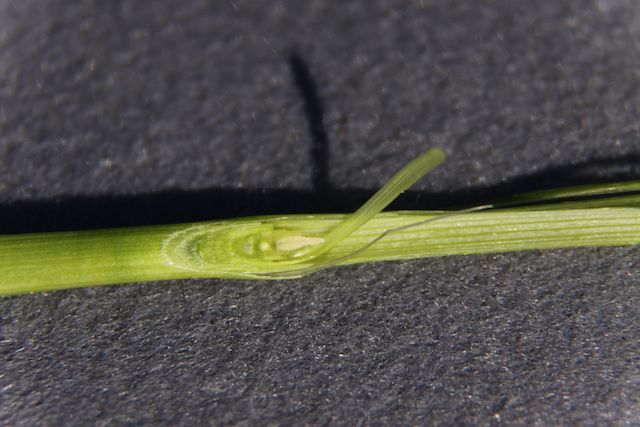
  • If there is 1.5 cm of hollow stem present (see picture below), it is time to remove cattle. 1.5 cm is about the same as the diameter of a dime.
  • Detailed information on first hollow stem can be found at www.wheat.okstate.edu under ‘wheat management’ then ‘grazing’


  • Image

We check for first hollow stem in our forage trials each year. These can be used as rules of thumb, but you will still need to check your own fields. Our Chickasha plots were sown September 20, 2012 and have had fair growing conditions. First hollow stem was measured on February 18, 2013 and the results are presented in the table below. Gallagher and Everest are just past first hollow stem and Razor is not far behind. I predict that most varieties will be past first hollow stem by March 1.

Variety Hollow stem* 02/18/13
—cm—
Jagger 0.9
Endurance 0.4
Deliver 0.3
Pete 0.0
Ruby Lee 0.7
Garrison 0.5
Duster 0.4
Gallagher 1.7
Iba 0.3
Fuller 0.5
Everest 2.1
Jackpot 0.6
Doans 0.1
Greer 0.4
CJ 0.2
Razor 1.4
Armour 0.5
WB-Cedar 0.5
WB-Redhawk 0.6
T153 0.9
T154 0.4
T158 0.0
OK08328 0.0
*Average of ten hollow stem measurements in wheat sown 09/20/12 at Chickasha, OK

Spring-planted oat for forage

Spring-planted oat has been a “go to” forage crop for southern Great Plains beef producers for years. It is a good option when winter wheat was not planted in the fall due to wet conditions, or, as is the case this year, when wheat failed to emerge due to drought. Forage production potential for spring-planted oat is around 1,500 to 2,00 lb/ac, but you will need about 60 – 75 lb/ac of nitrogen to make this type of yield. Dr. Daren Redfearn has written a fact sheet detailing spring oat production for hay and it can be found at www.wheat.okstate.edu under “wheat management” then “seeding”. I will provide the Cliff’s Notes version below.

Seed — Plant 80 – 100 lb/ac of good quality seed that has a germination of no less than 85%. There aren’t many options regarding varieties, so you will likely be limited to whatever seed is available in your area. The key is not to cut back on seeding rate, regardless of variety.

Seedbed — Sow oat seed at approximately 1/2 to 3/4 inches deep. Most producers will fare better with a conventionally-tilled seedbed. You are planting seed at a time of year when the ground is already marginal regarding temperature. Conventionally-tilled seedbeds warm more quickly, which should speed germination. There is one exception to the conventional till recommendation. If you are sowing into a stale seedbed or a failed wheat crop that is very thin, no-till should be okay. Just avoid situations where excessive residue will keep the soil cold.

Grazing — Oat plants should have a minimum of six inches of growth prior to grazing. Unlike fall-seeded cereals, you should not expect a large amount of tillering. Dr. Redfearn indicates a good stand of spring oat can provide a 750 lb animal approximately 60 days of grazing when stocked at 1.5 animals per acre

Hay — Oat should be cut for hay at early heading.

Time to topdress, but be realistic

Normally, I would be sounding the wheat topdress alarm in early January. When you have 5.5 million acres to cover, it is important to start early. However, this year we have mostly kept the topdress rigs in neutral with a wait and see approach due to the drought. The recent rain brought life to portions of the Oklahoma wheat belt and it is time to make a decision regarding topdress nitrogen. I have posted three slide presentations with audio regarding topdressing wheat at my YouTube channel available by clicking here or by searching YouTube for OSU Small Grains. I have listed some additional facts and items to consider below.

  • In order to have full benefit, nitrogen must be in the rooting zone by the time wheat is jointing. Jointing occurs around the first of March in southern OK and around the second week of March in northern OK.

  • On average it takes about 2 lbs/ac of N for every bushel of wheat yield. In addition, dual-purpose wheat requires 30 lbs/ac of N for every 100 lbs/ac of beef removed. You can subtract your soil test NO3-N from these total requirements.

  • It is okay to adjust topdress N plans based on your current yield potential. When you submitted your soil test, you might have stated a 50 bu/ac yield goal which would require 100 lbs/ac of nitrogen; however, it is important to take a hard look and determine if this yield goal is still realistic based on your current crop status. I am not suggesting to adjust based on what you think the weather might do, but it is okay to take inventory and adjust your topdress N up or down based on current field conditions.

  • Don’t have an N-rich strip? It would be a lot cooler if you did. An N-rich strip would take the guess work out of adjusting your topdress N up or down based on your current crop conditions. Your county extension educator can provide more information on N-rich strips and you can find more information on the web at www.npk.okstate.edu

2012 versus 2013 greenness maps

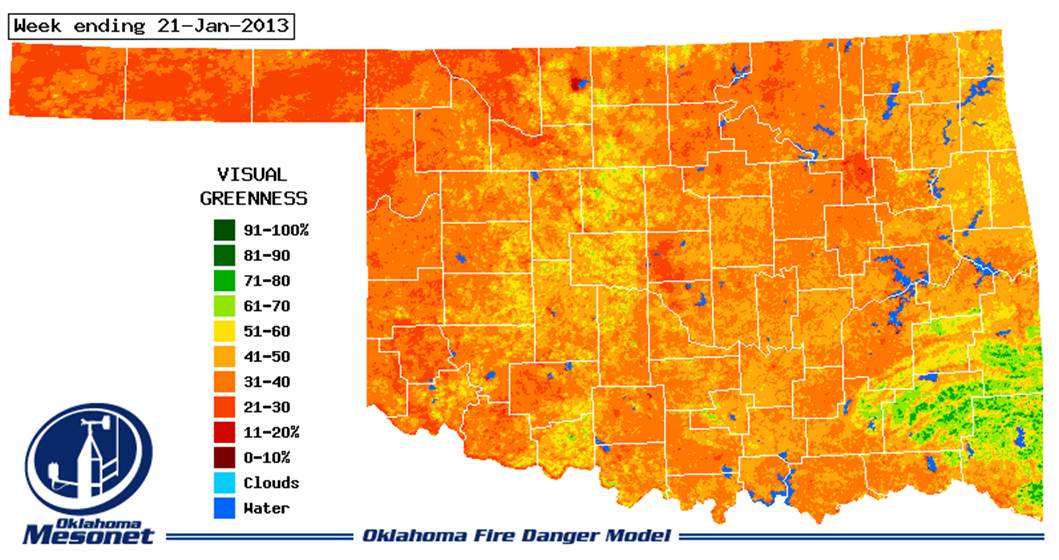
I thought I would share a couple of visual greenness maps sent to me by JD Carlson in Biosystems and Ag Engineering. These are from the Oklahoma Mesonet fire danger model site and provide a visual estimate of green vegetation for mid January 2012 (top) and 2013 (bottom). Note the stark contrast in greenness throughout the wheat belt of western Oklahoma. As indicated in the 2013 map, there are some small pockets of wheat with ample stands and average yield potential, but these are not large enough to make up for all of the red.ImageImage

Check with crop insurance provider prior to drilling mud application

There are more questions than answers when it comes to application of drilling mud to agricultural land. The list of questions expands when the drilling mud is being applied to an established annual crop, such as wheat. We simply do not have enough information to know how a growing crop will respond to drilling mud application from different sources and at different application timings.

If current conditions continue it is highly likely that many Oklahoma wheat farmers will rely on crop insurance to cash flow through 2013. Therefore, wheat farmers should check with their crop insurance provider prior to applying drilling mud to established wheat to see how application of these materials will affect their coverage. Tenants should discuss application of drilling mud with landowners and it is a good idea to address these issue in writing in the lease agreement.