Plant growth regulators for wheat

Wheat lodging is not generally a widespread problem in Oklahoma, but it does occur. Lodging occurs due to a variety of factors, and as shown in the figure below, the timing of lodging will determine the final impact on grain yield. Lodging at head emergence, for example, can cause as little as 30 or as much as 80% yield reduction. The numbers in the figure do not account for harvest losses, which can exceed losses associated with lower photosynthetic capacity shown in the figure.

Slide05

Freeze injury or disease can cause lodging due to stem failure, which is characterized by plant stems breaking near the base. I the absence of weakened stems due to freeze or disease, most lodging in wheat is caused by failure of the root anchorage system (root lodging). Root lodging occurs when the anchorage system of a top-heavy wheat plant is weakened due to moist soil and wind provides sufficient force to overcome the rotational stiffness of the root/soil complex. Research has shown that increasing the soil water content from 17 to 26% reduced the force required for anchorage failure by 33%, and as little as 0.25 inches of water plus 11 mph winds were enough to cause lodging. The thicker the wheat crop and/or the taller the wheat crop, the more force that winds exert on the root anchorage system and the greater the likelihood of lodging.
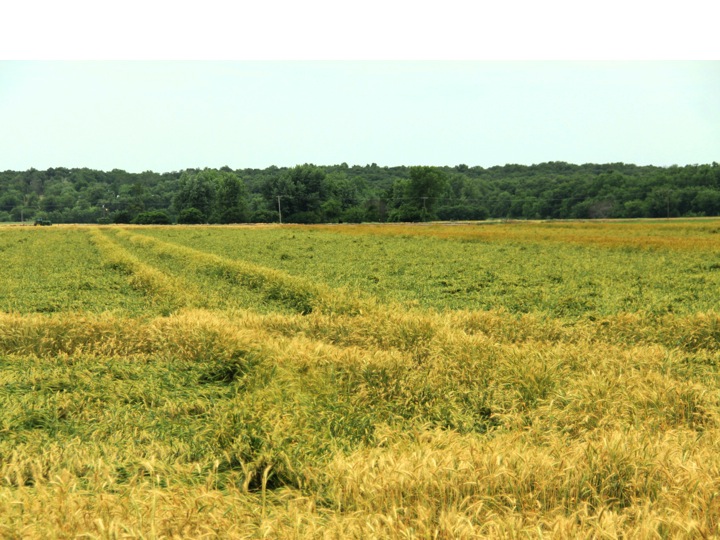
Severe lodging in an Oklahoma wheat field in 2013

In 2013 and 2014 we evaluated the plant growth regulator trinexapac-ethyl, which is sold under the trade name Palisade®. Palisade is a giberellic acid inhibitor and works primarily by reducing plant height. In our study we evaluated 12 oz/ac of Palisade with and without 4 oz/ac of Tilt (propiconazole) applied at Feekes GS 7 (two nodes visible above the soil surface). We included an untreated check and ALL plots, including the check, received 10.5 oz/ac of Quilt Xcel at Feekes GS 10.5 (heading). We conducted the trial at Stillwater (Irr), Perkins (Irr), and Chickasha (Non-Irr).


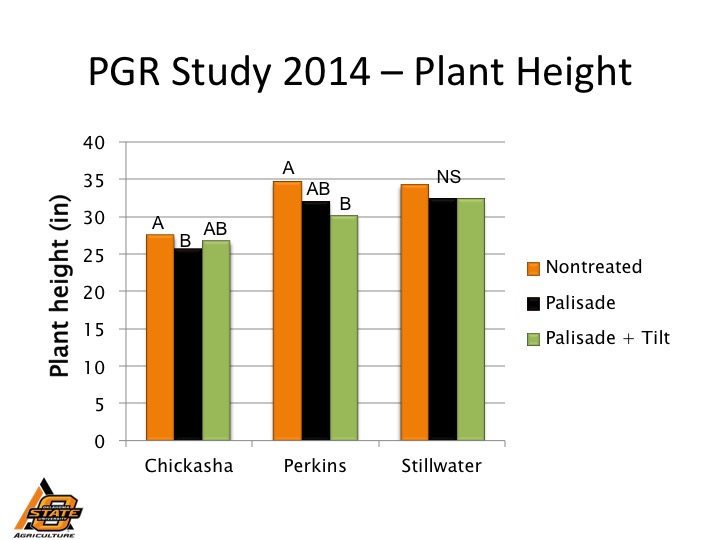
I provided 2013 results in a blog post last year, and this post provides an update including our 2014 findings. While application of Palisade resulted in numeric reductions in plant height at Chickasha and Stillwater in 2013, differences among treatments were not statistically significant. In 2014 application of Palisade or Palisade plus Tilt significantly reduced plant height at Chickasha and Perkins.
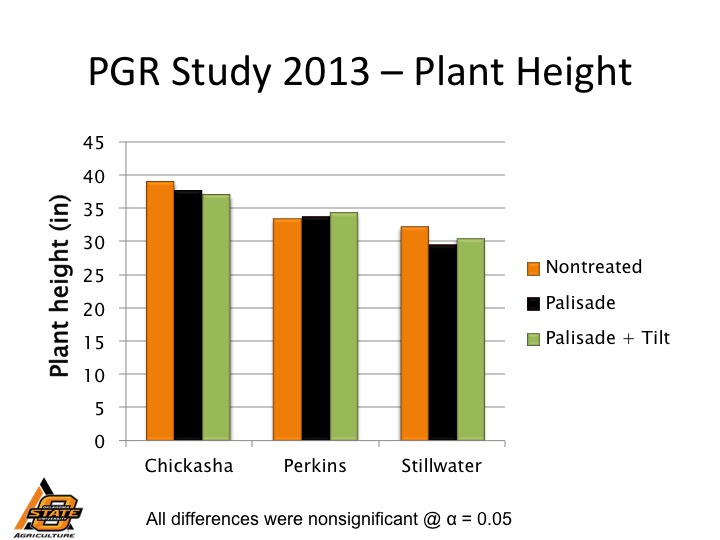
Wheat plant height as affected by plant growth regulators in 2013
Wheat plant height as affected by plant growth regulators in 2013


Wheat plant height as affected by plant growth regulator in 2014

Wheat plant height as affected by plant growth regulator in 2014

We rated plots for lodging at harvest using a 1 – 10 scale with 0 equaling no lodging and 10 equaling complete lodging.  Application of Palisade plus Tilt reduced lodging over Palisade alone at Chickasha. Application of Palidsade or Palisade plus Tilt resulted in numeric reductions in lodging scores at Stillwater in 2013, but the result were too variable to result in statistical significance. Palisade did not affect lodging at Perkins in 2013. There was no lodging for any site or treatment in 2014.


Lodging as affected by plant growth regulator in 2013. No lodging occurred in 2014 regardless of treatment.

Lodging as affected by plant growth regulator in 2013. No lodging occurred in 2014 regardless of treatment.


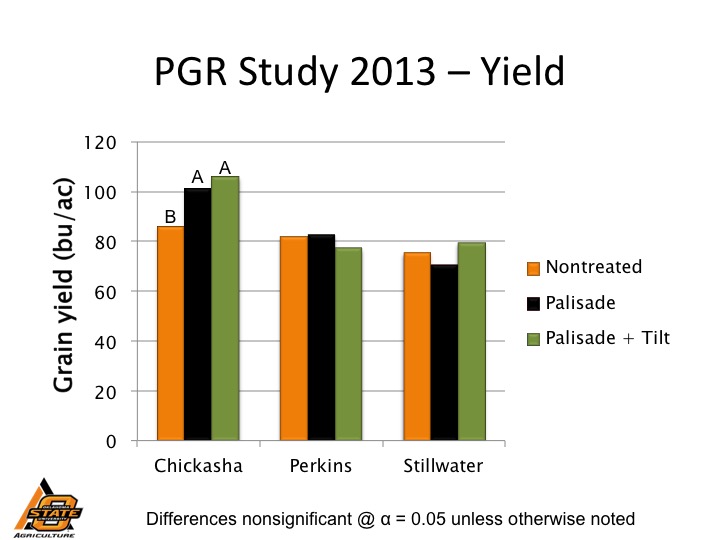
Application of Palisade or Palisade plus Tilt increased grain yield at Chickasha and had no effect on grain yield at Stillwater or Perkins in 2013. It is interesting to note that the Palisade treatment increased grain yield at Perkins in 2013 even though the plots lodged at comparable levels as the non treated check. My best hypothesis is that the treated plots lodged later than the non treated plots, as all plots were standing at anthesis (see picture below). Application of Palisade or Palisade plus Tilt increased grain yield at Perkins in 2014 even though there was no lodging. There were no differences in grain yield at Stillwater or Chickasha in 2014. Lodging occurred at Chickasha, but occurred later in the season.

Wheat grain yield as affected by plant growth regulator in 2013

Wheat grain yield as affected by plant growth regulator in 2013

Wheat grain yield as affected by plant growth regulator in 2014

Wheat grain yield as affected by plant growth regulator in 2014


To summarize our work, we found a trend for one to two inch reductions in plant height when Palisade or Palisade plus Tilt were applied, but this did not consistently translate to increased grain yield. Our results are consistent with other wheat plant growth regulator research, which has reported similar variation in response among sites and years.  The literature also shows that reduction in lodging is relative to the straw strength of the variety. That is, a plant growth regulator will not make a lodging prone variety stand like one with excellent straw strength, rather they will make it less prone to lodging relative to the same variety non treated.

Based on current evidence, plant growth regulators in Oklahoma are best kept on acres with high (> 80 bu/ac) yield potential that may have greater propensity for lodging due to variety or fertility.  If these high yield potential acres are being sprayed with a growth regulator at GS 7, the addition of a foliar fungicide might be prudent if it can be included at a relatively low cost. This early-season fungicide application will not, however, substitute for a fungicide application at flag leaf.

Full disclosure: Syngenta donated the product for this trial, but the only funding for the research was provided by the Oklahoma Agricultural Experiment Station and the Oklahoma Cooperative Extension Service. We conducted a separate trial evaluating Palisade in drought stress environments that was partially funded by Syngenta. The analysis and recommendations made in this blog post are based on research findings from 2013 and 2014 production years. Recommendations may change as further research is conducted and new information is obtained.
First hollow stem update 02/19/15

First hollow stem is the optimal time to remove cattle from wheat pasture (full explanation). We measure first hollow in our September-sown wheat forage plots at Stillwater each year, and the warm temperatures have caused first hollow stem to advance ahead of schedule this year. The small grains extension crew split ten stems from each of the 56 lines tested in our program yesterday and Sy Llano, WB-Cedar, WB-Redhawk, and a few experimental lines were all at first hollow stem. Early varieties such as Gallagher, Greer, Everest, WB4458, TAM 114, and Brawl CL Plus are not far behind. A full listing of first hollow stem measurements are included in the table at the end of this blog. We will take another set of measurements the first of next week and report the results on this blog.

The numbers reported from Stillwater are likely behind those being observed in southern Oklahoma and ahead of those observed in northern Oklahoma. Jim Johnson with the Noble Foundation reported seeing quite a bit of first hollow stem in early varieties last week.

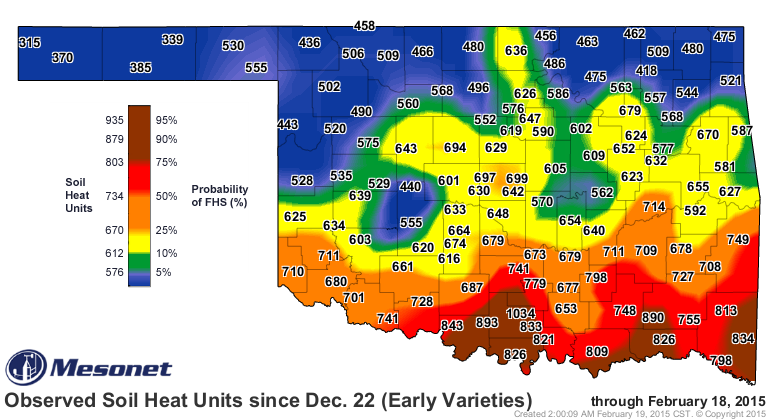
Probability of first hollow stem for early maturing wheat varieties as estimated on 02/19/15. Red areas indicate there is at least 50% likelihood that early-maturing wheat varieties have reached first hollow stem in the shaded area.

Probability of first hollow stem for early maturing wheat varieties as estimated on 02/19/15. Red areas indicate there is at least 50% likelihood that early-maturing wheat varieties have reached first hollow stem in the shaded area.

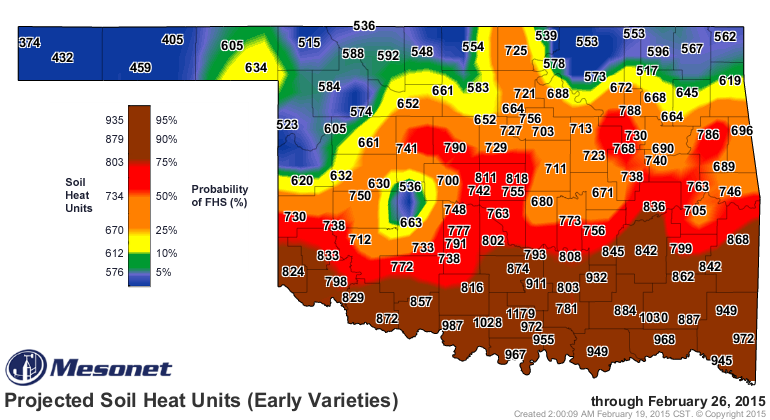
One week projection of first hollow stem for early-maturing wheat cultivars 02/19/15

One week projection of first hollow stem for early-maturing wheat cultivars 02/19/15

The First Hollow Stem Advisor on the Oklahoma Mesonet indicates that  early varieties in southern Oklahoma are likely past first hollow stem and that early varieties in central Oklahoma will reach this point within a week.

Keep in mind the one week projection uses historical weather conditions which are slightly above our current forecast. Cooler than normal conditions will not last long and wheat can grow anytime average daily temperature is above 32F. So, my advice is to move cattle off of wheat pasture in southern Oklahoma yesterday, start moving them off of wheat pasture in central Oklahoma today, and move cattle off wheat pasture in northern Oklahoma next week.


First hollow stem measured in wheat sown 09/16/2014 at Stillwater, OK. Varieties at or past first hollow stem (>1.5 cm of hollow stem) are shaded in red.
Variety cm of hollow stem 02/18/14
Endurance 0.1
Deliver 0.0
Pete 0.0
OK Rising 0.0
Billings 0.7
Ruby Lee 0.0
Garrison 0.1
Duster 0.1
Gallagher 1.2
Iba 0.2
Centerfield 0.0
Doublestop CL Plus 0.0
NF 101 0.9
Everest 1.3
1863 0.6
KanMark 0.5
Oakley CL 1.0
KS061406 0.4
Sy Llano 2.7
Sy Southwind 0.8
Greer 1.4
Jackpot 0.8
Sy Monument 0.0
06BC722#25 0.5
AP09T7631 0.7
WB-Cedar 1.5
WB-Redhawk 1.5
WB4458 1.3
WB-Grainfield 0.1
Winterhawk 0.8
T153 1.1
T154 0.6
T158 0.1
LCS Mint 0.7
LCS Wizard 0.4
LCS Pistol 0.8
LCH13DH-20-87 0.4
LCH13DH-14-91 1.8
TAM 112 0.9
TAM 204 1.0
TAM 113 0.7
TAM 114 1.3
CO11D174 0.5
Byrd 0.5
Brawl CL Plus 1.2
OK09125 0.9
OK1059060-2C14 0.4
OK10126 0.5
OK11D25056 0.2
OK11231 0.6
OK12621 0.7
OK13625 1.6
OK0986130-7C13 2.2
OK08P707W-19C13 0.9
OK10728W 1.0
OK11755W 1.2
Average 0.7


Checking for first hollow stem

First hollow stem occurs just prior to jointing and is the optimal time to remove cattle from wheat pasture. First hollow stem usually occurs in mid to late February in southern Oklahoma and early March in northern Oklahoma. Grazing past first hollow stem can reduce wheat grain yield by as much as 5% per day and the added cattle gains are not enough to offset the value of the reduced wheat yield.

Similar to previous years, we will monitor occurrence of first hollow stem in our wheat plots at Stillwater and report the findings on this blog. There is also a new first hollow stem advisor available on the Oklahoma Mesonet that can assist in determining when to start scouting.

Checking for first hollow stem is fairly easy.

  • You must check first hollow stem in a nongrazed area of the same variety and planting date. Variety can affect date of first hollow stem by as much as three weeks and planting date can affect it even more.
  • Dig or pull up a few plants and split the largest tiller longitudinally (lengthways) and measure the amount of hollow stem present below the developing grain head. You must dig plants because at this stage the developing grain head may still be below the soil surface.
  • If there is 1.5 cm of hollow stem present (see picture below), it is time to remove cattle. 1.5 cm is about the same as the diameter of a dime.
  • Detailed information on first hollow stem can be found at www.wheat.okstate.edu under ‘wheat management’ then ‘grazing’
  • Image
The plant on the left is past first hollow stem and is jointing. The plant on the right is at first hollow stem

The plant on the left is past first hollow stem and is jointing. The plant on the right is at first hollow stem

Wheat disease update – 11 February 2015

Wheat disease updates are written by Dr. Bob Hunger, OSU Extension Plant Pathologist

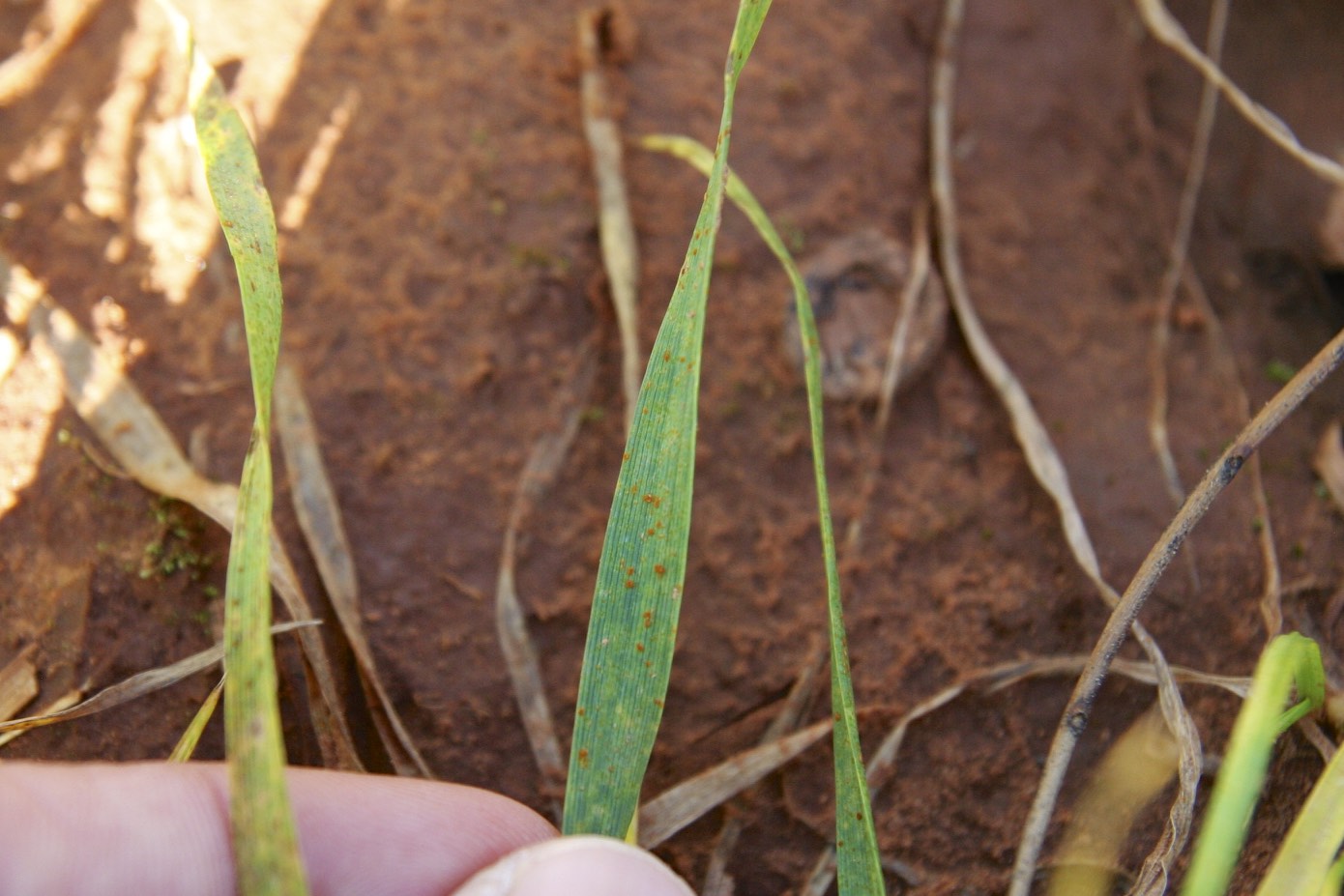
Oklahoma: Reports of diseases in Oklahoma have been sparse (as expected for this time of year) but certainly more numerous than last year when drought curtailed foliar diseases.  Yesterday (10-Feb) I found wheat leaf rust at a low, but consistent level in guard strips of Jagalene planted around a large wheat breeder nursery here in Stillwater.  Susceptible-type pustules were on lower leaves at 15-25%.  As temperature increases and with moisture this rust will increase and spread.

Gary Strickland (Extension Educator – southwest Oklahoma) indicated to me that he had heard reports of some leaf rust in Tillman County and also has seen a few pustules here and there on wheat in Jackson County, but nothing severe.  He has seen no powdery mildew and no root rots to speak of.  He also indicated there were a lot of acres of “little wheat” with some looking good if moisture had been received but that the southwest OK was quickly drying out.

Symptoms of wheat soilborne mosaic/wheat spindle streak mosaic (SB/SS) have shown up in Dr. Edward’s variety demonstration as well as in my SB/SS evaluation nursery, but symptoms are not yet striking as the flush of spring growth has not yet started.

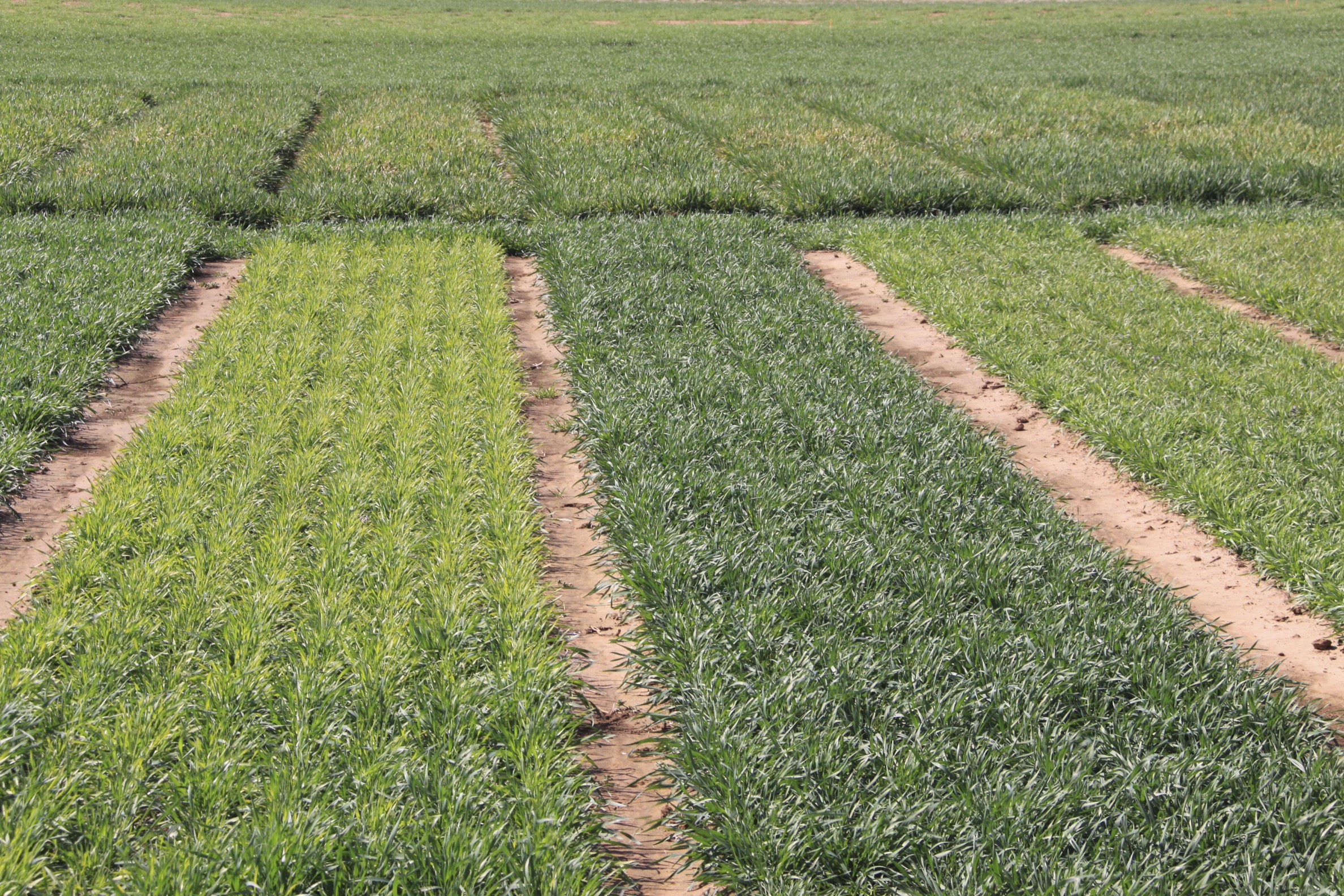
Wheat soilborne mosaic virus can cause yellowing in the spring in susceptible varieties such as the one on the left.

Wheat soilborne mosaic virus can cause yellowing in the spring in susceptible varieties such as the one on the left.


Reports/excerpts of reports from other states:

Louisiana; Dr. Stephen Harrison (Professor; Wheat & Oat Breeder, LSU AGCenter) 3-Feb-2015:  “Stripe rust has been reported in several commercial fields and nurseries around central and northeast Louisiana.”


Texas Dr. Amir Ibrahim (Prof, Small Grains Breeding and Genetics, Texas A&M AgriLife Research) 3-Feb-2015:  “Wheat stripe rust found in Texas Blacklands area:  On January 29th, Russell Sutton, Assistant Research Scientist with the Small Grains program at Texas A&M University and our anchor in the northern Blacklands area and northeast Texas, visited our research plots near Ennis Texas. Russell found a small hot spot of stripe rust on the susceptible variety ‘Patton’ that we use as a spreader. The spot was about three feet in diameter and the lower leaves where heavily infected. The wheat appears to have completed the tillering stage and ready to begin jointing.  Russell will return in two weeks and collect some spores and look for more infection sites.

Wheat disease update – 31 October 2014

Wheat disease updates are written by Dr. Bob Hunger, OSU Extension Plant Pathologist

Oklahoma:  We’ve not seen any diseases so far this fall around Stillwater, but we have been relatively dry and much of the wheat was not planted until the past couple of weeks.  Mark Gregory (Area Extn Agron Spclt – southwestern OK) indicated to me earlier this week that he has not seen or heard any reports of leaf rust or other diseases.  However, Bryan Vincent (Crop Scout – NW/NC Oklahoma) sent me some photos of leaf rust pustules he found in several fields around the Aline-Helena area (30-40 miles northwest of Enid in north-central OK).  The pustules were extremely sparse and found only in very early planted wheat.  Bryan also reported seeing some light tan spot infections.  Leaf rust also has been observed in Kansas, Colorado, and Nebraska (see reports below), and stripe rust has been reported in Wyoming, Montana and the PNW.

Fall infestations of leaf rust rarely carryover to the spring and generally do not warrant treatment. Monitor fields and consider a split fungicide application in the spring if heavy foliar disease is still present at Feekes GS 6 - 7

Fall infestations of leaf rust generally do not warrant treatment. Monitor fields and consider a split fungicide application in the spring if heavy foliar disease is still present at Feekes GS 6 – 7 in early March

When leaf rust occurs in the fall in Oklahoma, the question arises regarding the value of spraying to control that rust.  Fall-infected leaf rust plants typically have yellowed lower/older leaves with rust pustules, but the youngest 2 or 3 leaves are green and healthy.  As temperature drops through November and December, the older rust-infected leaves die and new infections are greatly slowed and inhibited.  Grazing also helps to remove these leaves and increase air circulation and drying that are conditions less favorable to spread of the disease.  Given these considerations, spraying to control leaf rust in the fall is of limited value.  The primary concern with fall infections of leaf rust is that with a mild winter and sufficient moisture, the rust will survive through the winter and inoculum will be present in fields to start the disease early in the spring.  Hence, monitoring of these fields through the winter and early next spring is recommended to determine if a split application of a fungicide is merited to control the rust (and also possibly tan spot, septoria, and/or powdery mildew) in the early spring.

Reports/excerpts of reports from other states:

Kansas (Dr. Erick De Wolf, Extn Plant Pathologist, Kansas State University) 27-Oct-2014:  Wheat Leaf Rust Update in Kansas:  Planting of the winter wheat crop in Kansas is well underway. Farmers are reporting that wheat has emerged and is looking good in many areas of the state. Wheat planting on some farms was delayed by a late soybean harvest this fall, but these acres should be planted soon.

I was checking wheat this week in Manhattan (Northeast KS) and found leaf rust in some research plots.  This wheat was sown about 2-weeks prior to the optimal planting date but well within the normal planting range for wheat production in the state.  The leaf rust was not difficult to find with disease incidence near 5% some plots. The severity was 2 percent or less on most of the infected leaves. This level of fall infection of leaf rust is common in Kansas; however, 60% of the time cold temperatures and leaf desiccation during the winter months will eliminate the disease in many fields.

Ned Tisserat, retired plant pathologist from Colorado State University, also reported leaf rust in Northeast Colorado this past week. So it is possible that leaf rust is active in other areas of Kansas as well.  I will be checking other locations for leaf rust in Kansas this coming week and let the group now what I find.

Nebraska (Dr. Stephen Wegulo, Extn Plant Pathologist, Univ of Nebraska) 27-Oct-2014:  On Friday last week, Oct 24, I answered a call from a crop consultant who told me there is leaf rust in several wheat fields in the Panhandle of Nebraska.

Wheat protein report – 2014

This blog post contains information from OSU Current Report 2135 Protein Content of Winter Wheat Varieties in Oklahoma. A complete pdf version of the report with a brief explanation of sampling procedures can be found at www.wheat.okstate.edu.

The grass always seems to be greener on the other side when it comes to wheat protein. In a low protein year, everyone is scrambling to find higher protein wheat to blend. In a high protein year, such as this one, the same low protein wheat that was considered marginally acceptable the year before might command a slight premium. While wheat protein is important to end users, wheat protein is just one of many attributes which determine end-use quality and marketability of winter wheat. In fact, some millers and bakers would argue that functionality of wheat protein is more important than the quantity of protein. While varietal differences commonly exist, differences in wheat protein among environments are generally much larger than differences among varieties. Factors such as nitrogen fertility and drought stress, for example, can sharply impact final protein content of the grain, and most producers are better served focusing on good agronomic practices than slight genetic differences in wheat protein content.

To reflect environmental impacts on wheat grain protein content, 2014 wheat variety test data are reported by variety and location in Table 1. The 18.5% average wheat grain protein for the Thomas location is a good example of how fertility and environment can impact protein content. Soil tests at the time of sowing revealed 141 lb/acre of residual nitrogen available, which should be enough to produce a 70 bu/acre wheat crop. Due to extreme drought, however, average grain yield at Thomas was 13 bu/acre. Under these circumstances, wheat plants were able to pull large amounts of nitrogen from the soil and move this nitrogen to the developing grain. Grain size was reduced and grains were shriveled due to drought, thus resulting in abnormally high wheat protein. A similar situation was reported for Altus in 2013.

In Table 2 we reported the wheat grain protein content as a deviation from location mean for each variety, as this provides easier comparison of wheat grain protein among varieties across locations. Billings, for example, is a variety with solidly positive deviation from location means, indicating it has a tendency for above-average grain protein content. Iba, on the other hand, has negative deviations from location means, indicating a tendency for lower than average grain protein content. Adequate nitrogen fertility as recommended by a recent soil test or sensor-based nitrogen management program can help ensure that varieties such as Iba produce grain protein within the acceptable range for end-use customers. Iba is also a prime example of how protein data can sometimes be misused, as the functionality of the protein in Iba is above average, which can offset lower absolute grain protein content.

How to make $100,000 in a day

No, this blog post is not about a get rich quick scheme, but there is a way for the average wheat farmer in the southern Great Plains to add $50,000 to $100,000 to the bottom line in a single day. Most soil tests I have pulled this summer have shown 50 to 90 lb/ac of NO3-N in the top 18 inches of soil. Ninety pounds of N equates to about $45 of N fertilizer, and this knowledge could save a 2,500 acre wheat farmer in excess of $100,000 in fertilizer cost. Soil testing is laborious, but the potential economic returns for spending a day or two soil sampling are outstanding.

There is still time to soil sample. Soil samples only take a few days to process once they are in the OSU lab. It is not unusual for transit time to the lab to the slowest part of the process, so if you need a fast turnaround a trip to drop samples in the Ag Hall basement in Stillwater will help (plus you have probably been wanting cheese fries). If you have already applied pre-plant fertilizer or sown wheat, there is still time to assess soil N availability and uptake via the N-Rich Strip. In its simplest form, the N-rich strip is an area where N is not limiting. Either by visual assessment or with the assistance of an optical sensor, you can use the N-rich strip to determine your top dress N requirement, but you must create the N-rich strip this fall.

Soil testing is not always easy, but it is time well spent. My high school shop teacher would have labeled me a "Primitive Pete" for this photo.

Soil testing is not always easy, but it is time well spent. My high school shop teacher would have labeled me a “Primitive Pete” for this photo.

The bottom line is that a day of soil testing or putting out N-rich strips is well worth your time investment. On another note, how would you like to make money and improve your health at the same time? I have a multi-level marketing opportunity that I can get you in on the ground floor, but don’t tell anyone else. I can only make this deal for you and only today. There will be a small “buy in” fee that you will need to pay cash up front, though.

Partial funding for the research included in this blog post was provided by USDA Project No.2012-02355 through the National Institute for Food and Agriculture’s Agriculture and Food Research Initiative, Regional Approaches for Adaptation to and Mitigation of Climate Variability and Change

2014 Wheat Crop Overview

This blog post is an excerpt from the 2014 OSU Small Grains Variety Performance Tests report, which is available at http://www.wheat.okstate.edu or by clicking here.

At the time of writing this post, 2014 Oklahoma wheat production is estimated to be approximately 51 million bushels, which is roughly half of 2013 production (Table 1). Oklahoma has not seen wheat production this low since the 43 million bushel crop of 1957, and with any luck, production will not be this low again for at least another 60 years.


Table 1. Oklahoma wheat production for 2013 and 2014 as estimated by OK NASS, July 2014
2013 2014
Harvested Acres 3.4 million 3.0 million
Yield (bu/ac) 31 17
Total bushels 105 million 51 million


The 2013-2014 wheat production season had a good start in central Oklahoma. Topsoil moisture was short in September, but October rains resulted in favorable conditions for wheat emergence and establishment. In addition, many areas had a fair amount of stored soil moisture from the summer of 2013. This stored soil moisture allowed sites such as Chickasha and Lahoma to produce 43 and 47 bu/ac average wheat yield on less than eight inches of rainfall during the growing season. Stored soil moisture also contributed to adequate forage production at grazed sites such as Marshall Dual-Purpose, but production of a forage crop did not leave behind enough moisture to fuel much of a grain crop.


The multi-year drought never released its stranglehold on western Oklahoma during the 2013-2014 wheat production season. Small rains here or there allowed most producers to obtain an acceptable stand of wheat, but moisture was never sufficient to spur tillering or leaf area development. Early winter snowfall made for a few bright spots for forage production in southwestern Oklahoma, but this moisture was quickly utilized by growing wheat plants and dry conditions soon returned. As a result, many fields in southwestern and western Oklahoma were abandoned and not taken to harvest.

This photo of a wheat field near Altus, Oklahoma in April 2014 shows the level of devastation from the extreme, multi-year drought. Most wheat fields in this region were abandoned due to drought.

This photo of a wheat field near Altus, Oklahoma in April 2014 shows the level of devastation from the extreme, multi-year drought. Most wheat fields in this region were abandoned due to drought.


Thin wheat stands left some fields vulnerable to blowing sand and wind erosion

Thin wheat stands left some fields vulnerable to blowing sand and wind erosion

The winter of 2013-2014 wasn’t just dry; it was cold too. Young, drought-stressed wheat plants had difficulty dealing with the cold, windy conditions, and winterkill was common in late-sown wheat. Winterkill was also common in grazed wheat that was stressed by heavy grazing pressure and inadequate soil moisture. Considerable winterkill was also present in no-till wheat without adequate seed to soil contact in northwestern Oklahoma. The inadequate seed to soil contact was generally the result of heavy residue from the previous year’s wheat crop.

Winterkill was common in northwestern Oklahoma, with the greatest injury occurring in no-till and/or grazed wheat fields.

Winterkill was common in northwestern Oklahoma, with the greatest injury occurring in no-till and/or grazed wheat fields.

Closer inspection of some no-till fields with winterkill revealed shallow seed placement due to heavy and/or unevenly spread residue from the 2103 wheat crop.

Closer inspection of some no-till fields with winterkill revealed shallow seed placement due to heavy and/or unevenly spread residue from the 2103 wheat crop.


While the wheat crop did not appear to be on its way to bumper production, most producers hoped for a turnaround similar to 2013 and topdressed in late winter. Unlike the spring of 2013, however, the rains never came and much of this topdress N applied did not make it into the soil until the crop was at boot stage or later.


The cold winter delayed the onset of first hollow stem by about five days as compared to 2013 and 25 days as compared to 2012. Despite a slow start to the spring, wheat in southern Oklahoma was near heading when a hard freeze occurred the morning of April 15, 2014. As expected, drought stressed wheat in advanced stages in southwestern Oklahoma suffered severe freeze damage; however, injury from the 2014 spring freeze did not always follow the “rule of thumb” guidelines used by agronomists. Many areas that received small amounts of rain just prior to the freeze seemed to escape widespread injury, regardless of growth stage. In southcentral Oklahoma, injury seemed to be most severe on later maturing varieties that were approximately Feekes GS 7 to booting, while earlier-maturing varieties that were just starting to head escaped freeze injury. Wheat that was barely past two nodes in northern Oklahoma suffered severe injury, while more advanced wheat in central Oklahoma endured similar temperatures with minimal injury.


There were relatively few insect or disease issues to deal with during the 2013-2014 wheat production season. Winter grain mite and/or brown wheat mite infestations proved to be too much for some drought stressed wheat fields in northcentral and northwestern Oklahoma. Some fields already devastated by the drought were left unsprayed, while others still showing some sign of yield potential were treated.


Injury, such as the bronzed areas in the picture above, was the result of brown wheat mite and/or winter grain mite infestations in late winter.

Injury, such as the bronzed areas in the picture above, was the result of brown wheat mite and/or winter grain mite infestations in late winter.


Other than a rare siting of a single leaf rust pustule, there was no foliar disease in Oklahoma in 2014. The lack of foliar disease is evidenced by the lack of response to foliar fungicides at either Chickasha or Lahoma. These two sites provided a rare opportunity in 2014 to observe yield impacts of foliar fungicides in the absence of disease, as most years we report at least light or negligible foliar disease at these sites. While foliar disease was not an issue in 2014, wheat streak mosaic virus was an issue for many producers. This disease has historically been most prevalent in northwestern Oklahoma and the Panhandle. Wheat streak mosaic virus was confirmed in several fields downstate this year, however, and it is likely that some fields affected by wheat streak mosaic virus were not identified as such because it is sometimes difficult to distinguish wheat streak mosaic virus symptoms from those of severe drought stress. The wheat variety testing program was not immune from this disease, and we lost our Kildare location to wheat streak mosaic virus.


Warmer temperatures in May hastened crop maturity and the Oklahoma wheat harvest began near Frederick on May 22, 2014. By the first week of June, harvest was in full swing, only to be delayed by rain shortly thereafter. Harvest resumed across most of the state by June 13 and was mostly completed by June 30. The exceptions being some waterlogged areas in northern Oklahoma. The Cherokee Mesonet site, for example, reported 5.1 inches of rainfall from October 1, 2013 to May 31, 2014, but the same site received 10 inches of rain from June 1 to June 30, 2014.

Harvest underway

The 2014 Oklahoma wheat harvest is underway and results from the Walters and Thomas wheat variety trials are now posted at http://www.wheat.okstate.edu. Depending on field operations, I usually get variety trial results posted on the web within a day or two of harvest.  The best way to learn when results are posted are to follow me on Twitter @OSU_smallgrains or subscribe to our Extension news list serve (send me an email at jeff.edwards@okstate.edu to be added to the listserv).

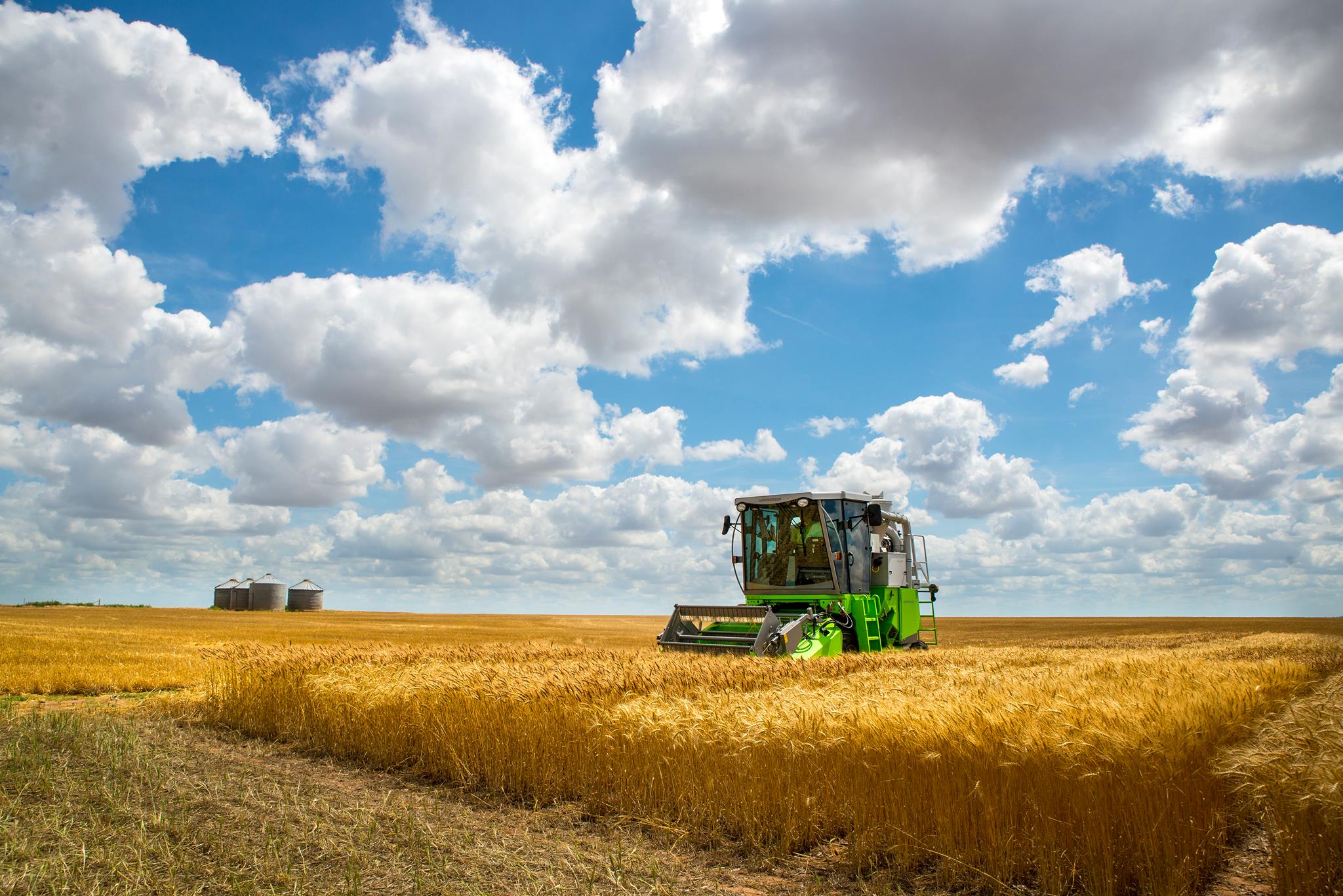
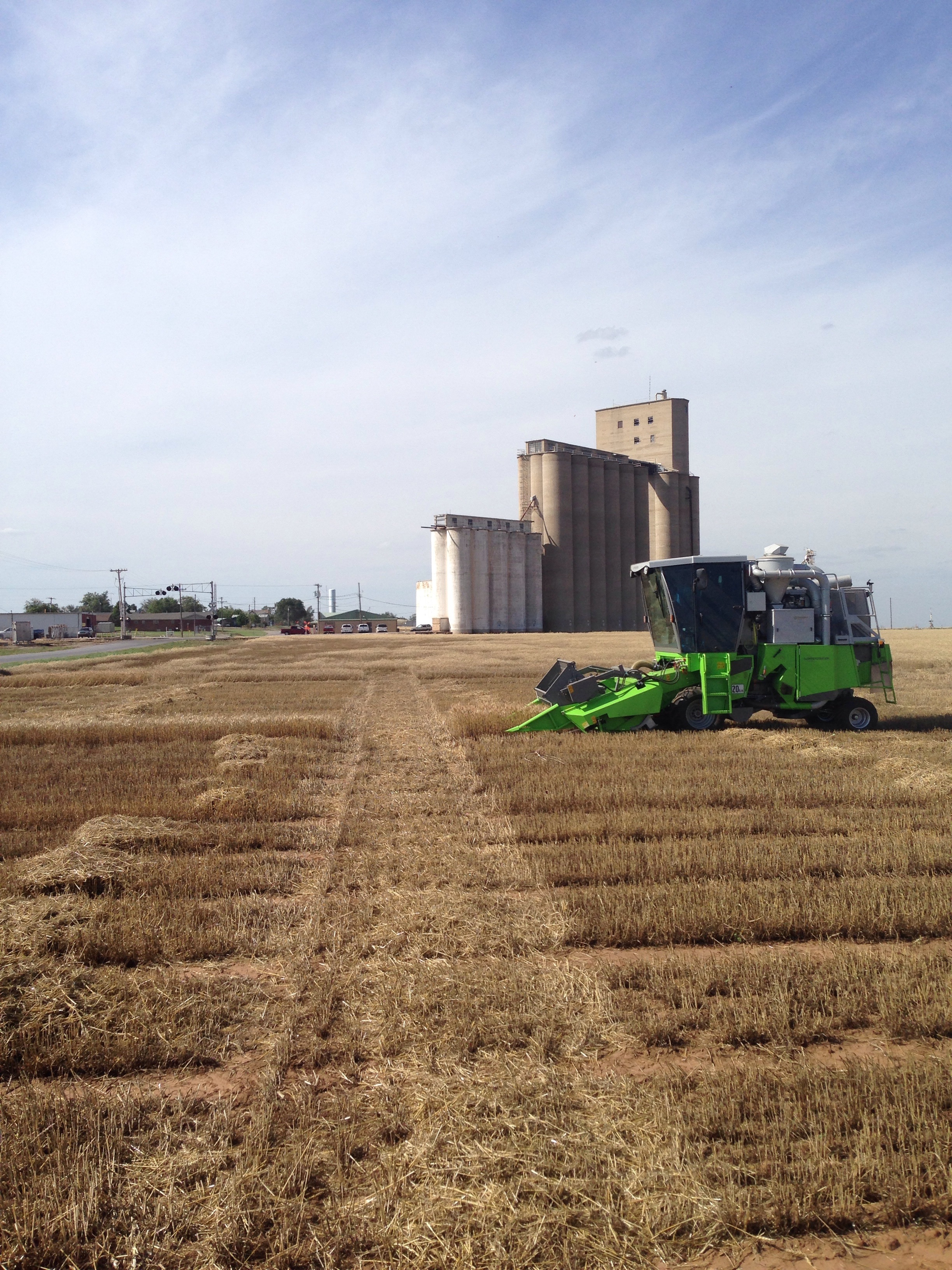
I have posted a few pics from our harvest operations below.


Wheat checkoff dollars make the Oklahoma Wheat Variety Testing program possible. We appreciate the support of our Oklahoma farmers!

Wheat checkoff dollars make the Oklahoma Wheat Variety Testing program possible. We appreciate the support of our Oklahoma farmers!

Harvest at Walters, OK. Photo courtesy Todd Johnson, OSU Ag. Comm. Services.

Harvest at Walters, OK. Photo courtesy Todd Johnson, OSU Ag. Comm. Services.

Changing tires on the side of I-35 is never fun. We blew two more on the way to Thomas the next day and damaged the trailer. Big shout out to Eley's service center in Watonga and Watonga  Machine and Steel for getting us back on the road. Don't get me started on the lack of American made trailer tires!

Changing tires on the side of I-35 is never fun. We blew two more on the way to Thomas the next day and damaged the trailer. Big shout out to Eley’s service center in Watonga and Watonga Machine and Steel for getting us back on the road.

Once we made it Thomas harvest went well. Yields were low, but that was to be expected given the freeze and drought.

Once we made it Thomas harvest went well. Yields were low, but that was to be expected given the freeze and drought.

Questions about Clearfield wheat

The introduction of two-gene Clearfield technology and the release of an Oklahoma-developed two-gene Clearfield wheat variety have resulted in increased interest in the Clearfield system in the southern Great Plains. This has also resulted in several questions, some of which I will attempt to answer in this blog post. If you have specific questions regarding rates, timings, etc., I encourage you to contact your local BASF representative.

Are Clearfield wheat varieties GMO’s? No. The Clearfield system is a non-genetically modified crop herbicide tolerance technology.

What is two-gene technology and what does it mean? As the name implies, two gene Clearfield varieties have two copies of the gene that confers resistance to imidazolinone herbicides. Two gene varieties have “Plus” or “+” in the name (e.g. Doublestop CL Plus). In wheat two-gene technology provides the option of adding 1% v/v methylated seed oil (MSO) to the spray solution. In my experience, addition of 1% v/v MSO greatly increases Beyond efficacy on feral rye. Methylated seed oil should NOT be added to the spray solution for one-gene Clearfield varieties, as crop injury will occur.

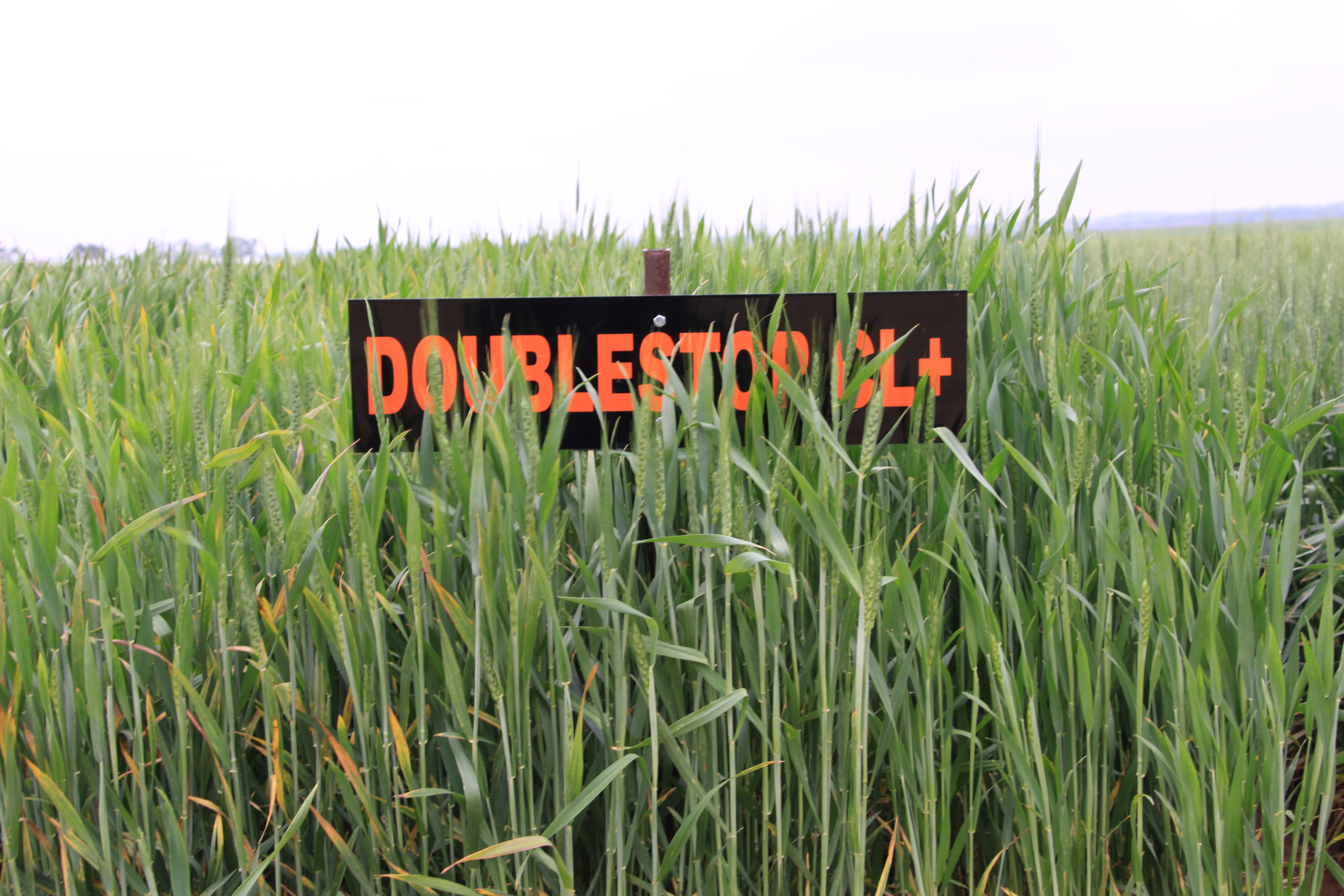
What is the new OSU two-gene Clearfield variety? Doublestop CL Plus was released by OSU in 2013 and is marketed through Oklahoma Genetics Inc. It is a late to first hollow stem and late maturity (about the same as Endurance) variety with a wide area of adaptation. A few of the strengths of Doublestop CL Plus include yield potential, acid soil tolerance, test weight, and milling and baking characteristics. More information on Doublestop CL Plus can be found by clicking here.

Doublestop CL Plus

Can I save seed from Clearfield varieties? No. The gene that confers the Clearfield trait is protected by a utility patent and new seed (registered or certified) must be purchased each year.

Can I grow a Clearfield variety two years in a row? The better question might be should you grow a Clearfield variety two years in a row? Multiple years of using the same herbicide or herbicide mode of action can result in herbicide resistance. Of particular concern is jointed goatgrass, which has the ability to hybridize with wheat. This ability to hybridize could result in a population of resistant jointed goatgrass in a fairly short time period. So, if jointed goatgrass is the primary weed problem, rotating crops and/or herbicide chemistries to avoid consecutive years of Clearfield technology is a good stewardship practice.

Other grasses, such as feral rye, do not have the potential to hybridize, but the potential for weed resistance is still there through selection pressure. In these situations, I would not be as concerned about two consecutive years of a Clearfield system, but would certainly switch herbicide chemistry for a year after that.

Ultimately, it is important to rotate crops and herbicide modes of action to ensure the longevity of the Clearfield system. Weed resistance is bad and it is worse if your farm is the epicenter of the problem. Clearfield stewardship guidelines are available from BASF by clicking here